
Trump backs diesel export ban as GOP faces fuel-price pressure
 4 Min Read
The US president backs a possible diesel export ban as Republican lawmakers seek relief from soaring fuel prices ahead of the US midterm elections.
-
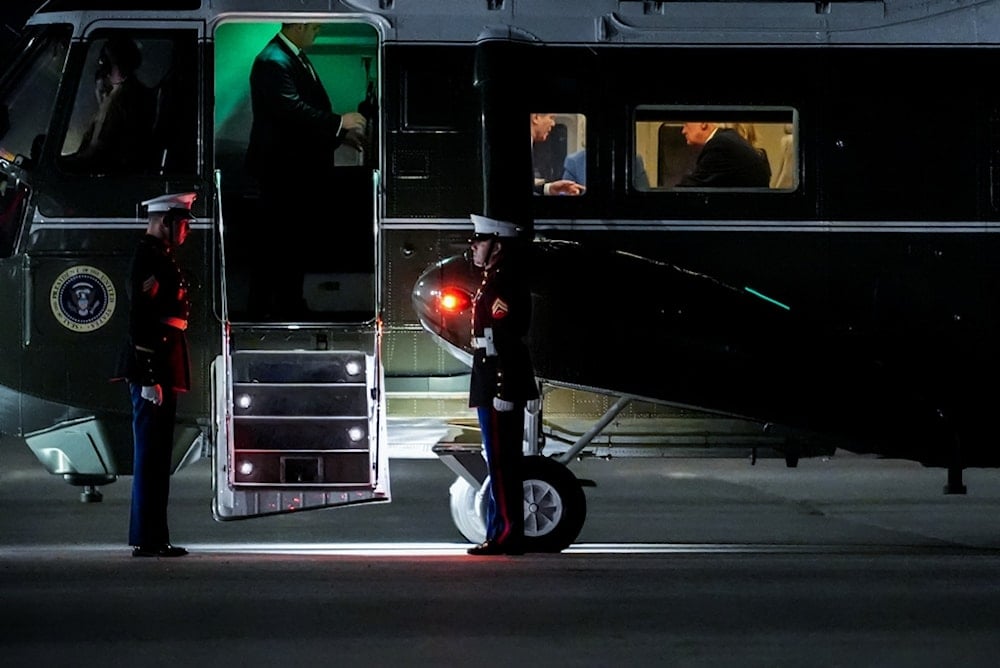
US President Donald Trump and Treasury Secretary Scott Bessent speak aboard Marine One at John F. Kennedy International Airport, Tuesday, September 22, 2026, in New York (AP)
US President Donald Trump and Republican lawmakers are turning to restrictions on diesel exports as rising fuel costs increase economic and political pressure ahead of the US midterm elections, The Wall Street Journal reported.
Trump said Tuesday that he favored limiting diesel exports, arguing that the United States produces substantial quantities of the fuel. Several Republican lawmakers and candidates have also called for restrictions, particularly as higher diesel costs weigh on farmers and other consumers.
According to the Wall Street Journal, the proposal reflects growing concern among Republicans about fuel prices and the political consequences of the broader rise in energy costs. The newspaper noted that some Republican candidates are attempting to distinguish themselves from the Trump administration as concerns about the economy increase.
The push for an export restriction has gained support from Republicans including Michigan Senate candidate Mike Rogers, Iowa Representative Ashley Hinson, and Iowa Senator Chuck Grassley. Senate Majority Leader John Thune has also indicated that he is open to considering such a measure.
Republican candidates seek response to rising fuel costs
The Wall Street Journal noted that Rogers has called for an end to the US war on Iran while arguing that energy costs could fall if the war ends. He has also supported temporarily restricting US diesel exports.
Hinson has similarly argued that Iowa residents should not have to absorb higher costs associated with the war on Iran. Grassley has backed a diesel export ban, while Thune has left open the possibility of congressional action.
The newspaper placed these proposals against a difficult political backdrop for Republicans. According to the WSJ, Democrats are competitive in several Senate races, including contests in Iowa, Ohio, Michigan, North Carolina, Maine, Alaska, and Texas, while remaining within striking distance in Kansas and Nebraska.
The Journal noted that Trump carried many of those states by substantial margins in 2024, but argued that his support has since weakened, particularly among independent voters.
Potential impact of diesel restrictions
The newspaper questioned whether restricting diesel exports would actually provide sustained relief for American consumers.
The United States is a major diesel exporter, with large volumes of refined fuel shipped overseas, particularly from Gulf Coast refineries. Supporters of an export ban argue that retaining more diesel domestically would increase supply and put downward pressure on prices.
The WSJ argued, however, that the US refining system and pipeline network could limit how effectively surplus diesel could be redirected to regions experiencing higher prices. Gulf Coast production cannot simply be transferred in unlimited quantities to the Northeast, West Coast, or Midwest.
The newspaper also pointed to the potential consequences for refiners. If exported diesel accumulates in domestic storage, refiners could reduce production, potentially affecting supplies of gasoline and jet fuel as well.
Fuel restrictions could affect global energy markets
According to the WSJ analysis, an export ban could also have consequences beyond the US market.
The newspaper argued that restricting American diesel exports could push international buyers toward alternative suppliers and raise global diesel prices. It also suggested that major customers could reconsider their reliance on US refined fuels if Washington imposes new trade restrictions.
The Journal compared the proposal with previous Republican criticism of restrictions on US liquefied natural gas exports, arguing that an export ban could raise questions about the reliability of the United States as an energy supplier.
The newspaper also highlighted the importance of diesel prices for American farmers, who rely heavily on diesel-powered machinery. Higher fuel costs can increase expenses throughout the agricultural supply chain and add pressure to already elevated consumer prices.
Other Republican proposals
The Wall Street Journal argued that Republicans seeking to reduce diesel prices could instead examine the US renewable fuel standard, which requires refiners to incorporate biofuels into transportation fuels or purchase regulatory credits.
The newspaper also pointed to Trump's tariffs as another area where Republican candidates could distinguish themselves from the administration. It cited an Emerson College poll showing that 58% of Iowa voters opposed Trump's latest tariffs on Canada, compared with 42% who supported them.
The WSJ further argued that Republican calls to end the war in Iran could carry implications for energy markets, particularly if such statements were interpreted by Iran and regional actors as evidence of declining US political support for continued military operations.


