
Republican midterm prospects darken as Iran war raises costs: POLITICO
 5 Min Read
Rising fuel prices, farm-sector pressures and opposition to the Iran war are testing Republican candidates as Democrats target key Senate seats ahead of the 2026 midterms.
-
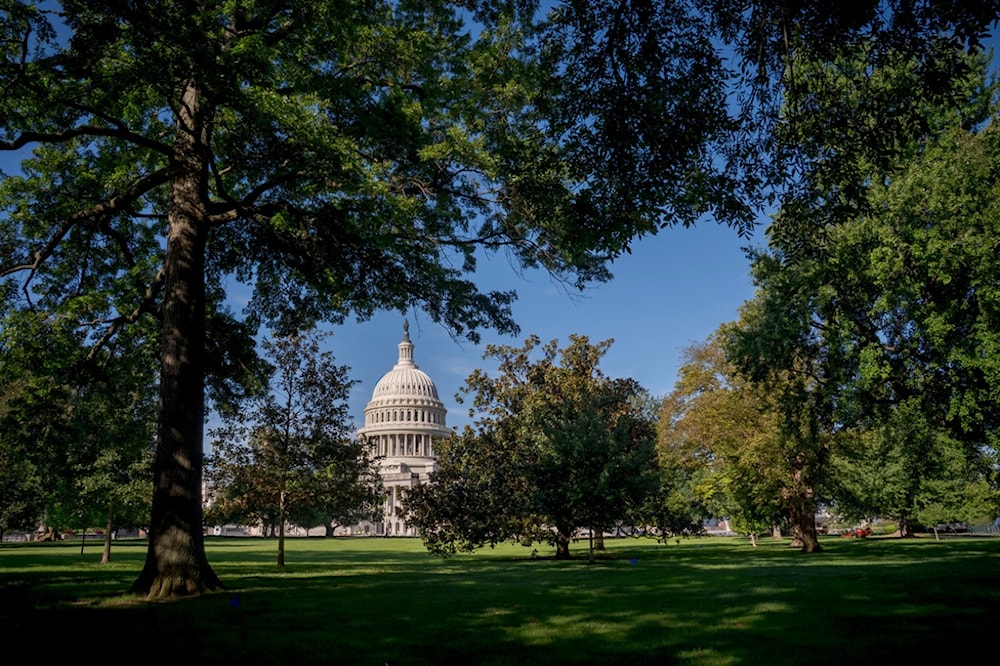
The US Capitol is seen in Washington on August 25, 2026. (AP Photo/J. Scott Applewhite)t
The Republican Party is facing mounting pressure ahead of the 2026 US midterm elections, with the Senate map increasingly exposing the political costs of US President Donald Trump’s economic policies and the prolonged US war on Iran.
POLITICO senior political columnist Jonathan Martin argues in an article for the outlet that the Senate contest could turn on a handful of Midwestern states, where rising costs, pressure on farmers and dissatisfaction with Washington’s policies are creating difficulties for Republican candidates.
Martin’s reporting also points to growing unease among Republicans themselves, particularly in agricultural states where Trump’s tariff policies, higher fuel and fertilizer costs, and changes to beef imports have become politically sensitive issues.
The developments come as public support for the US war against Iran continues to weaken. A Reuters/Ipsos poll published in August found that only 31% of Americans supported the US war on Iran, while Trump’s approval rating remained at 33%.
Read more: Iran inflicted billions in damage to US intelligence sites: NBC
Republican Senate majority faces growing pressure
The Senate contest could become significantly more difficult for Republicans if Democrats retain Michigan while capturing Republican-held seats in Ohio and Iowa, Martin reports. Such a result would put Democrats within reach of the four seats needed to take control of the chamber.
Iowa has emerged as a particularly important test. The state backed Trump in all three of his presidential campaigns, while Democrats have not elected a senator there since 2008.
Martin identifies Iowa as a potential bellwether because a Democratic victory would suggest that some voters who have repeatedly supported Trump could nevertheless turn against his party in congressional races.
The political pressure is also being felt in Kansas and Nebraska, while Democratic candidates are looking for openings farther south and in states such as Maine and Alaska.
The possibility of a broader shift remains uncertain, but Republican strategists are increasingly concerned that dissatisfaction over economic conditions could spread beyond the races initially considered competitive.
Read more: ‘Remove Trump immediately’: Carlson fears nuclear strike on Iran
Midwest voters confront the cost of Washington policies
Agriculture has become one of the most politically exposed sectors.
Martin cites Republican Senator Kevin Cramer of North Dakota, who warned that Trump was facing serious difficulties in “farm country.” The concern centers on a combination of tariffs, expensive diesel and fertilizer, and increased beef imports.
The agricultural backlash is significant because rural voters have formed an important component of Trump’s electoral coalition.
Democratic candidates are attempting to turn those economic pressures into a broader argument about Washington’s priorities. In Kansas, Democratic Senate candidate Adam Hamilton said farmers and other voters were increasingly concerned about whether they could withstand another period of economic pressure.
In Iowa, Democratic state lawmaker Josh Turek similarly described the situation as another farm crisis.
Such claims are part of an increasingly contested electoral battle, but the underlying pressure on household and agricultural costs is becoming difficult for Republican candidates to ignore.
Iran war adds pressure on Republicans
The prolonged US war on Iran has introduced another major liability for the Republican Party: the direct economic consequences of a foreign military campaign.
The war disrupted energy markets and contributed to higher gasoline prices, with the Strait of Hormuz remaining a central point of confrontation as Washington tries and fails to control the strategic waterway.
Reuters reported that the war has helped push gasoline prices higher while public support for the war has fallen.
The political consequences are particularly significant because the Trump administration began the conflict alongside "Israel" while promising to address the economic concerns of US households.
Martin points to Republican candidates in states such as Iowa and Ohio who have faced questions about whether the war should continue. Some have avoided directly challenging Trump's policy despite growing concern over its domestic consequences.
In Ohio, Republican Senator Jon Husted has said he wanted the conflict to be “brief and successful.” But as the war continues, that position becomes increasingly difficult to reconcile with the economic pressure generated by disruptions around the Strait of Hormuz.
For voters already facing higher fuel costs, the distinction between foreign policy and economic policy can quickly disappear.
A difficult road for Trump’s party
Martin compares the emerging political environment with previous midterm elections in which unpopular wars, high fuel prices and dissatisfaction with the party in power produced major congressional shifts.
His comparison with 2006 is particularly relevant to the current political debate. That year, Democratic candidates benefited from widespread dissatisfaction with the George W. Bush administration, including opposition to the Iraq war and anger over economic conditions.
The present situation is not identical. Political polarization is considerably stronger, and Republicans retain a substantial base of support that may limit the scale of any Democratic gains.
Martin also reports growing frustration within Republican circles over Trump's focus on personal political battles and his reluctance to devote more resources to vulnerable Republican candidates.
The result is a party preparing for a midterm campaign in which it may have to defend the consequences of its own administration's choices rather than campaign solely against Democratic policies.
Read more: Pentagon 'raids' payroll as Trump's Iran war eats Navy's budget


