
Israeli withdrawal derails Lebanon talks as framework deal collapses
 3 Min Read
Talks in Washington were set back after the Israeli delegation pulled a draft framework agreement from the agenda, halting progress on planned security coordination discussions involving Lebanon.
-
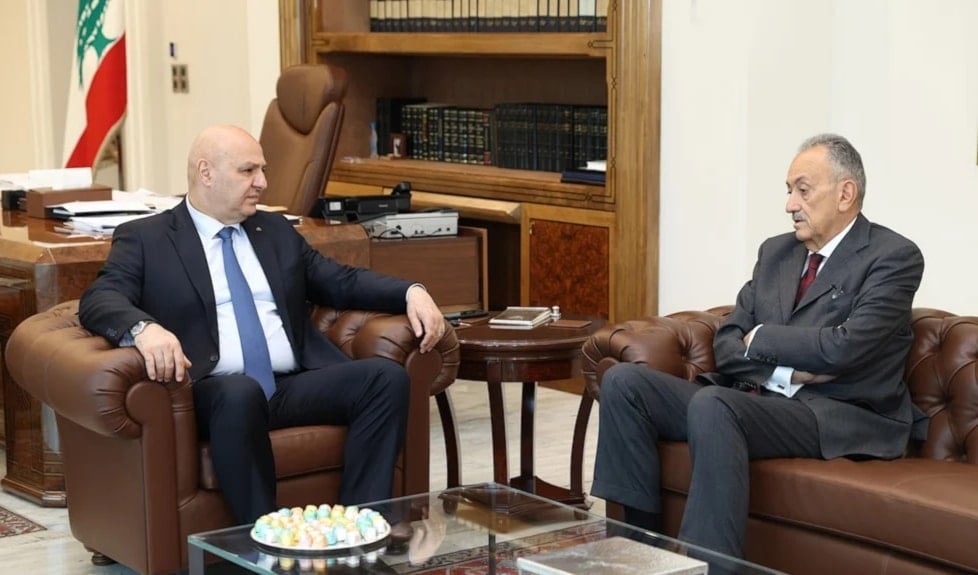
Former ambassador Simon Karam, during a meeting with Lebanon's President Joseph Aoun (Lebanese Presidency / X)
Former ambassador Simon Karam will lead the negotiating delegation during talks scheduled for May 29 at the US Department of War, as well as in upcoming negotiations over political arrangements set for June, sources speaking to Al Mayadeen revealed.
The Israeli delegation has withdrawn the draft framework agreement that was set to be discussed in the May 29 negotiations, effectively returning the security arrangements to square one, according to the same sources.
The negotiating delegation had previously stated that Washington intends to "enhance military coordination" between Lebanon and “Israel” through a track set to begin on May 29 at the Pentagon.
Direct negotiations only benefit 'Israel'
Hezbollah Secretary-General Sheikh Naim Qassem explicitly called on Sunday for abandoning direct talks with the occupation, calling for indirect talks instead, while arguing that the former would only benefit the Israeli side.
“We call for the option of indirect negotiations, where the cards of power are in the Lebanese negotiator’s hand, and for withdrawal from direct negotiations, which constitute pure profits for Israel and gratuitous concessions from the Lebanese authority,” he said.
He emphasized that matters of weapons and resistance are internal Lebanese affairs, not subject to negotiation with the enemy.
“No external party has any authority over Lebanon’s weapons, Resistance, or internal affairs. This is a purely domestic matter and not part of any negotiations with the enemy,” Sheikh Naim Qassem tersely stated.
Hezbollah ready to cooperate with Lebanese authorities
The Hezbollah chief acknowledged ongoing diplomatic efforts, particularly the Iranian proposal to the United States, which includes a halt to aggression against Lebanon.
“The Iranian-American agreement that includes a halt to the aggression on Lebanon is almost the strongest paper to stop the aggression,” Sheikh Qassem wrote.
“We thank Iran for its concern for Lebanon and its people, and we will thank any party that contributes to stopping the aggression. However, the responsibility for negotiations to achieve Lebanon’s sovereign goals remains with the Lebanese authorities. We are ready to cooperate with them.”
In his letter, Sheikh Naim Qassem listed five sovereign objectives for Lebanon: ending Israeli aggression by land, sea, and air; liberating occupied Lebanese territory; securing detainees' release; allowing displaced people to return to their villages; and reconstruction.
"Once Lebanon achieves these five goals," according to Sheikh Qassem, "it can organize its internal framework through a national security strategy, drawing on its sources of strength, including the Resistance, as outlined in President Joseph Aoun’s oath speech:
'My commitment is to call for a comprehensive defense policy as part of a national security strategy… enabling the Lebanese state to remove Israeli occupation and repel its aggression from all Lebanese territory.'"


