
JD Vance says cheap oil is top US goal in Iran war
 3 Min Read
US Vice President JD Vance says keeping oil prices low is Washington’s top goal in the Iran war as the Strait of Hormuz closure hikes US energy costs.
-
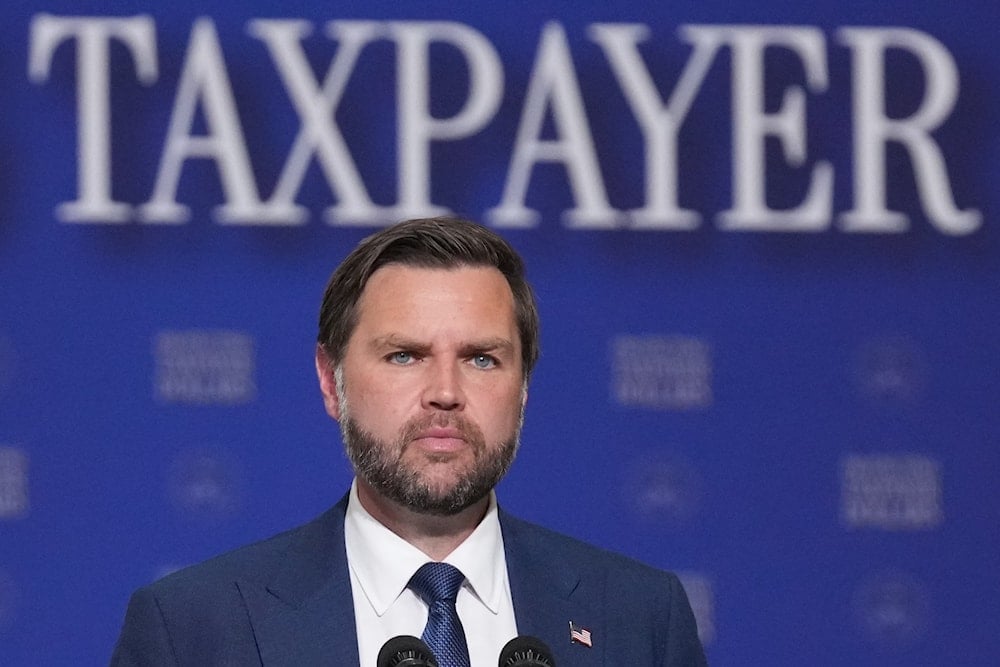
United States Vice President JD Vance speaks at the Wisconsin Air National Guard facility at Milwaukee Mitchell International Airport, on July 8, 2026, in Milwaukee. (AP)
United States Vice President JD Vance claimed that keeping oil and gasoline prices low for Americans is Washington’s top priority in the war on Iran.
Vance made the remarks Thursday in an interview with Fox News, directly contrasting with US President Donald Trump’s repeated framing of the war as a campaign aimed primarily at preventing Iran from obtaining a nuclear weapon.
“I know that oil is down today and it’s way down from the highs in the early days of the conflict,” Vance said.
“That’s goal number one — keep oil and gas cheap for Americans all over our country,” the vice president said.
“And then obviously goal number two is ensure that Iran never gets a nuclear weapon,” he added.
The comments highlight how the Strait of Hormuz has emerged as a central factor shaping Washington’s calculations, with Iran maintaining that maritime traffic through the strategic waterway remains under its control.
Vance puts energy prices ahead of nuclear concerns
Vance said the administration’s priorities could shift depending on developments in the war, with Washington focusing at times on energy prices and at others on military and nuclear issues.
“Sometimes we're focused on the energy piece of it because we want Americans to be able to afford the price of oil and gas,” Vance said, adding, “Sometimes we're obviously focused on the military... on the nuclear program.”
He added that Trump remains “at the height of his authority with a lot of tools — diplomatic, military and economic.”
Vance has previously been among the administration figures most skeptical of the aggression launched against Iran in late February. His latest remarks point to a more cautious approach in which Washington seeks to maintain economic pressure on Tehran while avoiding further escalation that could push energy prices higher.
Hormuz becomes central to US calculations
The emphasis on oil prices comes as the Strait of Hormuz remains at the center of the standoff between Washington and Tehran.
Iran’s Khatam al-Anbiya Central Headquarters has rejected US assertions that maritime traffic through the strategic waterway has returned to normal, saying the strait remains under Iranian control.
“Washington’s claims that vessels are passing normally through the Strait of Hormuz are nothing but lies and fabrications,” a spokesperson for the headquarters said.
The headquarters stressed that Iran continues to determine the conditions under which ships can cross the waterway, including commercial vessels and oil tankers.
“No commercial vessel or oil tanker has been, or will be, able to pass safely through the Strait without authorization from the Armed Forces,” it said.
Iran has maintained that the strait will not reopen to normal maritime traffic until the United States meets its conditions, making the waterway a key point of leverage in the ongoing confrontation.
Read more: JD Vance says Israeli figures seek to prolong US war on Iran


