
KSA touts post-war West Asia non-aggression pact with Iran: FT
 3 Min Read
Saudi Arabia's proposal draws on the Cold War-era Helsinki Process as a model for regional security cooperation.
-
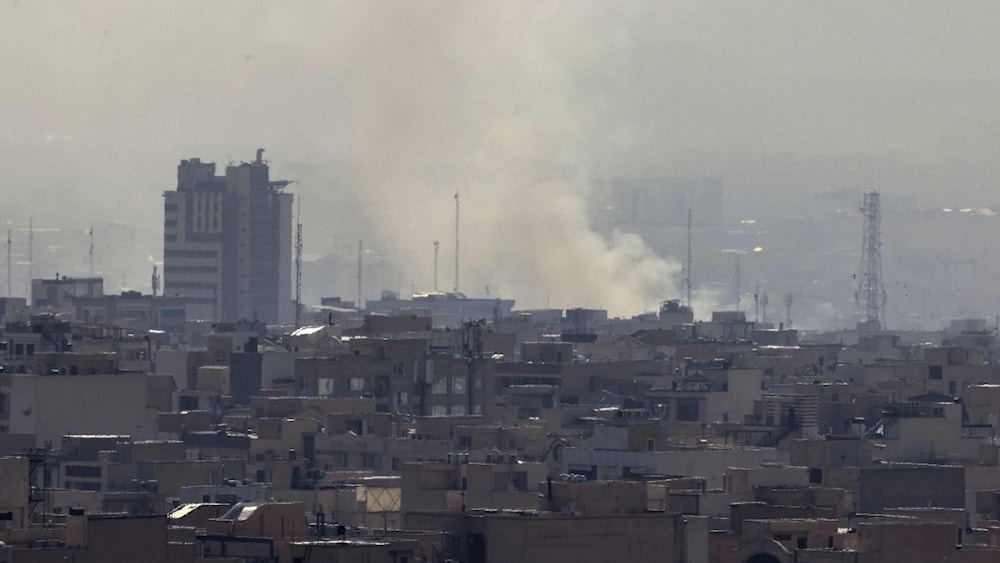
A plume of smoke rises following an Israeli strike on Tehran, Iran, on February 28, 2026 (AFP)
Saudi Arabia has reportedly discussed the idea of a non-aggression pact between West Asian states and Iran as part of consultations with allies on managing regional tensions following the end of the US-Israeli war on the Islamic Republic, the Financial Times reported on Thursday, citing diplomats.
The diplomatic sources said Riyadh is considering a framework inspired by the 1970s Helsinki Process, which helped ease Cold War tensions in Europe through security guarantees and expanded cooperation between rival blocs.
Two Western diplomats said the proposed pact is among several options being explored for a post-war regional security architecture, as Gulf states prepare for post-Iran war dynamics.
The 1975 Helsinki Accords, signed by the US, European countries, and the Soviet Union and its allies, are viewed by some policymakers as a possible template for reducing tensions and establishing basic principles of non-aggression in West Asia.
Gulf concerns over post-war security
According to the FT's report, diplomats said Gulf states are concerned that the end of the war could leave the region facing "a more volatile Iranian posture," particularly if US military presence in the region is reduced over time. They added that the idea of a pact is also driven by fears of renewed escalation if long-term political arrangements are not established after the war.
According to the diplomats, several European capitals and EU institutions have expressed support for the Saudi proposal and have encouraged Gulf states to consider backing it as a stabilizing mechanism.
In turn, an Arab diplomat said such an arrangement could be supported by most Arab and Muslim states, as well as Iran, though participation would be crucial to its effectiveness. However, divisions remain within the region, particularly between Saudi Arabia and the United Arab Emirates, over approaches to Iran and future regional alignments.
UAE and Saudi Arabia differ on Iran policy
The report mentioned that the UAE has taken a more hardline stance toward Iran during the war and has criticized regional institutions for what it views as "insufficient responses to Iranian actions." It has also signaled an intention to deepen relations with “Israel” in the post-war period, amid heightened regional realignments. This comes as Netanyahu's office confirmed that he made a secret visit to the UAE and met with President Sheikh Mohamed bin Zayed during the aggression on Iran.
Saudi Arabia, on the other hand, has moved closer to Pakistan, Turkey, and Egypt in recent months, exploring broader security and economic cooperation frameworks.
This comes as Reuters reported, citing Western and Iranian officials, that Saudi Arabia reportedly carried out covert military strikes on Iran in late March after Iran struck US assets in the kingdom during the war.
According to the officials, the operations mark the first known instance of Riyadh directly launching military aggression against Iranian territory.
Meanwhile, Pakistan’s Defense Minister Khawaja Asif said Islamabad has proposed expanding its defense arrangement with Qatar and Turkey into a broader “economic and defense alliance” aimed at reducing reliance on external powers.
A Pakistani official said discussions on the idea predated the war and reflect a broader regional push to reshape security and cooperation frameworks in West Asia.


