
Lebanon-'Israel' framework 'illusion', will backfire: Israeli media
 4 Min Read
Criticism mounts over the US-brokered “Israel”-Lebanon framework agreement as Israeli media and analysts question its viability and long-term success.
-
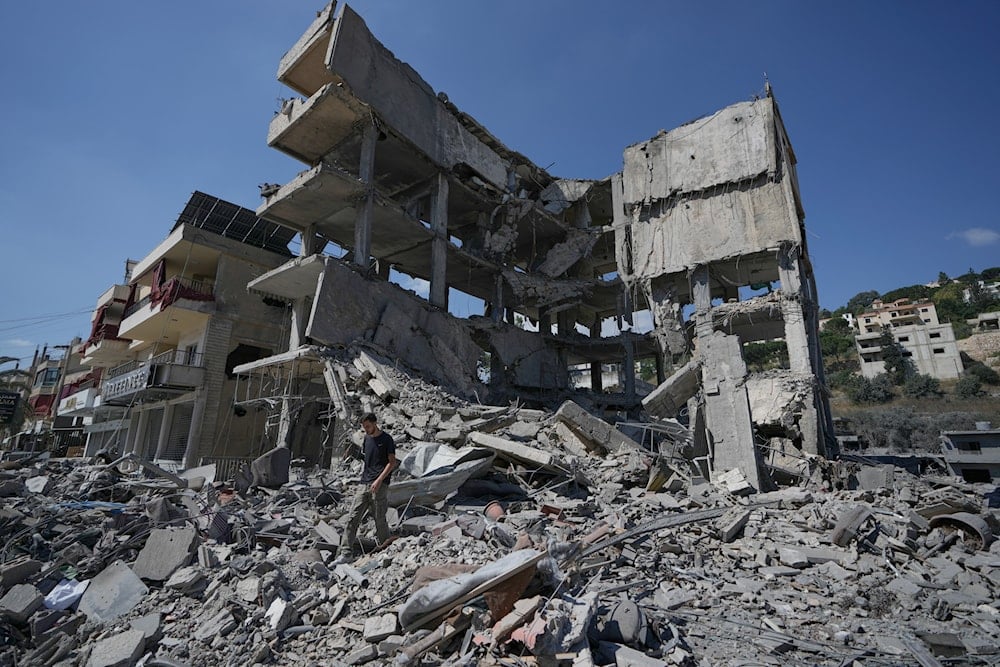
Abed Harb inspects a relative's apartment in a building destroyed in previous Israeli airstrikes in the town of Nabatiyeh, southern Lebanon, Wednesday, June 24, 2026, following a ceasefire in Lebanon (AP)
The US-brokered framework agreement between "Israel" and Lebanon is worthless and will backfire disastrously, according to a blistering critique published by the Hebrew-language version of Times of Israel, Zamn Yisrael.
"The framework agreement with Lebanon is an illusion that will blow up in our faces," the site wrote, arguing that "Israel has achieved nothing" and that the deals were forced upon it by a Washington that had grown "tired of being preoccupied with the Middle East."
It added that "Israel is in a very bad situation" and that the United States had imposed accords "not worth the paper they are written on."
The article also drew a parallel between the Lebanon framework and "unrealistic" US policy rhetoric, comparing it to President Donald Trump's past statements about "hotels and casinos in Gaza" and "Iran without nuclear weapons or ballistic missiles."
It further noted that the US administration pursued the agreement vigorously in order to hand Trump "another celebratory announcement."
In a related development, the far-right Israeli daily Israel Hayom reported earlier that while the security establishment officially supports the agreement signed with Beirut, it harbors significant doubts about its success. The newspaper warned that the implementation path is "long and full of obstacles" and that the chances of success are "not great", according to security sources.
Israeli military yet to receive withdrawal orders
In the same context, no order for any Israeli military withdrawal from Lebanese territory has been received to date, Haaretz reported Monday, citing unnamed security sources. The report underscored growing confusion over how and when a recently signed ceasefire-security agreement between "Israel" and Lebanon would actually translate into a pullback on the ground.
Haaretz further noted that Israeli forces are not currently deployed in the village of Zowtar al-Gharbiyah, yet both the political and military establishments are actively promoting a withdrawal from that specific location as part of what they describe as a broader "withdrawal package."
Meanwhile, Kan reported that the US has proposed training Lebanese forces to take over "demilitarized" zones in place of Israeli troops, indicating Washington's push to shape post-conflict security arrangements.
An annex kept secret at request of Lebanese gov.
The agreement, formalized last Friday, includes a classified security annex. Israeli Channel 12 confirmed that the Lebanese government explicitly requested that the annex remain undisclosed. According to Channel 12, the deal commits neither party to fixed timelines, with implementation hinging entirely on the verification of field conditions rather than any automatic schedule.
Crucially, Channel 12 reported that any Israeli withdrawal is conditional on what "Israel" unilaterally defines as "ground success", leaving the pace and scope of pullback entirely subject to its own assessments. The channel also claimed that "pilot zones" inside Lebanon, currently limited to Froun and Zawtar al-Gharbiyah, will not expand without Israeli approval, and noted that neither location actually hosts Israeli troops, exposing an Israeli "charade" and its clear intent to remain.
Channel 12 further reported that Lebanese authorities have granted "Israel" freedom of action within the so-called "Yellow Line", a zone encompassing dozens of sovereign villages and towns whose residents remain forcibly displaced from their homes.
Separately, Channel 14 confirmed that "Israel's" security and military establishment is preparing for a prolonged occupation of Lebanon that could last for years, reinforcing the assessment that the current framework is unlikely to produce a swift or complete Israeli withdrawal anytime soon.


