
Lebanon asks UN Security Council to extend UNIFIL mandate
 4 Min Read
Parliament Speaker Nabih Berri says an international presence in the South must continue in some form even if UNIFIL's mission ends as planned.
-
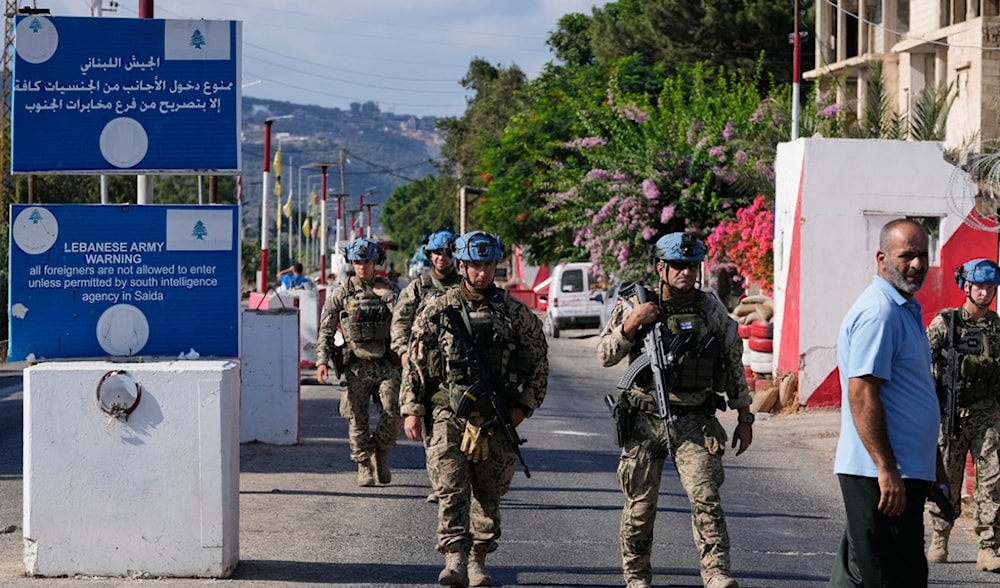
Finnish UN peacekeepers patrol at a Lebanese checkpoint in the southern village of Mansouri, Lebanon, Friday, Sept. 4, 2026. (AP Photo/Mohammed Zaatari)
Lebanon has submitted a formal letter to the UN Security Council requesting an extension of the international peacekeeping mission in the south of the country, with the request backed by France and several other states, the Financial Times reported Sunday, citing the text of the letter and sources familiar with the matter.
The letter follows comments Saturday from Lebanese Parliament Speaker Nabih Berri, who said an international presence in southern Lebanon must be preserved even if the UN Interim Force in Lebanon (UNIFIL) mission concludes as scheduled. Berri floated the possibility of a replacement force still operating under the UN flag.
Beirut's push to keep a peacekeeping contingent in place is tied directly to "Israel's" continued occupation of southern Lebanon, according to the Financial Times. "Israel" has rejected any extension of UNIFIL's mandate, a position it has held since before the mission's last renewal.
Ahead of the August 2025 Security Council vote, "Israel" and the United States told Council members they opposed automatic renewal and pushed for a reassessment of the force's mandate altogether. Israeli officials characterized UNIFIL as a passive actor whose reporting did not reflect conditions on the ground.
Options under discussion
Several alternatives for a post-UNIFIL international presence have circulated, the Financial Times reported, including a scaled-down UN mission or the deployment of US, French, or EU troops in place of the current peacekeeping force.
The idea has been building for months. France and Italy, two of UNIFIL's largest troop contributors, announced in June plans for a multinational force to succeed the mission, a proposal Lebanese President Joseph Aoun discussed in Rome in August with Italian President Sergio Mattarella and Prime Minister Giorgia Meloni.
French President Emmanuel Macron told Aoun in June that Paris had opened consultations with other countries on deploying an international force coordinated with the UN and EU to reinforce Lebanese sovereignty and support the Lebanese army.
Germany has since signaled it will join that effort, with Foreign Minister Johann Wadephul announcing in July that Berlin and Paris would define a joint policy on Lebanon ahead of the mandate's expiration.
Separately, UN Secretary-General Antonio Guterres proposed three options in a June report for maintaining an international presence after UNIFIL, ranging from close to 2,000 to more than 5,500 UN personnel. In August, 86 Lebanese lawmakers signed a letter urging the Security Council to maintain the peacekeeping mission, a call now echoed in Beirut's formal request.
UNIFIL says South remains fragile
UNIFIL reported in late August that although Israeli attacks have decreased compared to earlier in the year, conditions in southern Lebanon remain unstable. Between August 21 and 27, peacekeepers recorded 1,030 projectile trajectories, an average of 147 per day. The force said at the time that the situation continues to weigh on civilians, with homes and infrastructure damaged and communities unable to fully recover.
That week's figures followed a documented pattern through the summer, including 552 Israeli violations recorded over three days in early August and 113 IOF-launched projectiles in a single day in early August, the highest daily total UNIFIL had recorded since June 21.
UNIFIL has also reported direct incidents affecting its own personnel, including tank fire striking peacekeeping positions and vehicles rammed by Israeli forces, and has said its patrols continue to face movement restrictions in the field.
The UN Security Council extended UNIFIL's mandate for a final time in August 2025, setting an expiration date of December 31, 2026, after which a phased withdrawal of forces is set to begin over the following year.
Aoun said in August that extending the mandate remains Beirut's preferred outcome. Failing that, he said Lebanon supports preserving an international presence in southern Lebanon under another legal framework, in coordination with the Lebanese army.


