
Marco Rubio visits eastern Europe to boost Trump ties
 3 Min Read
US State Secretary Rubio visits Slovakia and Hungary to strengthen the Trump administration's ties, discussing energy cooperation, NATO commitments, and regional security.
-
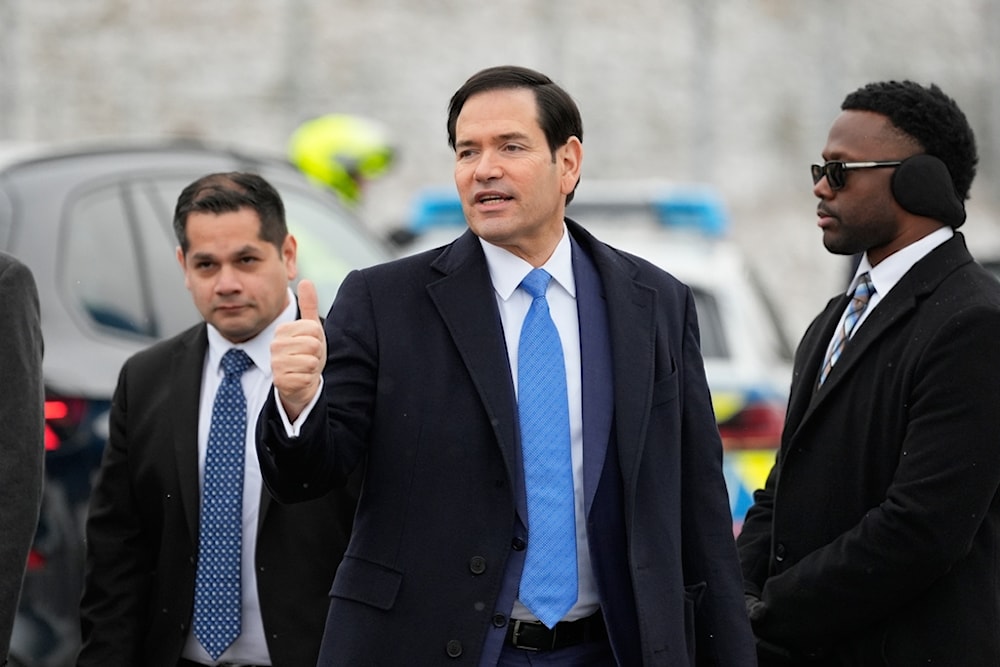
US Secretary of State Marco Rubio gives a thumbs-up as he departs Munich International Airport in Munich, Germany, Sunday, February 15, 2026, after attending the Munich Security Conference. (AP Photo/Alex Brandon)
US Secretary of State Marco Rubio is set to begin a two-day visit to Eastern Europe on Sunday, aiming to bolster ties with Slovakia and Hungary, whose conservative leaders maintain close relations with the Trump administration.
Rubio will use the trip to discuss energy cooperation and bilateral issues, including NATO commitments, the State Department said in an announcement last week.
"These are countries that are very strong with us, very cooperative with the United States, work very closely with us, and it's a good opportunity to go see them and two countries I've never been in," Rubio told reporters before departing for Europe on Thursday.
Read more: Marco Rubio reaffirms US-Europe alliance in Munich
Meeting Slovak Prime Minister Robert Fico
Rubio will meet in Bratislava on Sunday with Slovak Prime Minister Robert Fico, who visited Trump in Florida last month. The visit follows Rubio’s participation in the Munich Security Conference on Saturday.
Fico has described the European Union as an institution in “deep crisis” and has praised Trump, saying he would bring peace back to Europe. However, he criticised the US kidnapping of Venezuelan President Nicolas Maduro in early January.
Talks with Hungary’s Viktor Orban
On Monday, Rubio is expected to meet Hungarian Prime Minister Viktor Orban, who is trailing in most polls ahead of an election in April.
"The President said he's very supportive of him, and so are we," Rubio said. "But obviously we were going to do that visit as a bilateral visit."
Orban is considered to be a close European ally of Trump’s and is viewed by segments of the American hard right as a model for tough immigration policies and support for families and Christian conservatism. Budapest has repeatedly hosted Conservative Political Action Conference events, with another due in March.
Energy, NATO and relations with Moscow
Both Fico and Orban have clashed with EU institutions over probes into democratic backsliding. They have also maintained ties with Moscow, criticised and at times delayed EU sanctions on Russia, and opposed sending military aid to Ukraine.
Even as other European Union states secured alternative energy supplies following the beginning of the Russia-Ukraine war in 2022, including US natural gas, Slovakia and Hungary have continued purchasing Russian oil and gas, a practice the United States has criticised.
Hungary and Slovakia have raised defense spending to NATO’s minimum threshold of 2% of GDP. However, Fico has refused to increase spending beyond that level for now, despite repeated calls from Trump for NATO members to raise military spending to 5%. Hungary has also budgeted for 2% defence spending this year.
On nuclear cooperation, Slovakia signed an agreement with the United States last month, and Fico said US-based Westinghouse was likely to build a new nuclear power plant. He also welcomed broader participation after meeting the head of France’s nuclear engineering company Framatome.


