
Mokhber warns Gulf states hosting US bases used against Iran
 3 Min Read
Advisor and aide to the Supreme Leader of the Revolution, Mohammad Mokhber, says US military presence in the region amounts to CENTCOM “outposts” and warned that restraint will not last indefinitely.
-
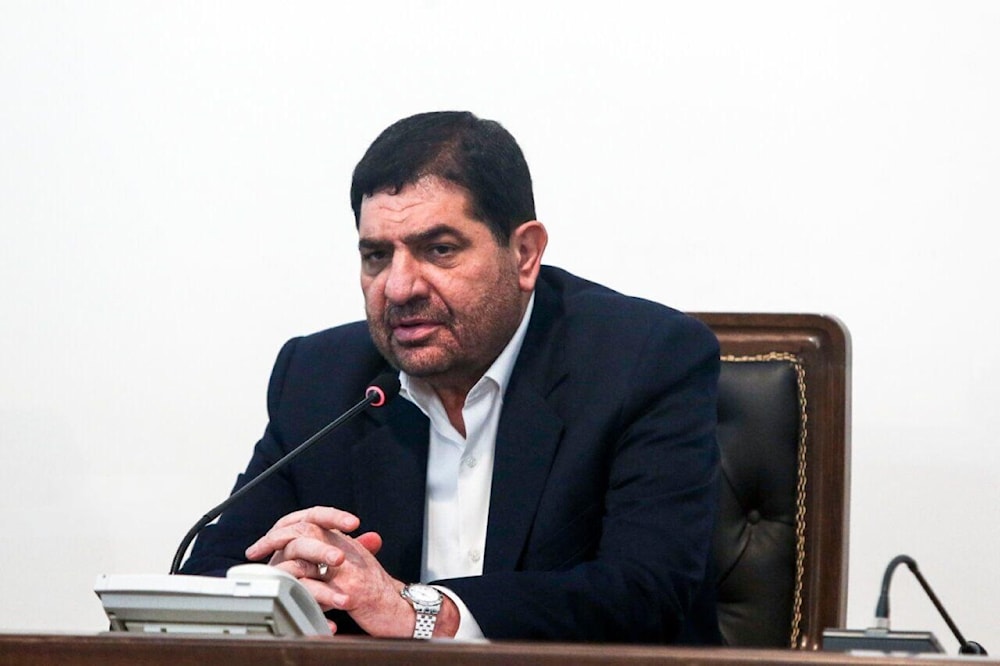
Mohammad Mokhber, advisor and assistant to the Leader of the Islamic Revolution, in an undated photo released by Iranian media (IRNA)
Mohammad Mokhber, advisor and aide to Iran's Leader, has issued a stark warning on Saturday to countries hosting US military forces, stating that their sovereignty has been “pre-sold” and that their territory is being used against Iran and Palestine.
In remarks posted on X, Mokhber said Iran had for years viewed certain regional actors as “friends and brothers,” but accused them of allowing their land and infrastructure to serve as US Central Command (CENTCOM) “outposts.”
ایران سالها به چشم دوست و برادر به آنها نگاه کرد ولی آنها با پیش فروش استقلال خود، حتی خاک و خانه هایشان را در اختیار دشمنان فلسطین و ایران قرار دادند.
— محمد مخبر (@MokhberOfficial) May 16, 2026
پاسخ جمهوری اسلامی به سنگرهای استیجاری سنتکام در جنگ اخیر تمام عیار نبود؛ اما قطعا این خویشتنداری همیشگی نیست.#کویت#امارات
Restraint not perpetual
Mokhber also referred to Iran’s military response during a recent large-scale escalation, saying that Tehran’s reaction to CENTCOM-linked positions in the region was deliberately limited and not fully expanded into a wider war.
However, he added that such restraint should not be interpreted as permanent, warning that Iran could escalate further if conditions change.
Iranian officials have repeatedly asserted that US military presence in the Gulf is the main reason for instability in the region, and have threatened retaliation against regional partners seen as supporting American operations.
Broader context
Mokhber’s remarks come amid heightened tensions between Iran, the United States, and regional governments hosting US forces, particularly since the start the unprovooked US-Israeli aggression on Iran on February 28, with Iran-US talks reaching a stalemate as the US insists on its demands.
Since the beginning of the aggression, Iran has carried out strikes against Israeli positions and US military facilities in the regions used in attacks against it. The US-Israeli aggression has disrupted energy flows through the Strait of Hormuz, a key global shipping route for oil and liquefied natural gas.
The Strait of Hormuz is one of the world’s most important energy chokepoints, with roughly one-fifth of global oil and LNG supplies passing through it under normal conditions.
The Strait of Hormuz links the Persian Gulf with the Gulf of Oman and is used by major oil and gas exporters, including Saudi Arabia, the United Arab Emirates, and Qatar, making it a critical route for the global and regional energy market
Tehran has, in previous statements, warned that regional military escalation could threaten maritime security in the Gulf, while also emphasizing its ability to respond to attacks on its territory or allied groups across the region.


