
NATO steps up submarine operations as US role in North Atlantic shifts
 4 Min Read
NATO allies are increasing efforts to track Russian nuclear-capable submarines in the North Atlantic as European forces and Canada take on a larger role.
-
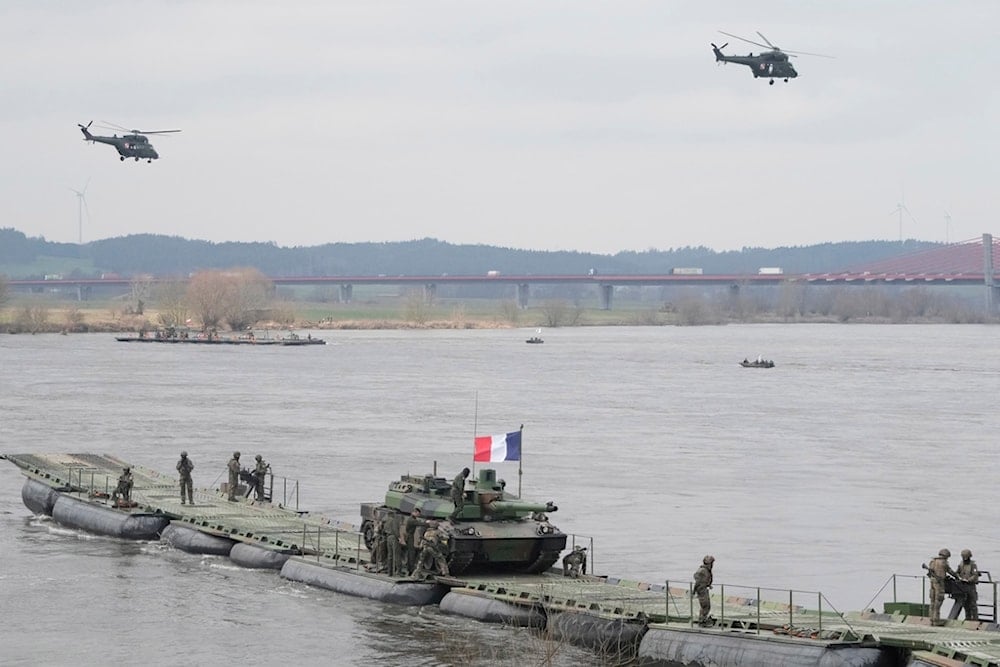
Polish and other NATO troops take part in military drills in Korzeniewo, Poland, Monday, March 4, 2024 (AP)
NATO allies are stepping up efforts to counter Russia's nuclear-capable submarines in the North Atlantic as the US takes a less prominent role in the alliance's military activities in the region, Politico reported Saturday.
During NATO's annual Northern Viking exercise last month, German surveillance aircraft, Canadian warships, and Belgian fighter jets operated off Iceland to practice detecting and tracking submarines.
For the first time in decades, however, no US ships or aircraft took part in the maritime operation, the report said.
European NATO allies and Canada step up
The exercise, led by French Rear Admiral Nicolas Molitor, was aimed at demonstrating that European allies and Canada can maintain security in the strategically important North Atlantic without direct US military leadership.
“We see Europe and Canada stepping up, and we see it literally here in Iceland,” Iceland’s defense chief Jonas Allansson reportedly said.
Iceland lies near the Greenland-Iceland-United Kingdom, or GIUK, Gap, a key maritime passage used by Russian submarines to enter the Atlantic from bases on Russia's Kola Peninsula.
“For NATO and for Russia, this is really a dividing line,” a senior NATO official reportedly said. “For the Russians, if they can control access to that gap, and get their submarines on the other side of it, then they’ve got free reign of the Atlantic and can hold bases on both sides of the Atlantic at risk.”
NATO eyes submarine and undersea infrastructure threats
NATO allies are increasingly concerned about Russia's nuclear and conventional military capabilities, as well as potential threats to critical undersea infrastructure, including internet cables and pipelines.
German Navy Commander Peter Flohr stressed the importance of protecting the infrastructure.
“Every Amazon order you do in Germany runs through these cables,” he said. “So we need to keep a constant eye on them.”
The US has not completely withdrawn from Iceland, with American personnel helping build new military facilities at Keflavik airport and contributing to planning for the exercise. However, the absence of US ships and aircraft marks a notable shift from previous years, according to Politico.
NATO undergoes loyalty test
This comes days after the Financial Times reported that the United States is examining how closely its NATO partners align with Washington's foreign policy as the Pentagon reviews the future of American troops and weapons stationed across Europe.
European governments have begun submitting responses to a questionnaire circulated by Washington this month that asks allies not only about their military capabilities and defense commitments, but also about their political support for US policies.
The exercise comes as the Trump administration pushes European members of NATO to assume a larger share of responsibility for the continent's defense while considering potential changes to the US military presence in Europe.
European governments fear consequences for US troop presence
Several NATO members are reportedly concerned that their responses could be factored into an ongoing Pentagon review examining the future distribution of US forces across the continent.
The review is expected to be completed by the end of the year and comes as Washington pressures European states to fill major military capability shortages.
US officials have reportedly described NATO assessments of European military readiness as a "sea of red," referring to the large number of shortcomings identified under the alliance's traffic-light evaluation system.
Colby maintained that Washington was not attempting to impose unconditional demands on its allies.
"We’re not coming in here and dictating. We’re saying: ‘What is in your questionnaire? What are you prepared to offer?’ And we’re gonna look at the different alternatives and make sure that that’s fit for purpose," he said.
He added that Washington maintained "reasonable expectations" of NATO partners.


