
Netanyahu seeks Trump meeting amid reported post-Iran war rift
 4 Min Read
Israeli Prime Minister Benjamin Netanyahu is expected to visit Washington seeking talks with Donald Trump as reports point to growing differences over Iran, Syria, and Lebanon.
-
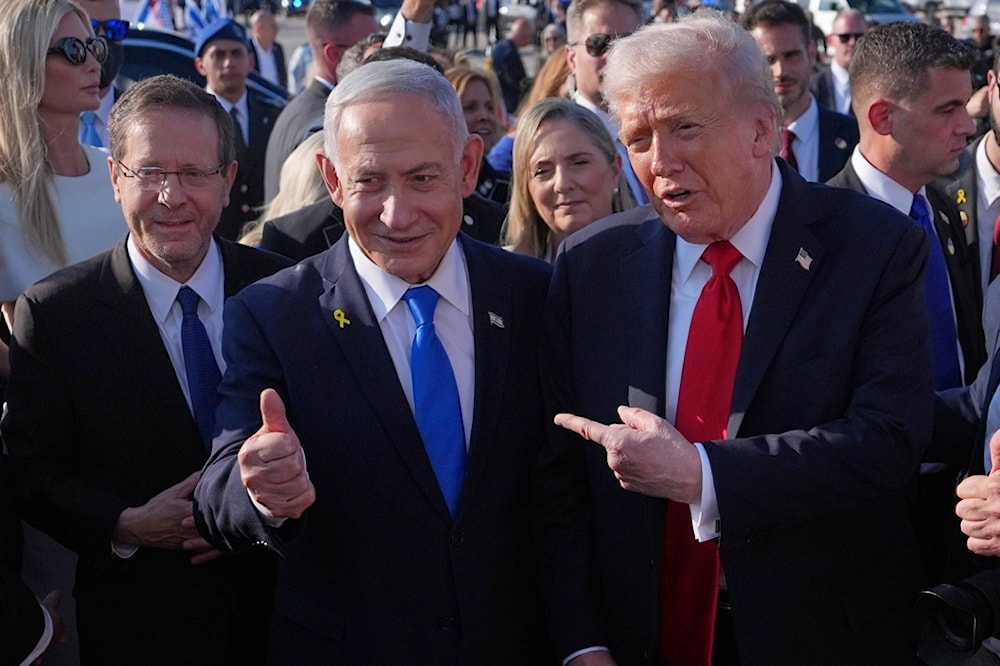
US President Donald Trump poses for a photo with "Israel's" Prime Minister Benjamin Netanyahu before he boards Air Force One at Ben Gurion International Airport on October 13, 2025. (AP Photo/Evan Vucci)
Reports of growing differences between Washington and the Israeli occupation have emerged following the recent US-Israeli war on Iran, as "Israel's" Prime Minister Benjamin Netanyahu is expected to travel to Washington this weekend in an effort to secure a meeting with US President Donald Trump.
Israeli media reports that no meeting has yet been finalized despite repeated efforts by Netanyahu's office to arrange talks with Trump, as both sides prepare for a new round of US-Iran negotiations.
Reports indicate that Netanyahu is seeking to restore confidence with the Trump administration after the joint US-Israeli aggression against Iran failed to achieve its declared objectives.
Officials close to Netanyahu are concerned that Trump blames the Israeli premier for assessments presented before the aggression, amid growing criticism within the US president's circle regarding the outcome of the military campaign.
Read more: Netanyahu 'will do whatever I want him to do': Trump
The visit is also reportedly intended to allow "Israel" to present what it claims is new intelligence ahead of anticipated negotiations between Washington and Tehran.
Per the Israeli reports, Netanyahu intends to press the United States to reject any agreement that would allow Iran to retain uranium enrichment capabilities on its own territory. "Israel" is also expected to urge Washington to include Iran's ballistic missile program and its support for Resistance movements as part of any future agreement.
Iran has repeatedly maintained that uranium enrichment for peaceful purposes is its sovereign right under the Nuclear Non-Proliferation Treaty and has consistently rejected attempts to restrict its civilian nuclear program beyond its international obligations.
Trump reportedly urges withdrawal from Syrian and Lebanese territories
The reported visit comes after Axios, citing US and Israeli officials, said Trump urged Netanyahu during a phone conversation last week to begin withdrawing occupation forces from areas in Syria and from positions in southern Lebanon.
According to the report, Trump warned that the continued presence of occupation forces on Syrian territory was fueling tensions and increasing the likelihood of renewed regional escalation.
"They don't want you there. You should redeploy," a US official told Axios.
According to the US official cited by Axios, Trump said the same approach should apply in Lebanon.
The reported conversation came shortly after Trump met Syria's transitional president, Ahmad al-Sharaa, during the NATO summit.
According to the report, the Trump administration had spent months attempting to broker a security arrangement between Syria and the Israeli occupation but concluded that Netanyahu was unwilling to accept proposals that included a phased withdrawal from Syrian territory occupied after the political developments that followed the fall of Bashar al-Assad's government in late 2024.
The Israeli occupation has continued to expand its military presence inside Syrian territory since then, drawing repeated condemnation from Damascus, which has described the incursions as violations of Syria's sovereignty and international law.
Netanyahu expected to attend Lindsey Graham memorial
During his visit, Netanyahu is also expected to attend memorial events honoring the late Republican Senator Lindsey Graham.
According to Israeli media reports, a memorial service is scheduled to take place in Washington before Graham's remains are transferred to South Carolina.
It is worth mentioning that throughout his political career, Graham was among the occupation's strongest supporters in the US Congress, consistently advocating expanded military assistance to the occupation, increased pressure on Iran, and continued US backing for Israeli military operations across the region.


