
Regional leaders meet in Antalya to address escalating threats on Iran
 3 Min Read
Turkey, Pakistan, and Qatar leaders meet in Antalya to discuss Iran tensions, ceasefire efforts, and a new regional security framework amid ongoing instability.
-
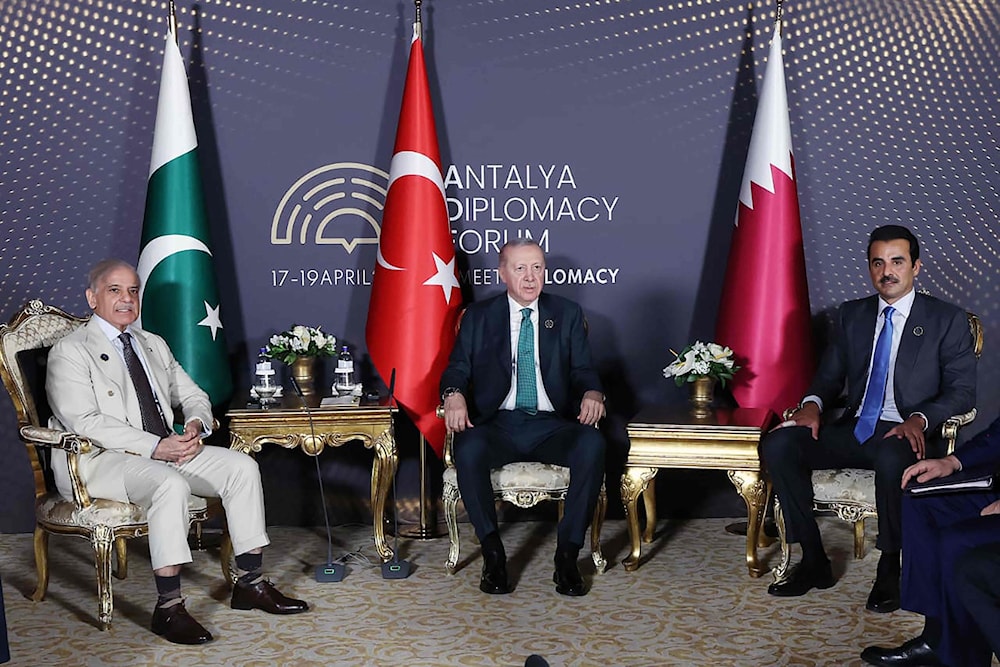
Turkish President Recep Tayyip Erdogan, Pakistan's Prime Minister Shehbaz Sharif, and Qatar's Emir Sheikh Tamim bin Hamad Al-Thani meet on the sidelines of the Antalya Diplomacy Forum in Antalya, April 17, 2026. (Pakistan's Prime Minister's Office Handout via AFP)
Leaders of Turkey, Pakistan, and Qatar convened in Antalya for a closed-door meeting to address escalating tensions surrounding US-Israeli threats against Iran and explore pathways toward regional de-escalation.
The meeting brought together President Recep Tayyip Erdogan, Prime Minister Shehbaz Sharif, and Emir Tamim bin Hamad Al Thani on the sidelines of the Antalya Diplomacy Forum, underscoring growing regional engagement on the issue.
According to the Turkish presidency, Erdogan stressed that attacks targeting Iran risk further destabilizing the region.
"During the meeting, our president said that illegal attacks on Iran increase security risks in our region, that we are satisfied with the ceasefire, and that Turkey would step up its efforts to maintain the ceasefire and ensure lasting peace," the statement read.
His remarks reflect a broader regional concern that continued escalation could undermine fragile stability and reignite the war in West Asia.
Toward a new regional security framework
Erdogan also highlighted the need for a reconfigured regional security architecture, suggesting that existing frameworks have failed to contain escalating crises.
He indicated that discussions would extend beyond the trilateral format, involving other regional actors in shaping a more sustainable approach to collective security.
Read more: Iran not seeking nuclear weapons nor regional instability: Pezeshkian
"During the meeting, the leaders also held consultation regarding the possible joint steps to achieve lasting and sustainable peace in the region," the presidential office added.
The Antalya meeting signals increasing coordination among regional powers seeking to manage tensions through dialogue rather than escalation.
Escalation, retaliation, and fragile ceasefire
The meeting comes against the backdrop of the recent escalation involving Iran.
A two-week ceasefire was announced on April 7 following indirect understandings between Washington and Tehran. However, subsequent talks held in Islamabad failed to produce a lasting agreement.
Despite the absence of renewed large-scale hostilities, tensions persist, particularly as Washington continues its Strait of Hormuz blockade targeting Iranian vessels, raising concerns about the durability of the ceasefire.
"Israel" acts as another factor in the potential collapse of the ceasefire as it negates the ceasefire signed on April 7 by continuing to attack Lebanon, despite the cessation of hostilities across all fronts, which was strictly mentioned in the ceasefire plan and was also agreed upon by Israeli officials in Washington.
A temporary ceasefire between Lebanon and "Israel" has since been put into effect but remains shaky as Tel Aviv has a history of violating non-aggression deals.


