
Republican infighting rises as $70bln immigration package falls apart
 4 Min Read
US Senate Republicans abandoned a major immigration funding bill after a clash over a $1.8 billion compensation fund linked to allies of Donald Trump, further exposing GOP divisions.
-
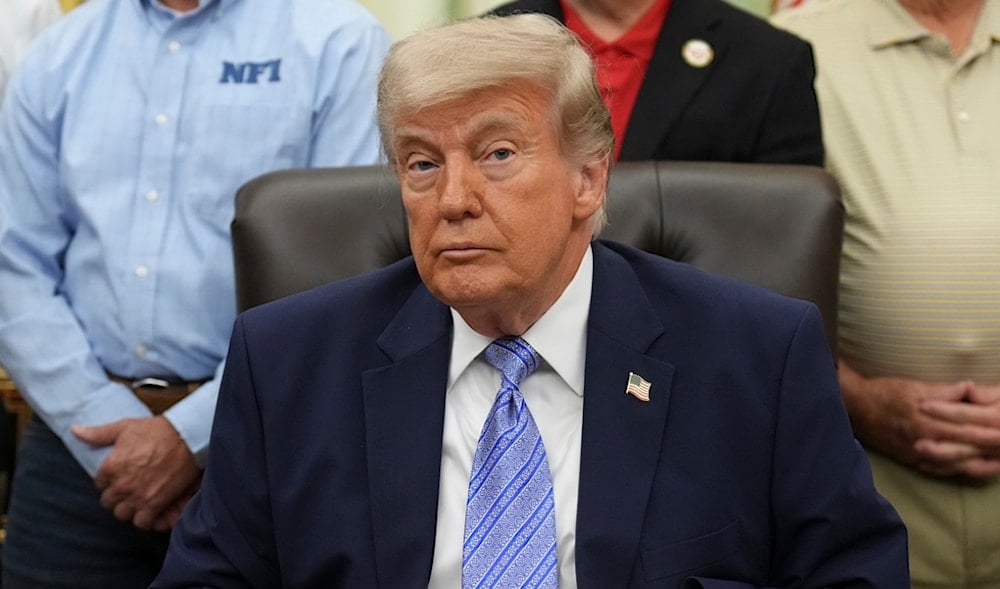
US President Donald Trump attends an event about loosening a federal refrigerant rule, in the Oval Office at the White House, Thursday, May 21, 2026, in Washington. (AP)
US Senate Republicans abandoned plans on Thursday to advance a major immigration enforcement funding package after an internal clash over a proposed $1.7 billion compensation fund tied to allies of Donald Trump who claimed they were unfairly targeted by federal agencies.
The fund announcement initially triggered immediate criticism from Democrats and watchdog groups, who said the arrangement was unconstitutional and potentially corrupt. Nearly 100 Democratic lawmakers filed a brief urging a judge to block the settlement, arguing it could funnel taxpayer money into politically motivated claims.
The collapse marked a significant setback for Trump and Republican leaders, who had aimed to pass roughly $70 billion in funding for agencies including Immigration and Customs Enforcement (ICE) and the US Border Patrol before lawmakers left for a week-long recess.
Why the immigration funding bill collapsed
The dispute exposed unusual public divisions within the Republican Party, as some senators resisted provisions they warned could become politically damaging in an election cycle shaped by concerns over the cost of living.
The main point of contention was Trump’s proposed “anti-weaponization fund,” which critics said could channel taxpayer money to individuals convicted in connection with the US Capitol riots in 2021.
Democratic senators Mark Warner and Tim Kaine accused Republicans of pushing a partisan package that included a perceived politically motivated compensation scheme, arguing it would reward Trump-aligned figures while expanding immigration enforcement spending.
The debate unfolded as Republicans struggled to maintain internal unity, with acting attorney general Todd Blanche meeting with senators to ease concerns over the proposed fund. However, several lawmakers remained unconvinced.
White House ballroom still causing friction
A second flashpoint in the negotiations centered on a proposal for up to $1 billion in funding tied to security arrangements for Trump's planned White House ballroom project.
The proposal quickly became politically sensitive, with several Republican lawmakers warning it could be seen as taxpayer support for a symbolic or personal presidential project rather than a strictly national security requirement. Senate leaders ultimately concluded the measure lacked sufficient support to advance and was dropped from the broader package before the talks collapsed.
Democrats sharply criticized the idea, tying it to broader spending priorities under Trump’s agenda. Senate Minority Leader Chuck Schumer said, “The American people will see it in black and white. Our contrast will be glaringly clear,” adding, “Ballroom Republicans are not working for you. They’re busy fighting for Trump. Democrats are fighting for you.”
Warner and Kaine also condemned the wider package in a joint statement, saying Republicans were “openly fighting amongst themselves over a bill that would pour billions more into President Trump’s extreme immigration agenda.”
However, Republicans defended the broader security-related spending as legitimate, but acknowledged the ballroom proposal complicated already fragile negotiations, contributing to the broader collapse of the immigration funding deal.
Iran vote canceled amid divisions
The setback also extended to the House of Representatives, where Republicans abruptly canceled a vote related to a proposal on US military aggression against Iran, prompting sharp criticism from Democrats over the party’s legislative strategy.
The collapse of the immigration package underscores growing friction within the Republican Party as Trump continues to exert influence over legislative priorities while also targeting internal critics in primary races.
Democrats, led by Senate Minority Leader Chuck Schumer, said the episode reflects a widening contrast in priorities between the two parties, with Republicans focused on Trump-aligned initiatives while Democrats emphasize economic pressures facing households.
Read more: Trump delays reignition of war on Iran after White House divisions


