
Senator blocks Trump's White House ballroom security funding
 4 Min Read
A Senate official has removed proposed security funding for Donald Trump’s White House ballroom from a major spending bill, dealing a setback to Republican efforts and intensifying political debate over the controversial project.
-
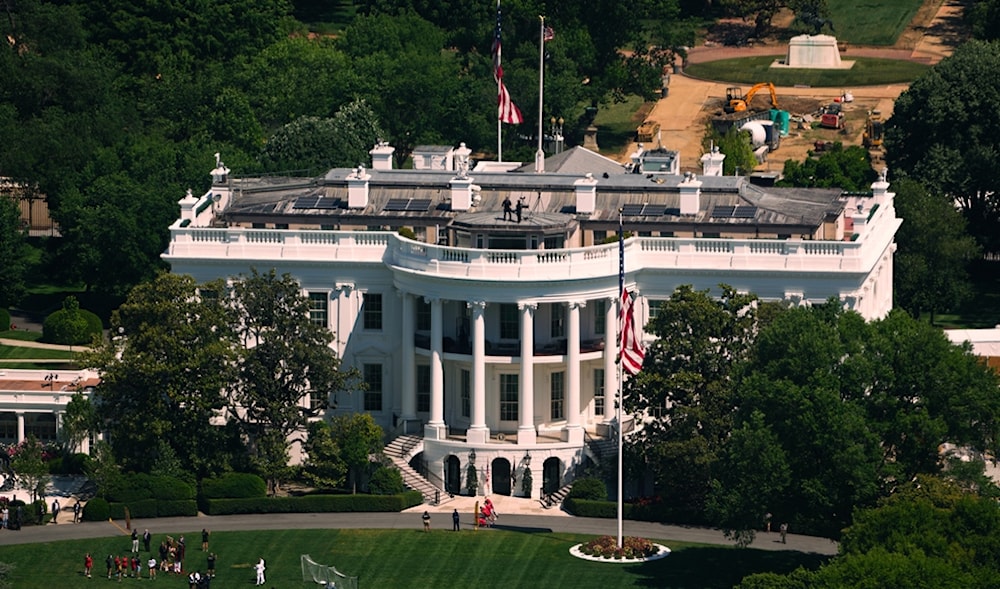
Construction on the new White House ballroom is seen from the Washington Monument, Tuesday, May 5, 2026, in Washington. (AP)
A US Senate official on Saturday removed a security funding provision tied to President Donald Trump’s planned White House ballroom from a major spending package, according to Democratic lawmakers, dealing a setback to Republican efforts to allocate taxpayer money for the controversial project.
The ruling by Senator Elizabeth MacDonough reportedly strikes the proposed funding for security upgrades related to the ballroom, which Republicans had sought to include in the legislation.
Ballroom plan faces procedural setback
Trump has stated that construction of the ballroom would be financed through $400 million in private donations. However, Senate Republicans have also proposed $1 billion in taxpayer funding for the Secret Service to cover security upgrades connected to the ballroom and other structures planned beneath it.
According to Democrats, the parliamentarian determined that the security funding provision falls under Senate rules requiring 60 votes for passage, making it harder to include in a party-line vote. Republicans currently hold a 53–47 majority in the Senate.
The representative plays a key role in interpreting Senate rules, including determining whether specific legislative provisions are allowed under budget procedures.
Political divide overtakes project
Democrats have criticized the ballroom proposal as an unnecessary and costly project, particularly at a time when Americans are facing rising living costs, including higher fuel prices. Trump, on the other hand, has defended the planned ballroom as “the finest Building of its kind anywhere in the World.”
Senator Jeff Merkley, the top Democrat on the Senate Budget Committee, said Republicans may attempt to revise the legislation to comply with parliamentary rules, while Democrats are prepared to challenge any changes.
If Republicans fail to restore the provision, the ballroom-related funding could be excluded from a broader $72 billion spending package expected to reach the Senate floor. The legislation is largely focused on immigration enforcement and is expected to face a party-line vote.
Republicans have been using complex budget procedures to advance the bill without Democratic support. Democrats have opposed funding elements tied to Trump’s immigration agenda, citing broader policy disputes.
GOP spawns security justification
Republicans have also argued that funding for ballroom-related security is necessary for presidential protection. They referenced an April incident in which a gunman reportedly stormed a black-tie media event in Washington attended by Trump.
The administration has defended the project, stating that the ballroom will modernize White House infrastructure, improve security, and reduce reliance on temporary structures for large events. Completion is projected for around September 2028, near the end of Trump’s second term.
At the same time, Trump reportedly ordered the demolition of the White House East Wing, originally constructed in 1902 during Theodore Roosevelt’s presidency and later expanded under Franklin Roosevelt, to make way for the ballroom project.
Consequently, the National Trust for Historic Preservation has filed a lawsuit challenging the project, arguing that neither the president nor the National Park Service has authority to remove historic structures or construct major new facilities without explicit congressional approval.
In April, a US appeals court allowed construction to continue after a lower court had issued an order to pause the project.
Pet projects while war costs rise
Democrats, seeking to gain control of Congress in the upcoming midterm elections, are highlighting Republican support for the ballroom project. They argue it demonstrates a disconnect from voters concerned about cost-of-living pressures, including rising energy costs following the joint war against Iran with "Israel".
The $400 million ballroom project came soon after the Trump administration sought an additional $200 billion in funding for the war on Iran, a request that sparked strong opposition in Congress from both Democrats and some Republicans.
Administration officials reportedly told lawmakers that the first six days alone cost more than $11 billion, with the total cost now surpassing $70 billion.
While Trump asks American taxpayers to fund a $200 billion war and a $400 million ballroom, the administration has simultaneously reduced spending on social services and foreign aid. For critics, the contrast was apparent: a president willing to spend unlimited sums on a war of choice and on renovating his own residence, while cutting programs that help ordinary Americans.


