
Trump admin appeals halt of $400 mln White House ballroom
 4 Min Read
The Trump administration is appealing a judge's order to halt construction of a $400 million White House ballroom, arguing that the facility's bomb shelters and military installations are essential for protecting the president from "missiles, drones, and other threats."
-
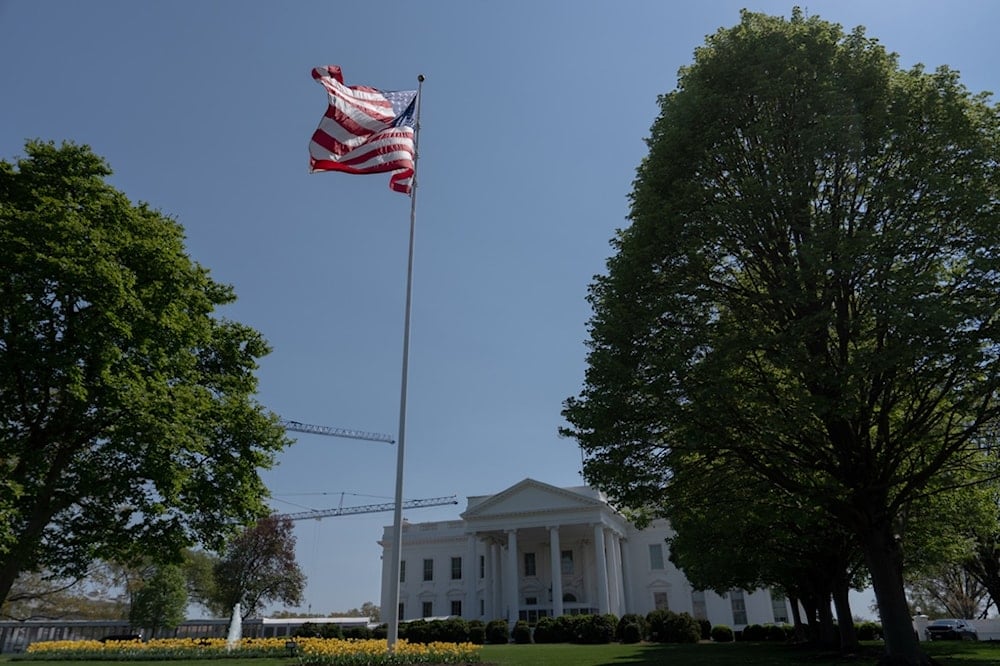
Cranes being used to construct the new White House ballroom are seen around the White House, Saturday, April 4, 2026, in Washington. (AP)
Donald Trump's administration is arguing that a judge's order to halt construction of a $400 million White House ballroom creates a security risk for the US president as his team asks a federal appeals court to pause the ruling.
In a motion filed on Friday, US National Park Service lawyers say that the federal judge's order to suspend construction of the new facility is "threatening grave national-security harms to the White House, the president and his family, and the president's staff."
"Time is of the essence!" the lawyers write, citing materials that will be installed to make a "heavily fortified" facility. The ballroom construction also includes bomb shelters, military installations, and a medical facility, according to the filing.
Judge orders pause
US District Judge Richard Leon in Washington on Tuesday ordered the temporary pause of the construction project, which includes demolishing the White House's east wing. He concluded that unless Congress approves the project, the preservationist group suing to stop it is likely to succeed on the merits of its arguments because "no statute comes close to giving the president the authority he claims to have."
The judge suspended enforcement of his order for 14 days, acknowledging that Trump's administration would appeal his decision.
Leon also addressed national security in his ruling. He said that he reviewed information that the government privately submitted to him and concluded that halting construction would not jeopardize national security. He exempted any construction work that is necessary for the safety and security of the White House from the scope of the injunction.
Security arguments
The National Park Service argues in its motion that the president has "complete authority to renovate the White House" and that the current state of the grounds, which is an open construction site, makes it harder to protect the White House.
"Canvas tents, which are necessary without a ballroom, are significantly more vulnerable to missiles, drones, and other threats than a hardened national security facility," says the NPS's motion.
The Trump administration is asking the appeals court to make a decision on its request by Friday. It also asked that the 14-day suspension of Leon's order be extended by another two weeks so that the case can be taken to the US Supreme Court.
Trump lashed out at the ruling but also noted that it would allow work on underground bunkers and other security measures around the White House grounds to continue. Those, however, will be paid for by taxpayers. Trump has pledged that he, along with private donors, will cover the costs for the ballroom construction.
A war that costs billions while Trump pursues pet projects
The $400 million ballroom project comes soon after the Trump administration sought an additional $200 billion in funding for the war on Iran, a request that sparked strong opposition in Congress from both Democrats and some Republicans.
The Pentagon's request would make the aggression the most expensive US military engagement since the wars in Iraq and Afghanistan. Administration officials reportedly told lawmakers that the first six days alone cost more than $11 billion, with daily expenses now estimated between $1 billion and $2 billion.
The push for war funding also comes as the US national debt exceeded a record $39 trillion, marking an unprecedented milestone just weeks into the conflict. Trump had promised on the campaign trail to reduce the debt, but his administration is now proposing to pour hundreds of billions more into a war that has no clear end in sight.
While Trump asks American taxpayers to fund a $200 billion war and a frivolous $400 million ballroom, the administration has simultaneously reduced spending on social services and foreign aid. For critics, the contrast could not be starker: a president willing to spend unlimited sums on a war of choice and on renovating his own residence, while cutting programs that help ordinary Americans.
Read more: War on Iran may actually cost the US trillions: The Intercept


