
South Korea seeks US deal for nuclear-powered submarines
 5 Min Read
South Korea is seeking a US legal exemption to pursue nuclear-powered submarines, citing the Australian precedent, amid rising domestic pressure for stronger nuclear deterrence and deeper integration into a US-Japan-led security framework aimed at countering the DPRK and China.
-
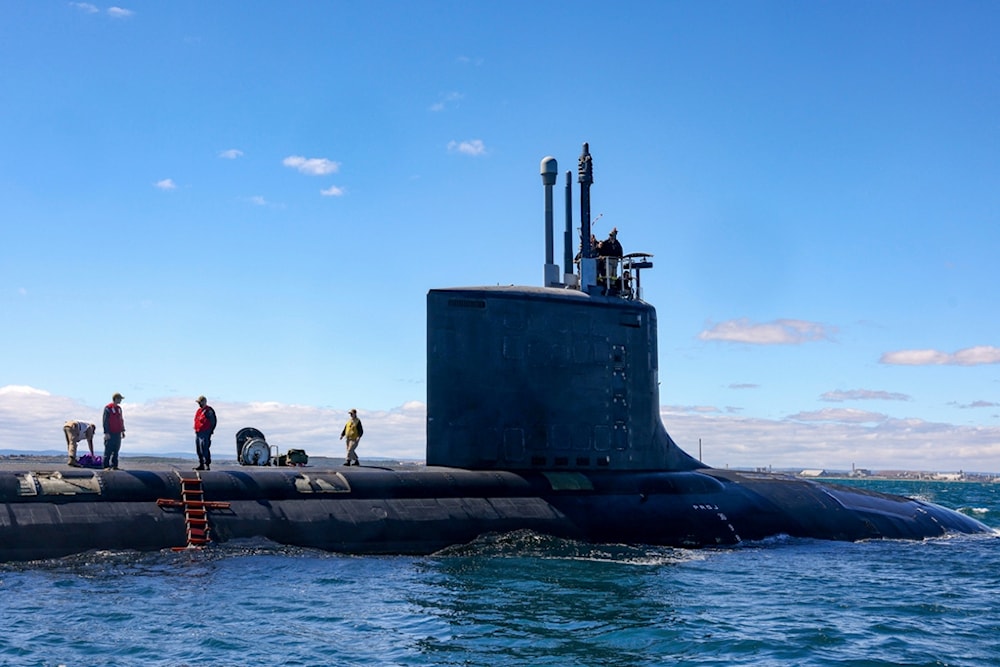
USS Minnesota (SSN-783) Virginia-class fast attack submarine, off the west Australian coast, on March 16, 2025. (Colin Murty/Pool Photo via AP)
South Korea is weighing the option of negotiating a standalone nuclear agreement with the United States to pursue nuclear-powered submarines, a move that would replicate the legal exemption Washington granted Australia under the AUKUS military pact, Yonhap News Agency reported on Wednesday.
The issue was raised by South Korean National Security Adviser Wi Sung-lac upon his arrival in Washington on Tuesday, where he is holding talks with US officials. His visit follows a joint fact sheet issued last month after the second summit between South Korean President Lee Jae-myung and US President Donald Trump, which outlined expanded trade and security cooperation.
Referring directly to the Australian precedent, Wi said Seoul may require a similar exemption under US law to move forward. "In the case of Australia, an exception was granted in accordance with Section 91 of the US Atomic Energy Act, which requires a separate bilateral agreement … Since we may also need that, I will discuss such a possibility," he told reporters.
Nuclear exception
Australia secured that exemption through the 2021 AUKUS pact with the US and the UK, allowing it to acquire nuclear-powered, though not nuclear-armed, submarines despite being a non-nuclear-weapon state. The deal marked a sharp departure from long-standing US non-proliferation practice and triggered backlash both internationally and domestically. In Australia, critics have warned of ballooning costs, prolonged delivery timelines, environmental risks, and the country’s increasing subordination to US military planning aimed at confronting China.
South Korea operates under a similar constraint. Its existing civil nuclear cooperation agreement with Washington limits nuclear materials strictly to peaceful use, effectively barring military applications such as naval propulsion. Any submarine program using nuclear reactors would therefore require a new and separate legal framework negotiated directly with the United States.
When asked whether Seoul was considering the establishment of a dedicated consultative mechanism with Washington to advance the submarine initiative, Wi stressed the need to accelerate engagement, while acknowledging that formal structures have yet to be created. "There are preparations from our side, and I will see what is going on with the US side … While there have not yet been talks on launching consultative bodies for different issues, I will look for ways to expedite consultations," he said.
We also highlighted unresolved disputes over uranium enrichment and the reprocessing of spent nuclear fuel, issues that have long reflected US efforts to maintain control over South Korea’s nuclear capabilities. While broader understandings exist, he noted that concrete steps are still lacking.
Nuclear pressure mounting
The submarine push is unfolding amid mounting domestic pressure inside South Korea over nuclear deterrence, driven by persistent tensions on the Korean Peninsula and the DPRK’s advancing missile and nuclear programs. Opinion polls in recent years have shown a majority public support for South Korea acquiring its own nuclear weapons, while senior political figures have increasingly questioned whether dependence on US security guarantees alone is sustainable.
Although the South Korean government continues to reaffirm its commitments under the Nuclear Non-Proliferation Treaty, analysts view the pursuit of nuclear-powered submarines as a strategic hedge, a way to build advanced nuclear-related capabilities while stopping short of an explicit nuclear weapons program.
Moreover, Washington has insisted that any cooperation with Seoul would remain within non-proliferation limits and would not involve assistance in developing nuclear arms. Instead, the US has intensified its oversight of South Korea’s deterrence posture by expanding nuclear consultation mechanisms and increasing the deployment and visibility of US strategic assets in the region, moves widely seen as aimed at preventing Seoul from pursuing independent nuclear options.
Strategic containment
These developments are also tied to the deepening US-Japan-South Korea security alignment, which has been increasingly institutionalized through trilateral summits, intelligence-sharing arrangements, and joint military exercises. While the DPRK is cited as the immediate justification, critics argue that the alliance functions as a broader containment structure targeting China and has become a major source of regional tension rather than stability.
Within this US-led security architecture, nuclear-powered submarines would significantly enhance South Korea’s integration into allied naval operations by extending operational reach and undersea surveillance capacity. However, analysts warn that deeper military integration risks eroding Seoul’s strategic autonomy and further entrenching the Korean Peninsula within escalating great-power rivalries.
Though discussions remain at an exploratory stage, the initiative reflects a wider shift in regional security dynamics, raising unresolved questions about deterrence, nuclear restraint, and whether expanding military blocs are amplifying, rather than reducing, instability in Northeast Asia.
Read more: South Korea, US hold joint nuclear, radiological terrorism drill


