
Strait of Hormuz blockade left 880M barrels unreplaced: Aramco
 2 Min Read
Saudi Aramco CEO Amin Nasser says 880 million barrels of liquid hydrocarbons were irreversibly removed from the global market.
-
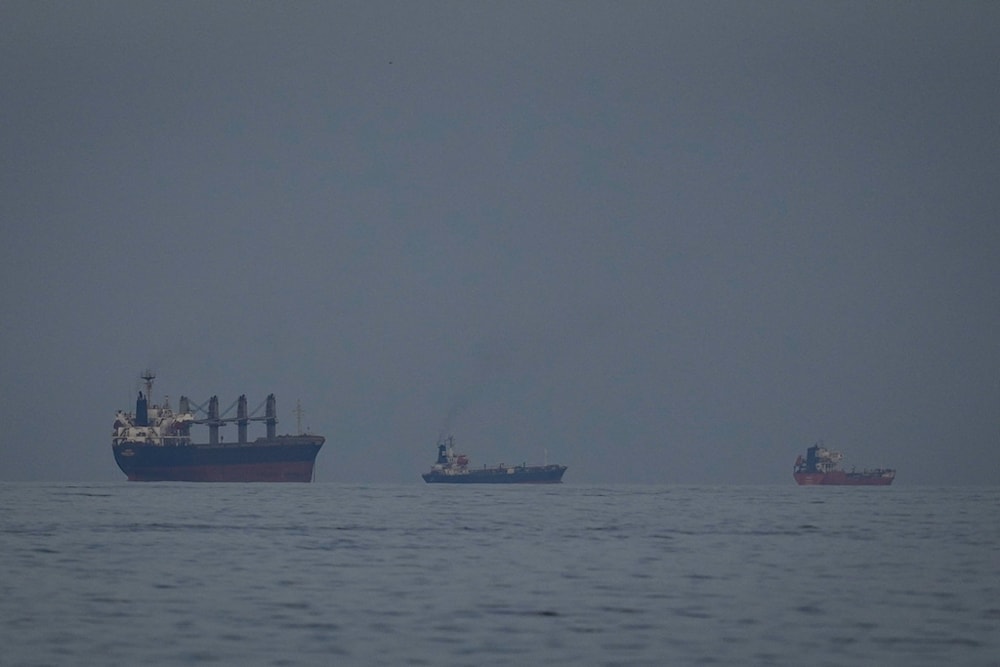
Oil tankers and ships line up in the Strait of Hormuz as seen from Khor Fakkan, United Arab Emirates, Wednesday, March 11, 2026. (AP Photo/Altaf Qadri)
Approximately 880 million barrels of liquid hydrocarbons were irreversibly removed from the global market, Saudi Aramco CEO Amin Nasser said, following the US aggression against Iran and the blockade of the Strait of Hormuz.
According to a presentation published on Monday, the war on Iran removed a total of 1.442 billion barrels from global oil markets. Part of the supply shortfall was offset through export rerouting, inventory use, and other emergency measures.
Saudi Aramco increased deliveries through the East-West pipeline to its maximum production capacity of 7 million barrels per day. Despite those efforts, around 880 million barrels remained unreplaced, the presentation showed.
Oil market recovery may take months
Moreover, Nasser said oil production outside the Gulf has not increased despite rising prices, limiting the market’s ability to compensate for lost supplies.
He added that even if the Strait of Hormuz reopens immediately, global oil markets would require several months to rebalance. Keeping the Strait closed for another six to eight weeks, he said, could delay the recovery of global oil markets until next year.
The sudden loss of nearly one billion barrels has pushed prices above $100 a barrel and triggered inflationary pressures across the world as a result of the Israeli-US aggression against Iran.
Brent crude rose more than 3% to surpass $104 per barrel, while US West Texas Intermediate also recorded strong gains, reflecting growing market anxiety over prolonged instability in West Asia.
Meanwhile, investment bank Morgan Stanley has warned that global oil markets are entering a "race against time" because the factors that have so far prevented prices from spiking even higher may no longer hold if the Strait of Hormuz remains closed into June, despite nearly one billion barrels of supply having already been lost since the US-Israeli war on Iran began.


