
Sudan war drives 70% into poverty as crisis deepens: UN
 3 Min Read
UN data reveals 70% of Sudanese now live in poverty as war between the Army and RSF devastates livelihoods, worsens hunger, and displaces millions.
-
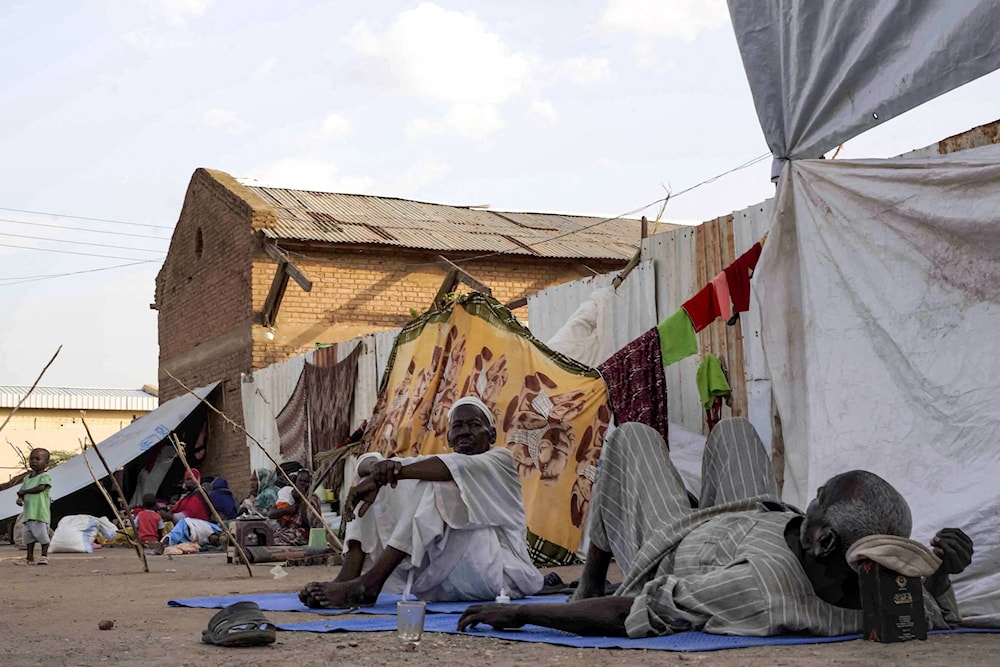
Men sit and lie outside shelters at the Hasahisa secondary school on July 10, 2023, which has been made into a make-shift camp to house people fleeing violence in war-torn Sudan. (AFP)
Around 70 percent of Sudan’s population is now living in poverty, according to a senior official from the United Nations Development Programme, reflecting a near doubling since the outbreak of war.
“Before the war, we were probably looking (at) around 38 percent of people living in poverty, and now we are estimating about 70 percent,” Luca Renda, the agency’s representative in Sudan, told AFP.
The figures are based on a poverty threshold of approximately $4 per day, with at least a quarter of the population surviving on less than half that amount, underscoring the depth of the economic collapse.
War devastates livelihoods and income levels
The conflict between the Sudanese army and the paramilitary Rapid Support Forces has entered its fourth year, leaving widespread destruction across the country’s economic and social fabric.
According to the UNDP report, nearly seven million people were pushed into extreme poverty in 2023 alone. Average income levels have sharply declined, falling back to levels last recorded in 1992.
The report further indicates that extreme poverty rates have surpassed those seen during the economic crises of the 1980s, highlighting the scale of long-term regression caused by the war.
Conditions are particularly severe in conflict zones such as South Kordofan and North Darfur, where deprivation rates range between 70 and 75 percent.
These areas have become central battlegrounds, with sustained violence disrupting agricultural production, trade routes, and basic services. The concentration of poverty in these regions reflects both the intensity of fighting and the breakdown of local economies.
Read more: US designates Sudanese Muslim Brotherhood 'terrorist organization'
Humanitarian collapse and food insecurity
The war has killed tens of thousands and displaced more than 11 million people, while pushing large parts of the country toward famine conditions.
More than 21 million people are now facing acute food insecurity, according to the UN, and approximately two-thirds of the population requires urgent humanitarian assistance.
“These figures are not abstract,” Renda said. “They reflect families torn apart, children out of school, livelihoods lost, and a generation whose prospects are steadily diminishing.”
The statement captures the broader social consequences of the conflict, extending beyond immediate economic hardship to long-term structural damage.
Stalled political process and international response
An international conference is scheduled to take place in Berlin, with donors expected to discuss pathways to revive stalled negotiations and mobilize aid.
However, analysts note limited signs of de-escalation. Fighting has intensified in regions including Kordofan and Blue Nile, while UN data indicates that drone attacks killed more than 500 civilians between January and mid-March.
“Three years into this conflict, we are not just facing a crisis -- we are witnessing the systematic erosion of a country's future,” Renda said.


