
Susie Wiles' interviews reveal deep divisions inside Trump admin
 3 Min Read
White House Chief of Staff Susie Wiles delivers candid, wide-ranging interviews revealing internal divisions in the Trump administration, including critiques of top officials and comments on Venezuela policy and political retribution.
-
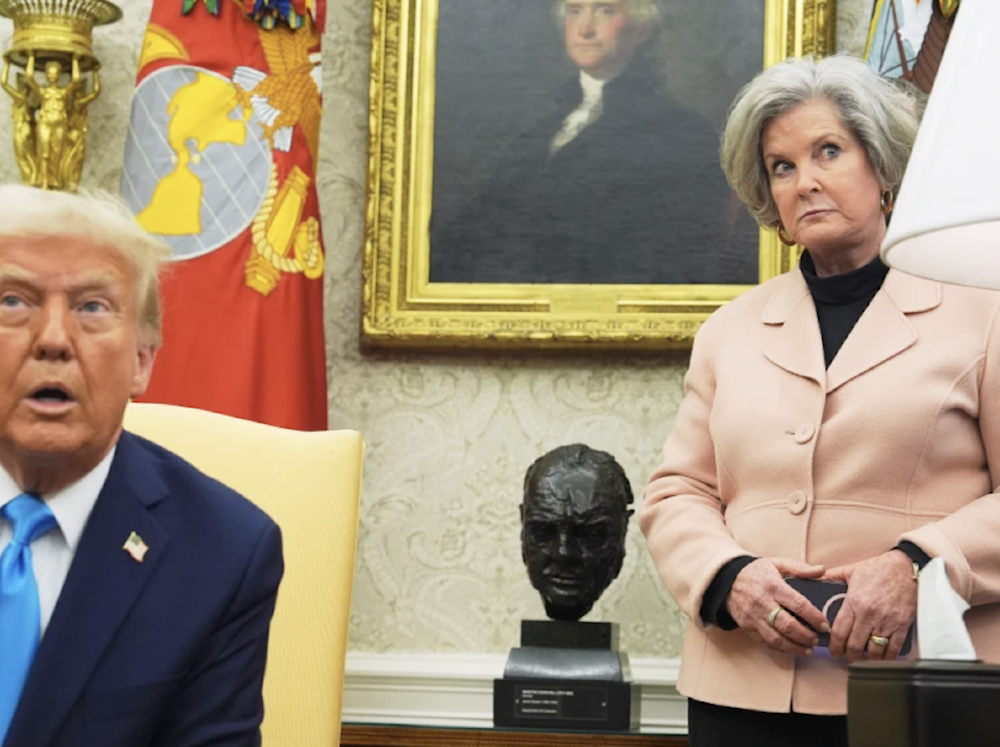
White House chief of staff Susie Wiles listens as President Trump meets with Benjamin Netanyahu in the Oval Office on February 4, 2025. (AP)
White House Chief of Staff Susie Wiles has ignited turmoil within the Trump administration by openly criticizing senior officials and revealing controversial internal assessments in a series of Vanity Fair interviews. Her candid remarks have prompted damage control efforts from the West Wing and sparked debate over President Donald Trump’s leadership style and policy direction.
Wiles breaks silence in wide-ranging profile
In a rare and extensive on-the-record interview with journalist Chris Whipple, Wiles, who has long avoided public comment, spoke frankly about internal disagreements within the Trump administration, including over the rollout of tariffs and broader policy priorities.
Describing parts of the piece as “thinking out loud,” Wiles acknowledged sharp internal debate over Trump’s trade war strategy, saying there was “a huge disagreement” about the tariffs and their impact.
Despite later dismissing the Vanity Fair profile as a “hit piece,” Wiles and other West Wing officials did not contest the substance of her comments. Press Secretary Karoline Leavitt defended Wiles’ contributions, calling her leadership “steady” and claiming she helped Trump achieve “the most successful first 11 months in office of any President in American history.”
Candid critiques of Trump circle
Wiles raised eyebrows with blunt characterizations of members of Trump’s inner circle:
Vice President JD Vance was labeled a “conspiracy theorist.”
Budget architect Russell Vought was called “a right-wing absolute zealot.”
Tech mogul Elon Musk was described as “an odd, odd duck,” with references to personal habits that drew media attention.
Venezuela and regime change remarks
Wiles also weighed in on US policy toward Venezuela, stating that Trump wants to sustain pressure on President Nicolas Maduro until he “cries uncle,” suggesting that regime change remains a long-term objective of Washington’s approach beyond counter-narcotics operations in the Caribbean.
She claimed the administration is “very sure we know who we’re blowing up,” referring to recent strikes on alleged drug-running vessels, actions that have drawn scrutiny from Congress for civilian casualties.
Epstein, political retribution, and internal discord
On other fronts, Wiles commented on the controversy surrounding Jeffery Epstein, saying Trump was not implicated in wrongdoing in the files she has seen. She also acknowledged that cases brought by the Justice Department against Trump critics, such as New York Attorney General Letitia James and former FBI Director James Comey, were perceived internally as political retribution. Wiles described efforts to rein in retaliatory actions during Trump’s early months in office.
Perhaps most striking was Wiles’ characterization of Trump’s psyche. Using personal analogy, she described Trump as having “an alcoholic personality,” meaning he believes there is “nothing he can’t do.” The remark underscores her portrayal of a president operating with boundless confidence, for better or worse.
Administration pushback and public reactions
Responding to the profile, Vance defended Wiles’ loyalty and commitment to Trump’s agenda, stressing that he has “never seen her be disloyal to the president of the United States.” He called her an indispensable member of the administration.
Wiles’ comments have raised broader questions about internal cohesion within the Trump White House and the administration’s tone toward both foreign policy and domestic political opponents.


