
Elon Musk rejects return to Trump's DOGE
 4 Min Read
Elon Musk says the DOGE initiative under the Trump administration was only “somewhat successful” and confirms he won’t return to lead it again.
-
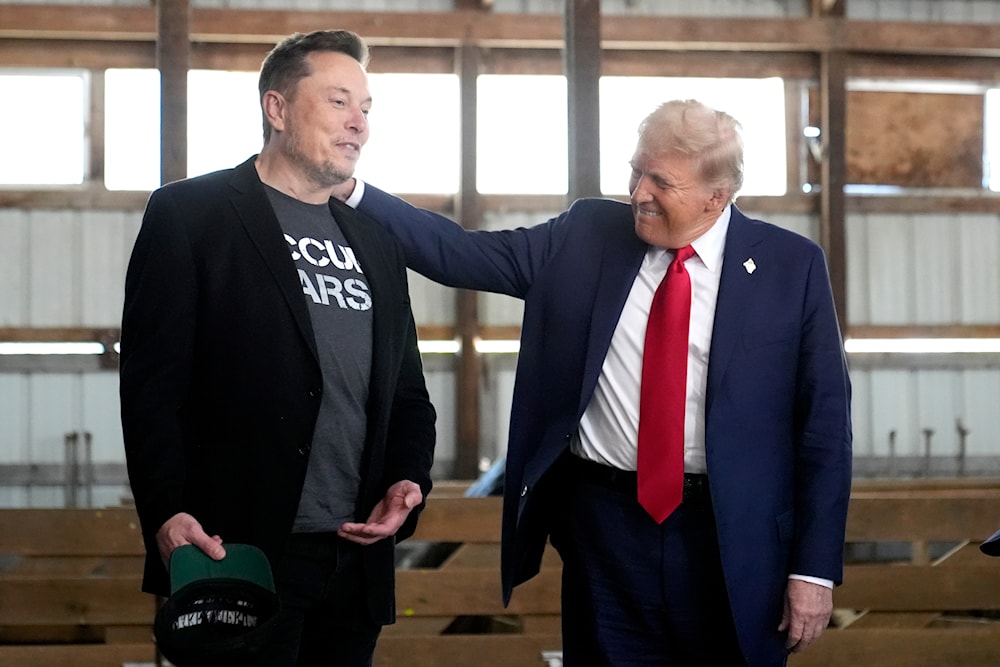
Tesla and SpaceX CEO Elon Musk and Donald Trump attend a campaign event at the Butler Farm Show, October 5, 2024, in Butler, Pennsylvania. (AP)
The US Department of Government Efficiency was only “a little bit successful” and is not a role he would take on again, Tesla CEO Elon Musk said on Tuesday, describing the Trump cost-cutting initiative as limited in impact.
Speaking on a podcast hosted by former Trump administration official Katie Miller, Musk said he now believes he should have focused on his companies instead of leading the project, joking that “they wouldn’t have been burning the cars” had he stayed in the private sector.
Musk said the initiative, known as DOGE, did manage to halt “a lot of funding that really just made no sense,” describing the effort as “somewhat successful” but ultimately limited in impact.
When asked whether he would be willing to return to lead DOGE in a potential future administration, Musk was unequivocal, responding: “No, I don’t think so.”
The rise and fall of DOGE
In the run‑up to the 2024 election, Elon Musk emerged as one of the biggest financial backers of Donald Trump's campaign. Musk helped found America PAC, a super‑PAC that funneled millions into support for Trump and other Republican candidates. He also used his social‑media platform X to amplify pro‑Trump messaging, hardline political views, and to mobilize support in key swing states.
When Trump won the 2024 election and returned to the White House, Musk’s influence translated into official policy action. In August 2024, still during the campaign, Musk floated the idea of a government “efficiency commission” to overhaul the federal bureaucracy and reduce wasteful spending. After Trump’s inauguration on January 20, 2025, that concept was formalized through an executive order establishing the Department of Government Efficiency, known as DOGE.
In the early months of the new administration, DOGE operated aggressively. Under Musk’s informal leadership, teams, often composed of engineers and staff from his private companies, were embedded across federal agencies to identify inefficiencies, cancel contracts, and initiate mass layoffs.
Entire agencies were dismantled, including the Millennium Challenge Corporation, while programs across departments were abruptly cut. In regulatory bodies like the Securities and Exchange Commission, DOGE representatives pushed for deep structural changes, raising concerns about political interference in independent institutions.
However, the initiative quickly drew criticism; DOGE claimed to have saved tens of billions of dollars, but provided no transparent or independently verifiable data to support those claims. The lack of oversight, the speed of implementation, and the extensive purging of career staff raised alarm among lawmakers, watchdogs, and the public. Allegations of mismanagement and overreach soon clouded the effort’s legitimacy.
Trump and Musk's fallout
By mid-2025, the alliance between Musk and Trump began to fracture. Musk's approach, seen by some within the administration as too disruptive and politically damaging, led to tensions behind the scenes. Musk formally exited DOGE by late May, and many of his appointees followed. Without his leadership, the initiative lost momentum.
By early June 2025, the tension between Musk and Trump had become unmistakably public when Musk began criticizing Trump’s major tax and spending package, known as the “Big, Beautiful Bill”, calling it a “disgusting abomination.” On June 5, 2025, Musk escalated matters by posting on X that Trump’s name appeared in files related to the Jeffrey Epstein investigation, writing: “@realDonaldTrump is in the Epstein files. That is the real reason they have not been made public. Have a nice day, DJT!”
In November 2025, the Office of Personnel Management confirmed that DOGE had been disbanded eight months before its mandate was set to expire, with its remaining functions either dissolved or absorbed by other agencies.


