
Syrian Alawite council says de-facto govt responsible for Homs attack
 3 Min Read
The Supreme Alawite Islamic Council condemns the Homs mosque attack, says over 30 were wounded, and calls for urgent international action and protection.
-
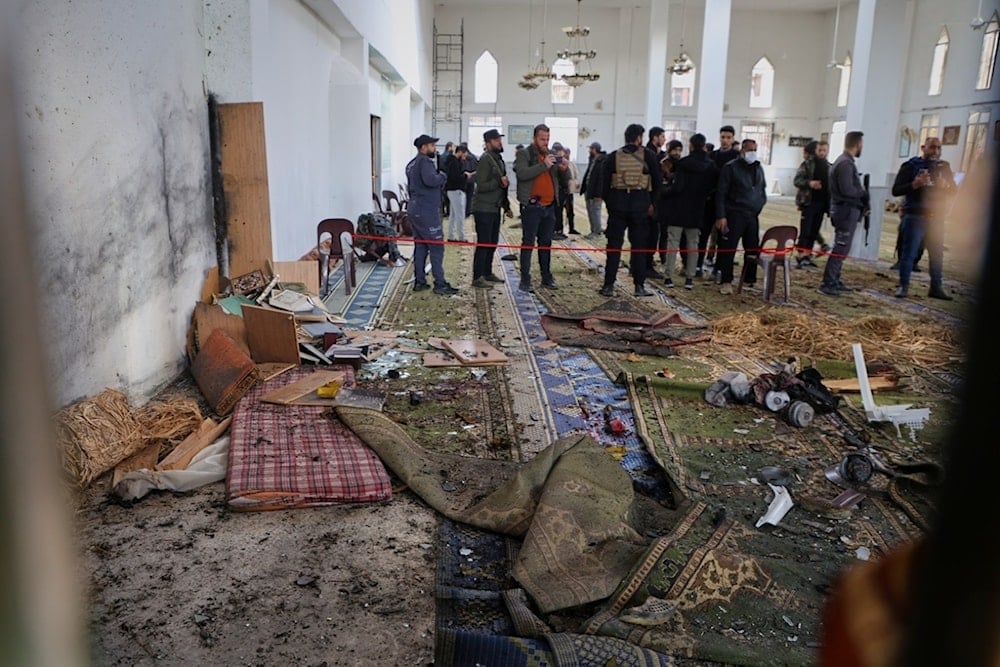
Syrian security forces inspect the damage after an explosion in the Imam Ali bin Abi Talib Mosque in a predominantly Alawite area of the Wadi al-Dhahab neighborhood in Homs, Syria, Friday, December 26, 2025 (AP)
The Supreme Alawite Islamic Council issued a statement on Friday condemning what it described as repeated terrorist crimes against members of the Alawite community, holding the de facto authorities fully and directly responsible and warning that the violence is the inevitable result of “policies of exclusion, incitement, and coercion.”
The council pointed to the terrorist attack on the Imam Ali ibn Abi Talib Mosque in the Wadi al-Dhahab area of Homs, which it said has so far resulted in “more than 30 serious injuries, including 12 martyrs among children, men, and the elderly.”
It said the assault represents a continuation of what it called organized takfiri terrorism targeting the Alawite community and other Syrian components in an escalating pattern.
The mosque is frequented mainly by members of the Alawite community.
Attack mirrors previous sectarian violence
According to the statement, the nature of the attack mirrors previous incidents, including the bombing that killed three US soldiers at the al-Tanf base and the attack on Mar Elias Church in Damascus’s Douweila neighborhood, asserting that this “confirms unity of method and perpetrator and refutes claims that these crimes are isolated or individual acts.”
The council called on the international community, the United Nations Security Council, international organizations, and global decision-makers to take “immediate and decisive action to stop the bloodshed” and to place Syria’s coastal region under international protection.
It also warned that “these criminal acts will not be met with silence indefinitely,” stressing that continued violence “will be answered with a response proportionate to the scale of injustice and aggression,” and that “patience in the face of bloodshed and the dignity of peoples has limits that cannot be crossed.”
Religious minorities reel under secterianism in Syria
The explosion comes against the backdrop of recent sectarian attacks, which targeted Alawites, Christians, and Druze in repeated massacres and violations.
On June 22, 2025, a suicide bomber targeted the Mar Elias Greek Orthodox Church in the Dweilaa neighborhood of Damascus, killing at least 25 people and injuring more than 60 others after opening fire on worshippers during a service before detonating an explosive belt. The attack was claimed by a group calling itself “Saraya Ansar al-Sunna,” believed to be linked to the Islamic State group.
In early October, unknown assailants vandalized the Church of Saint Cyril in Damascus’ Qassaa neighborhood, damaging a statue of the Virgin Mary, triggering widespread public outrage. Earlier this month, the Church of Saint Michael was also set on fire in what was described as the second such incident within weeks, amid a volatile security environment.
Since the fall of Bashar al-Assad’s rule, human rights groups and UN investigators have reported serious violations against Syria’s Alawite community, including targeted killings, arbitrary arrests, and forced displacement, particularly in coastal areas, such as Latakia and Tartus. Rights organizations say the abuses appear sectarian in nature, with dozens of civilians killed and thousands displaced amid a deteriorating security situation, raising concerns that some acts may amount to war crimes.


