
Trump has 'lost control of the war', says US Sen. Chris Murphy
 4 Min Read
A US senator warned that Washington underestimated Iran’s capacity to retaliate after the US-Israeli war on the Islamic Republic.
-
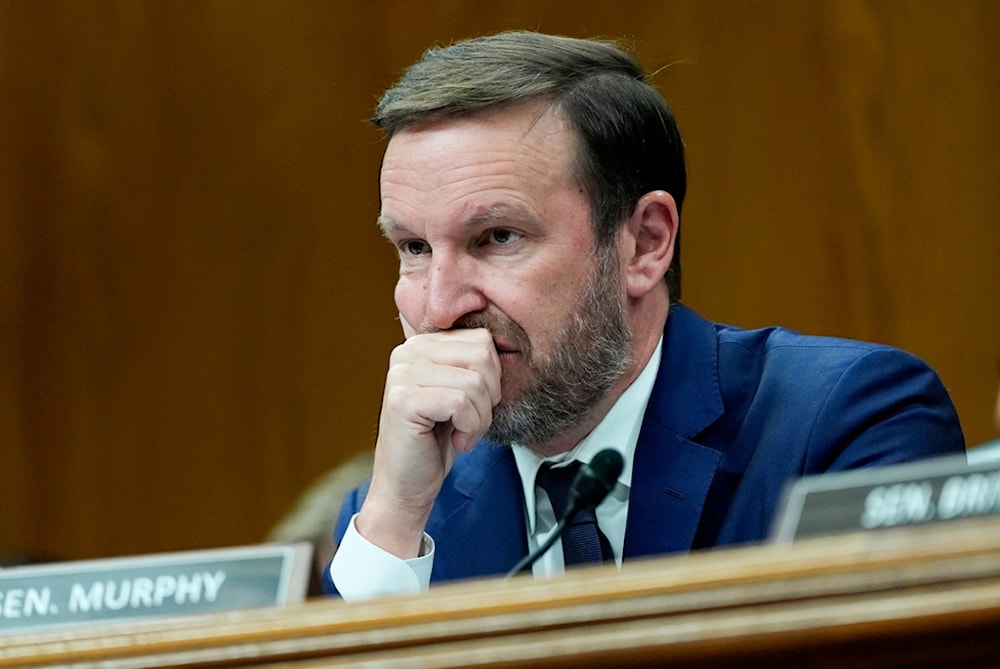
Sen. Chris Murphy, D-Conn., listens as Homeland Security Secretary Kristi Noem speaks during a Senate Appropriations Subcommittee on Homeland Security oversight hearing, Thursday, May 8, 2025, on Capitol Hill in Washington (AP Photo/Julia Demaree Nikhinson)
A senior US lawmaker has suggested that Washington underestimated Iran’s capacity to respond to the US-Israeli aggression, warning that Tehran’s ability to disrupt one of the world’s most vital energy corridors has exposed major flaws in the war strategy.
In a thread on X, Chris Murphy argued that the Trump administration ignored warnings that attacking Iran could trigger retaliation in the Strait of Hormuz, a narrow waterway through which roughly one-fifth of global oil supply normally passes.
It’s crystal clear now that Trump has lost control of this war. He badly misjudged Iran’s ability to retaliate. The region is on fire.
— Chris Murphy 🟧 (@ChrisMurphyCT) March 14, 2026
1/ I’m going to explain to you in this🧵what I’ve learned - in part from closed door briefings - about the four biggest current crises.
The senator cited briefings given to the White House before the war began, saying senior US military officials cautioned that Iran could employ mines, drones, and missiles to disrupt shipping through the strait.
“Before the U.S. went to war, Gen. Dan Caine … told President Trump that an American attack could prompt Iran to close the Strait of Hormuz,” Murphy wrote.
According to Murphy, the president acknowledged the possibility but proceeded with the operation, believing Tehran would ultimately back down rather than escalate. Two weeks into the war, however, Iranian leaders have refused to yield, while the strait has become Tehran’s most powerful pressure point.
Iran’s leverage in global energy flows
The escalating confrontation has already shaken global energy markets. The Strait of Hormuz is considered one of the most critical maritime chokepoints in the world, carrying close to 20 percent of internationally traded oil.
Following the outbreak of the war, tanker traffic through the waterway collapsed and oil prices surged above $100 per barrel amid fears of prolonged supply disruption.
Murphy argued that the administration underestimated how effective Iran’s asymmetric capabilities could be in threatening shipping.
“Trump believed Iran would not close the Strait of Hormuz. He was wrong. And now oil prices are spiking,” the senator wrote.
He warned that sustained disruption could have severe economic consequences, stating that “if the Strait stays closed, a global recession will result.”
Asymmetric warfare complicates response
Murphy also pointed to the difficulty of neutralizing Iran’s decentralized military tactics.
“The assets Iran uses to harass and attack tankers — thousands of small drones, speed boats and mines — cannot be eliminated,” he wrote.
Even escorting commercial vessels through the strait would pose major logistical challenges, he argued, noting that “100 tankers need escorting each day,” while US warships themselves could face risks if mines or drones remain active.
Analysts have similarly warned that Iran’s mix of drones, missiles and naval mines could make securing the waterway a prolonged and complex task.
Regional escalation risks
Murphy said the war could spread across the Middle East as forces aligned with the Axis of Resistance respond to the US-Israeli aggression.
He warned that attacks by Hezbollah against Israeli targets and operations by armed groups in Iraq against US forces could open additional fronts. The possibility of wider involvement from Ansar Allah in the Red Sea also remains a concern.
The senator argued that the war has reached a dangerous phase without a clear path to de-escalation.
“Trump has lost control of the war,” Murphy wrote, urging Washington to reconsider its strategy before the conflict triggers an even broader regional crisis.
His remarks come as the war on Iran intensifies following attacks on Iranian infrastructure and Tehran’s retaliatory operations across the region, developments that have already shaken global energy markets and raised fears of a prolonged war.
Read more: Iran could allow limited trade through Hormuz Strait, but only in yuan


