
Trump on Cuba: 'May or may not be a friendly takeover'
 3 Min Read
With fuel reserves nearly gone and no real negotiations underway, the island faces an existential squeeze.
-
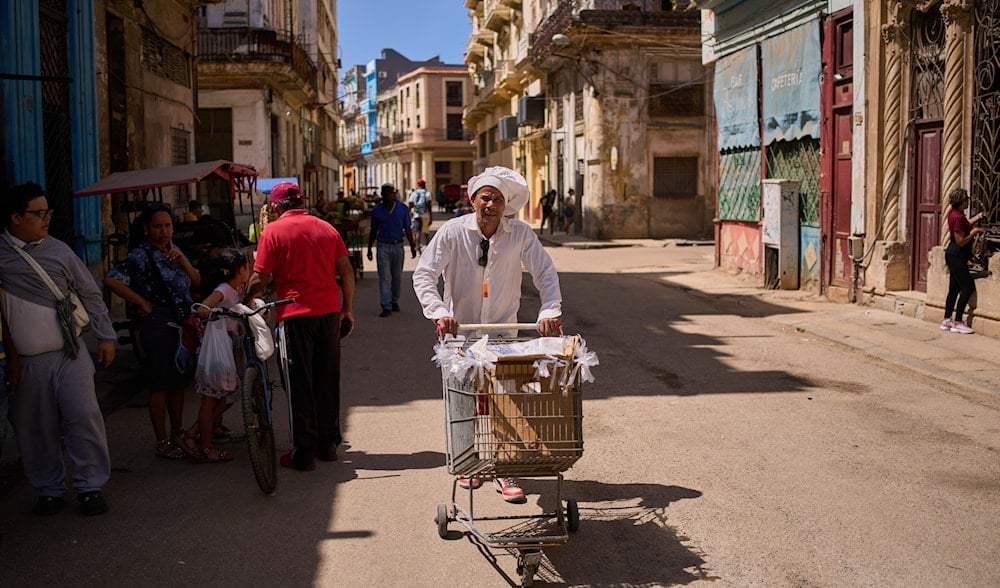
A baker hawks his baked goods through the streets of Havana, Cuba, Thursday, March 5, 2026, during a blackout (AP)
With the US war on Iran still raging and the dust far from settled across West Asia, US President Donald Trump already has his eyes set on his next target: Cuba.
Speaking at a press conference in Doral, Florida, on Monday, Trump said Cuba was in "deep trouble" on a humanitarian level, claiming that Secretary of State Marco Rubio was handling the situation.
Whether that amounts to what Trump described as a "friendly takeover" remains to be seen, but Trump made clear the distinction may not matter much.
"It may be a friendly takeover, it may not be a friendly takeover. Wouldn't really matter because they're really down to, as they say, fumes. They have no energy, they have no money," he told reporters.
Maximum pressure
On January 29, Trump signed an executive order declaring the Cuban government an "extraordinary threat" to US national security. Following the January 3 US aggression against Venezuela, Washington severed the flow of oil and funds from Havana's last major ally and imposed steep economic penalties on any country that continues to supply Cuba with oil.
The blockade intensifies a decades-long embargo that has already restricted Cuba's access to foreign currency, caused chronic shortages, and degraded a healthcare system that was once among Latin America's best.
The administration has made no secret of its end goal. Rubio has stated explicitly that the objective is "regime change," while a congressional representative closely aligned with the administration acknowledged that civilian suffering is a trade-off Washington is willing to accept.
'Running on fumes'
Cuba had been receiving an average of 35,000 barrels of Venezuelan oil per day through late 2025, used both to power the island and generate export revenue for essential imports. That lifeline collapsed following the abduction of Maduro. Analysts now warn Cuba could exhaust its remaining fuel reserves by mid- to late March, bringing life on the island to a standstill.
A 2025 survey by the Food Monitor Program found that 78% of respondents described the current crisis as the worst they had experienced in terms of food access, while seven in ten Cubans skipped at least one meal last year due to shortages or inability to pay. Fuel has grown so scarce that a tank of gas now fetches over $300 on the black market, more than most Cubans earn in a year.
Rubio's play
Trump had repeatedly insisted that negotiations with Havana are well underway. But reporting by Drop Site News in February complicated that picture considerably. According to five Cuban and American officials speaking on condition of anonymity, no high-level negotiations between Washington and Havana exist.
A senior Trump official told Drop Site that Trump believes talks are happening "because that's what Marco is telling him," with the plan that Rubio will eventually attribute their failure to Cuban intransigence
Trump, for his part, is framing Cuba as the next item on a growing to-do list. "We're really focused on this one right now," he told CNN last Friday, referring to Iran. "We've got plenty of time, but Cuba's ready, after 50 years."


