
Trump risks lame-duck status as approval ratings collapse
 5 Min Read
Trump risks becoming a lame-duck president as approval ratings collapse, key voter groups abandon him, and Republicans face potentially heavy losses in the November midterms.
-
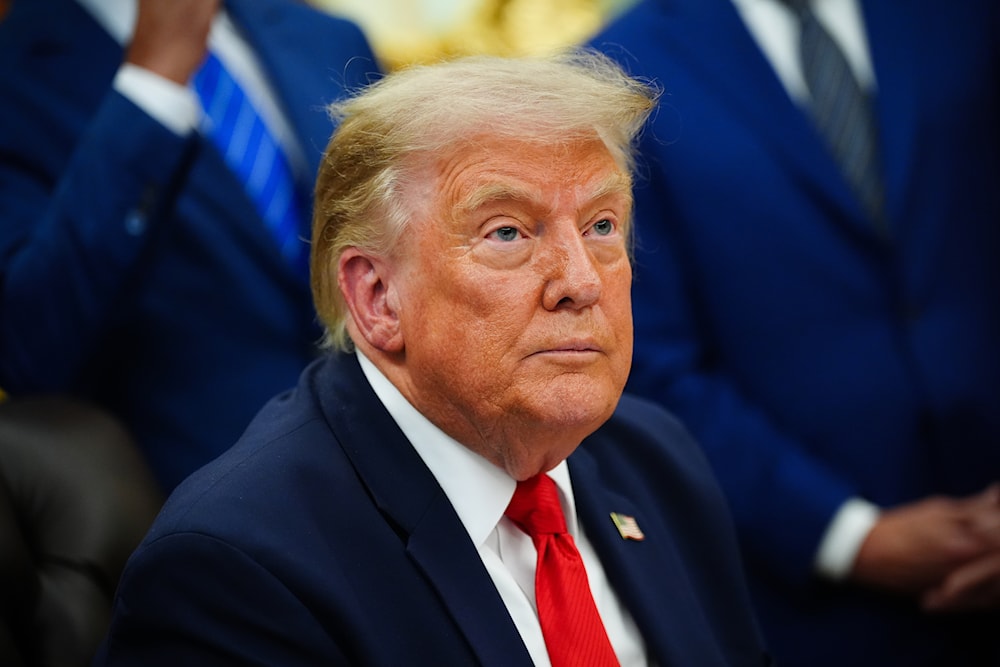
US President Donald Trump speaks about Dulles International Airport modernization, in the Oval Office of the White House, Wednesday, July 29, 2026, in Washington (AP)
US President Donald Trump may be losing his place at the center of American political life as declining approval ratings, economic frustration, and the prospect of heavy Republican losses in the midterm elections weaken his influence, The Independent reported.
Pollster Nate Silver raised the possibility that Americans and the media are beginning to turn their attention away from a president who has dominated political coverage for more than a decade.
Writing on X, Silver said, “It’s kind of striking how, apart from Iran, most of the Trump-related stories this summer have been boring and dumb (reflection pool, White House Correspondents’ Dinner) or kind of funny (FIFA), maybe we’re moving on from him being the central figure in American politics.”
His observation came as coverage of Trump increasingly focused on relatively minor controversies rather than the broader political and institutional dangers that shaped reporting during earlier stages of his political career.
Diverging opinions
Journalist John Harwood challenged Silver’s assessment, pointing to the killing of two people by federal immigration agents in Maine and Texas earlier this month as an example of a more consequential story linked to the administration.
Silver acknowledged the incidents but argued that media attention had nevertheless remained concentrated on less significant matters.
“Indeed, but there’s been more focus both from the mainstream media and even more specifically the partisan-leaning media on these low-stakes (frankly kinda stupid) stories instead,” he wrote.
“Maybe because they click better. But it feels lame duck-ish not ‘Trump as existential threat.’”
Midterms threaten Trump’s remaining agenda
The discussion comes ahead of November’s midterm elections, which are expected to determine whether Trump retains the political leverage needed to advance his agenda during the second half of his final presidential term.
Republicans risk losing control of the House of Representatives, while the Senate could also come within reach of the Democrats.
A Democratic congressional victory would allow lawmakers to block much of Trump’s legislative program, initiate investigations into his administration, and potentially pursue a third impeachment effort against him.
Such an outcome could effectively reduce Trump to lame-duck status, limiting his authority both in Washington and within the Republican Party.
Cost of living contentious point
Concern among Republican officials has grown as voters continue to identify the cost of living as one of their most pressing problems.
Trump has repeatedly downplayed those concerns, despite criticism that his economic and foreign policies have contributed to rising household expenses.
His reciprocal tariff program, which was blocked by the Supreme Court in February, increased the cost of imported goods before retailers transferred part of that burden to consumers.
At the same time, the ongoing US war on Iran has driven global oil prices higher, pushing the national average price of gasoline to $4.09 per gallon on Wednesday morning.
Support erodes across key voter groups
Trump’s political difficulties are reflected in a new Economist/YouGov survey showing his approval rating at its lowest point across either of his presidential terms.
The poll found that 62% of American adults disapproved of his performance, compared with 34% who strongly or somewhat approved.
That left Trump with a net approval rating of minus 28 points, significantly below the minus-nine rating recorded at the same stage of his first term in July 2018.
YouGov said the president was losing ground among constituencies that had previously formed important parts of his political coalition.
The pollster said Trump’s support was eroding “among several groups that had been core parts of his base.”
Among Americans aged between 45 and 64, 63% now disapprove of his performance. His net rating within the group has fallen from plus 15 at the beginning of his second term to minus 29.
Major decline among white Americans without college degrees
Trump has also suffered a major decline among white Americans without college degrees, a demographic central to his previous election victories.
Fifty-two percent of voters in that group now disapprove of his performance, sending his net approval from plus 27 in January 2025 to minus six.
The president is also encountering resistance among Republicans who do not identify with the MAGA movement. Within that group, 43% disapprove of his performance, while 55% continue to support him.
The combination of declining public support, economic dissatisfaction and the threat of a Republican defeat in November is fueling speculation that Trump’s ability to dominate US politics may be approaching its end.
Read more: Carlson says war on Iran marks end of Trump's political era


