
Trump, Rubio weigh removing US ambassador to Greece Guilfoyle
 4 Min Read
The Trump administration is reportedly considering Kimberly Guilfoyle’s removal as ambassador to Greece following allegations of improper conduct and a possible State Department inquiry.
-
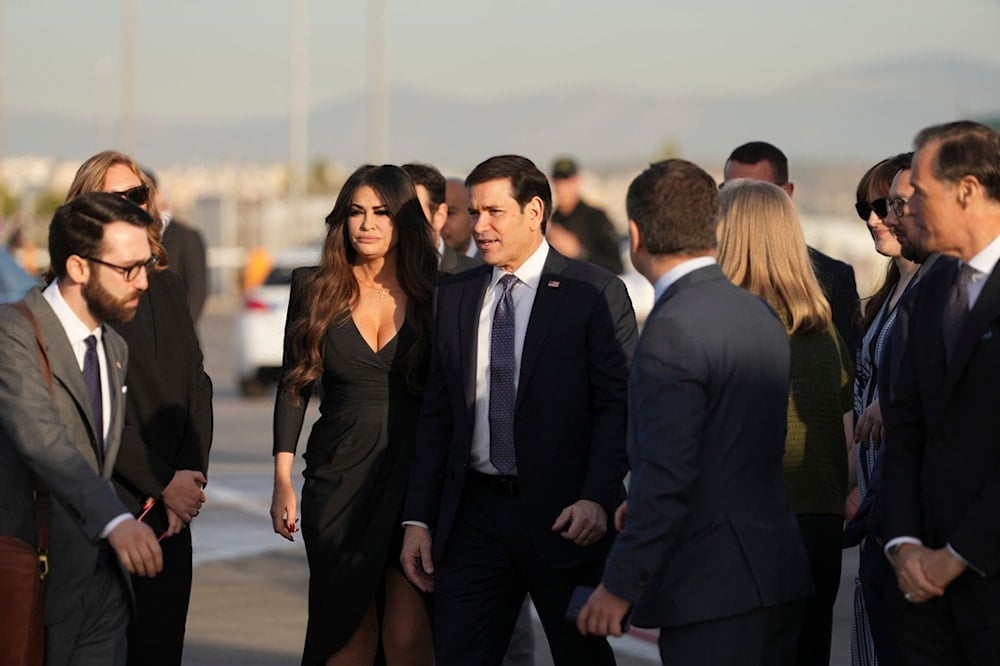
US Secretary of State Marco Rubio, center, and US Ambassador to Greece Kimberly Guilfoyle stand at Eleftherios Venizelos International Airport near Athens, Greece, before Rubio boards a plane , Thursday, Oct. 8, 2026. (AP Photo/Mark Schiefelbein)
US President Donald Trump and Secretary of State Marco Rubio are considering removing Ambassador to Greece Kimberly Guilfoyle following a series of reports alleging improper and potentially illegal conduct before and during her diplomatic tenure, according to The Guardian.
A senior US official told the newspaper on Sunday that Trump and Rubio were “extremely pissed off” over the reported allegations and could decide on a course of action this week, after Monday’s federal holiday. The official spoke anonymously to discuss internal deliberations.
Rubio was reportedly particularly frustrated after visiting Athens the previous week, where Guilfoyle attended most, if not all, of his events and greeted him upon arrival as allegations surrounding her conduct continued to emerge.
Read more: US senators call Trump diesel deal with Russia illegal
Reports raise questions over Guilfoyle’s conduct
A series of reports by The Wall Street Journal has raised allegations concerning Guilfoyle’s conduct, including an alleged threat against a Greek official, the acceptance of improper gifts and services, and an offer to use her influence within the Trump administration in exchange for payment of a substantial credit card bill.
Guilfoyle has not directly addressed the reports. Her lawyer has maintained that she did nothing wrong, while the US Embassy in Athens has also expressed support for her.
The allegations have not been established as fact, and it remains unclear whether they will result in formal disciplinary proceedings or her removal from the post.
Rubio pushes back against questions
Rubio initially defended Guilfoyle after the first report emerged, saying on Wednesday: “Our ambassador has been a strong ambassador here.”
However, after another report appeared late Wednesday, Rubio rebuked journalists who questioned him about the allegations before his departure from Athens the following day.
He said he did not know whether the claims were true and would not comment on matters he could not confirm.
“You guys walk around thinking that because some source told you something and you reported it, it’s the gospel. It’s not the gospel. It’s not the gospel for me. That’s not the way we do things,” Rubio said beside his plane as Guilfoyle watched his departure.
According to the senior official cited by The Guardian, Rubio’s frustration grew as further reports emerged.
A second US official told The Guardian that the State Department’s inspector general was looking into the allegations, but could not confirm whether a formal investigation had begun.
Read more: Pope Leo opposes death penalty as US weighs broadcasting execution
Guilfoyle says US could topple Romania
Guilfoyle triggered a political controversy during a visit to Romania in March when she stated that the US could topple any country it pleases.
She referred to the collapse of Romania’s government during a conversation with Greek Energy Minister Stavros Papastavrou, the Wall Street Journal reported last month.
“We can do that to any country we want. We can do that here,” Guilfoyle said.
Papastavrou responded by saying that Washington could not replace Greece’s democratically elected government.
The Financial Times, citing a person familiar with the matter, reported that Guilfoyle made the remarks during an official dinner held at the US Embassy in Athens with more than a dozen people in attendance, including politicians, embassy personnel, and military officials.
Guilfoyle met members of Romania's Social Democratic Party (PSD) in late March. Those present included party chairman Sorin Grindeanu and then-Energy Minister Bogdan Ivan.
Romania’s government collapsed in May after the Social Democrats withdrew from the governing coalition and joined the far-right opposition in voting to oust Prime Minister Ilie Bolojan.
Whether or not Guilfoyle advised the Social Democrats to withdraw from the governing coalition remains unclear.


