
Trump’s policies accelerate decline of US soft power: FP
 3 Min Read
Stephen Walt warns US overreliance on hard power under Trump is eroding soft power, weakening global influence and long-term strategic leverage.
-
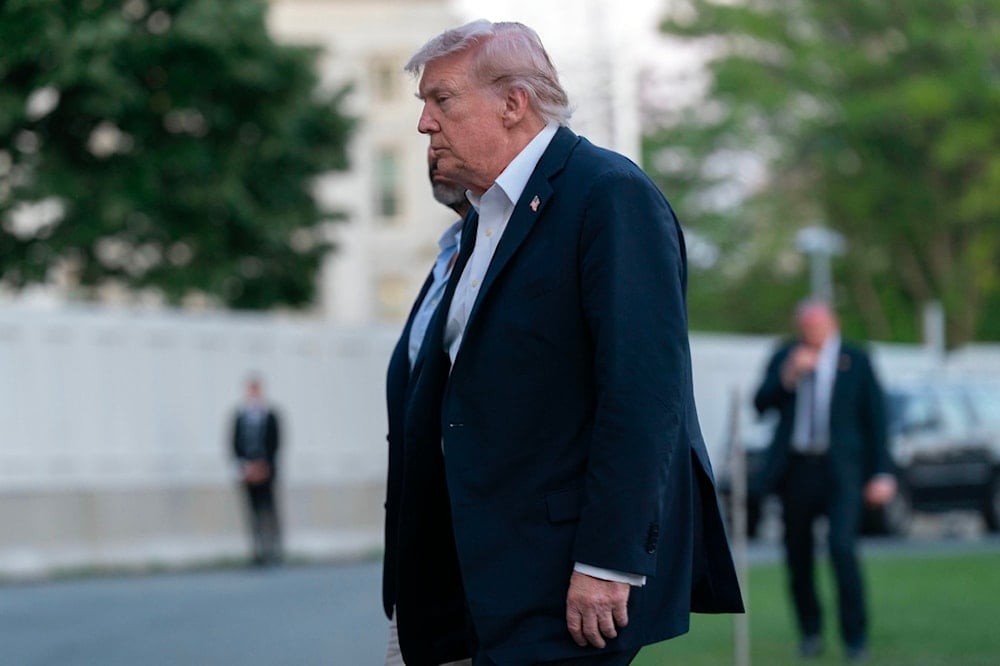
US President Donald Trump and Donald Trump Jr. walk on the South Lawn upon their arrival at the White House, Sunday, May 3, 2026, in Washington. (AP Photo/Jose Luis Magana)
The United States is increasingly relying on coercive tools of power at the expense of its global appeal, a shift that risks undermining its long-term influence, top political scientist Stephen M. Walt writes in Foreign Policy.
The Trump administration's foreign policy approach has placed growing emphasis on military force, economic pressure, and unilateral measures, while sidelining diplomacy and international legitimacy.
This trajectory, critics argue, reflects a broader transformation in how US power is exercised globally, prioritizing immediate gains over sustained strategic positioning.
Erosion of US global appeal
At the center of Walt’s argument is the decline of what Joseph Nye, the former Assistant Secretary of Defense for International Security Affairs of the United States, termed “soft power,” defined as the ability of a country to shape outcomes through attraction rather than coercion.
Historically, the United States combined military strength with cultural, political, and institutional appeal, allowing it to influence global actors without constant reliance on force.
However, Walt suggests that this balance has deteriorated, with US policies increasingly perceived as unilateral and coercive, reducing their appeal internationally.
Read more: For undermining Iran, US global influence crumbles: Analyst
Policies undermining soft power institutions
The analysis highlights a range of policies that have contributed to this decline. These include the Trump administration's use of tariffs to pressure trade partners, expanded military operations across multiple regions, and the imposition of blockades and sanctions.
Walt also points to the dismantling or weakening of institutions traditionally associated with US global influence. These include reductions in foreign aid mechanisms, efforts to curtail international broadcasting platforms, and a decline in diplomatic engagement.
He further notes that restrictions on immigration and pressure on higher education institutions may reduce the number of international students in the United States, historically a key driver of pro-US sentiment abroad.
Ideological drivers behind the strategy
According to Walt, the shift reflects an ideological worldview that prioritizes dominance and views international relations through a binary lens of strength and weakness.
This perspective, he argues, places little value on compromise or long-term relationship-building, instead favoring immediate displays of power.
The result is a foreign policy approach that emphasizes coercion over persuasion, with limited attention to how actions are perceived globally.
Historical lessons and strategic risks
Walt contrasts current policies with earlier US strategies that combined power with diplomacy and international cooperation. He cites examples such as the Marshall Plan and the formation of NATO as instances where soft power played a central role in advancing US interests.
He warns that overreliance on hard power has historically led to strategic setbacks, pointing to conflicts such as Vietnam and prolonged military engagements in Iraq and Afghanistan.
The continued erosion of soft power, Walt argues, could make it increasingly difficult for the United States to build alliances and sustain global influence.


