
Trump’s war on Iran signals deeper shift in US global power: FP
 3 Min Read
A Foreign Policy analysis warns that Trump’s war on Iran and unilateral foreign policy could accelerate the decline of US global influence and reshape the international order.
-
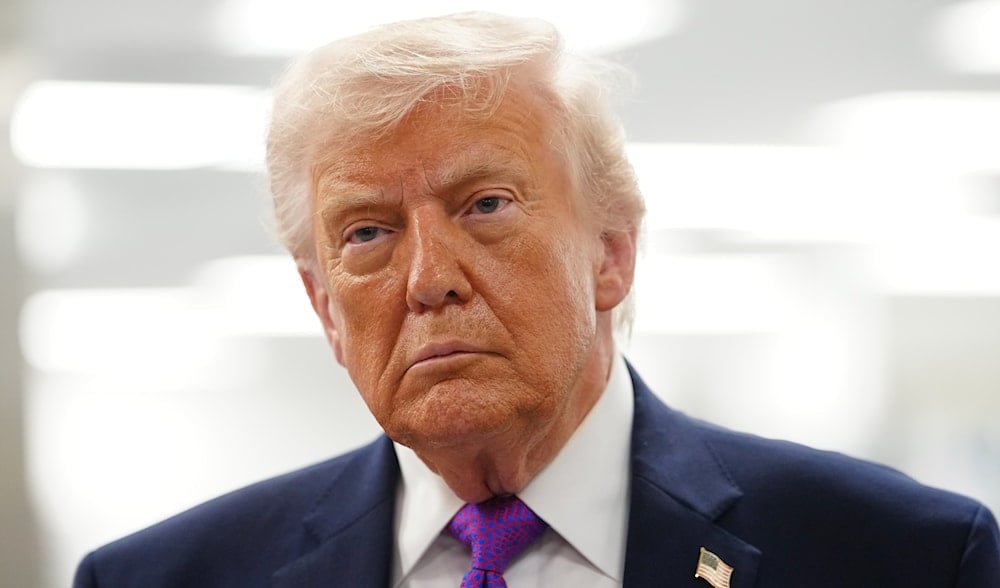
US President Donald Trump talks with reporters as he visits Thermo Fisher Scientific, on March 11, 2026, in Cincinnati. (AP Photo/Julia Demaree Nikhinson)
As the US-Israeli war on Iran approaches its third week, the most important question may not be the state of shipping in the Strait of Hormuz or fluctuations in global oil prices. The more decisive issue is how the events unfolding early in US President Donald Trump’s second term could reshape America’s global power and standing in the international system.
For decades, Washington has been at the center of the global order, meaning any shift in its influence will have consequences far beyond the United States.
According to a Foreign Policy analysis on Thursday, profound changes in the global system may already be underway.
Trump’s foreign policy is increasingly characterized by impulsive decision-making, unilateral action, and limited consultation with allies, departing from traditional US diplomatic practice.
Since the end of World War II, the United States has rarely gone long without engaging in military operations abroad, reinforcing its role as a central actor in global "security affairs".
The limits of American dominance
Earlier in the 21st century, some within the US political establishment began questioning how Washington should use its power.
As America’s overwhelming economic and military dominance gradually narrowed, policymakers argued the country should become more selective in deploying military force. However, decades of unrivaled power created a political culture accustomed to global dominance.
Trump’s campaign slogan “America First” reflects that mindset, although its origins date back to an earlier period when the United States faced far fewer international rivals.
Even without Trump, analysts expect America’s relative weight in the global economy to decline over time. According to the report, this shift is driven not only by China’s rise but also by the expanding economic power of countries such as India and other emerging “middle powers.”
Nations rarely considered central to global power dynamics today, such as Nigeria, could become major economic forces by the end of the century.
A star before its collapse
The analysis compares the current moment to a stage in the life cycle of stars. In astronomy, stars often reach their largest size shortly before entering a phase of collapse. Similarly, Trump’s expansive and confrontational foreign policy may represent a moment of overreach rather than renewed American strength.
Critics argue that Washington’s alliance system, once a cornerstone of US global influence, is being strained by the administration’s approach. As a result, European and Asian partners may increasingly seek alternative partnerships or more independent strategic paths.
Trump’s growing reliance on military force also carries significant risks.
The wars in Iraq and Afghanistan demonstrated the enormous financial and strategic costs of prolonged occupations. The ongoing war on Iran could repeat that pattern.
With no clear path toward ending the war and with "Israel" continuing its aggression in West Asia, it risks becoming another prolonged drain on US resources and strategic attention.


