
UAE firms exit Saudi defense expo amid rising tensions
 3 Min Read
Emirati companies pull out of Riyadh's World Defense Show amid rising UAE-Saudi tensions linked to Yemen and economic rivalries.
-
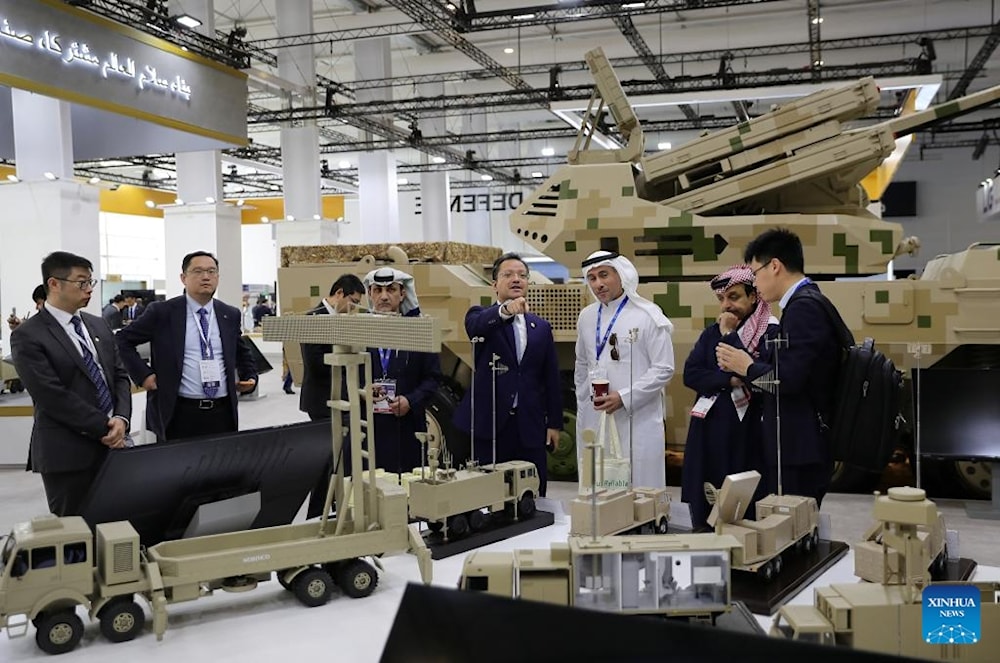
People visit the China Defense exhibition area during the second edition of the World Defense Show in Riyadh, Saudi Arabia, Feb. 5, 2024 (Xinhua)
Several Emirati companies have reportedly withdrawn from a major defense exhibition hosted in Saudi Arabia, signaling a potential escalation of political and economic tensions between the two Gulf nations, according to two sources familiar with the matter who spoke to Reuters.
So far, neither the UAE Ministry of Foreign Affairs nor the Saudi government’s media office has issued any official comment on the developments.
Observers suggest that the withdrawal of Emirati firms from this prominent annual defense event could indicate that political disputes between the oil-producing nations are beginning to spill over into trade and investment sectors.
Two Gulf-based commercial sources told Reuters that, while formal business deals between the countries have not yet been significantly affected, the rising tension is beginning to impact the broader business community.
World Defense Show is scheduled to take place in Riyadh from February 8 to 12, although it remains unclear whether the withdrawals involve all participating Emirati companies.
Tensions between the two countries first became publicly visible in December, when the UAE-backed Southern Transitional Council seized large areas of southern Yemen. The move prompted a rapid escalation, including a Saudi-led coalition airstrike targeting a UAE-linked arms shipment in the port of Mukalla.
Although the UAE later withdrew all its forces from Yemen, tensions have continued to mount, particularly following Saudi accusations that the Emirates assisted Southern Transitional Council leader Aidrous al-Zoubaidi in fleeing via Somalia.
UAE-Saudi trade at stake amid Yemen tensions
Businesses across the Middle East are closely monitoring rising tensions between Saudi Arabia and the United Arab Emirates, amid concerns that the dispute could disrupt commerce as both nations strengthen their roles as regional trade and financial powerhouses, Bloomberg reported on January 27.
For international firms and investors, the situation has revived memories of the 2017 blockade of Qatar by Saudi Arabia, the UAE, Bahrain, and Egypt, which lasted over three years and severely disrupted regional supply chains. Heightening regional stability concerns, US President Donald Trump last week said an “armada” of US Navy vessels was heading to the Middle East amid ongoing threats of strikes on Iran.
“At this stage, companies are not reacting operationally; they are asking baseline questions,” said Hussein Nasser-Eddin, CEO of Dubai-based security services provider Crownox. “Most inquiries focus on financial resilience in case of escalation and whether there are any early diplomatic or consular shifts.”
Some UAE-based firms have reported difficulties obtaining Saudi business visas, although the extent of the problem remains unclear. Riyadh has encouraged foreign companies to relocate their regional headquarters to the kingdom in recent years. At least one UAE-based supplier to Saudi Arabia is reportedly considering building inventory as a buffer, while some funds and companies are assessing plans to open offices in the kingdom to mitigate potential curbs on cross-border activity.
About $22 billion in trade between the two largest Gulf economies is at stake, alongside broader business confidence as both nations aim to position themselves as global financial hubs. Their sovereign wealth funds have expanded their influence through major investments in finance, energy, technology, and healthcare, intensifying competition to attract Wall Street banks, hedge funds, and asset managers. Representatives from both governments did not respond to requests for comment.


