
UK refuses to let US use British bases to attack Iran
 4 Min Read
The UK has refused to allow the US to use British-controlled bases for a potential strike on Iran, citing international law concerns.
-
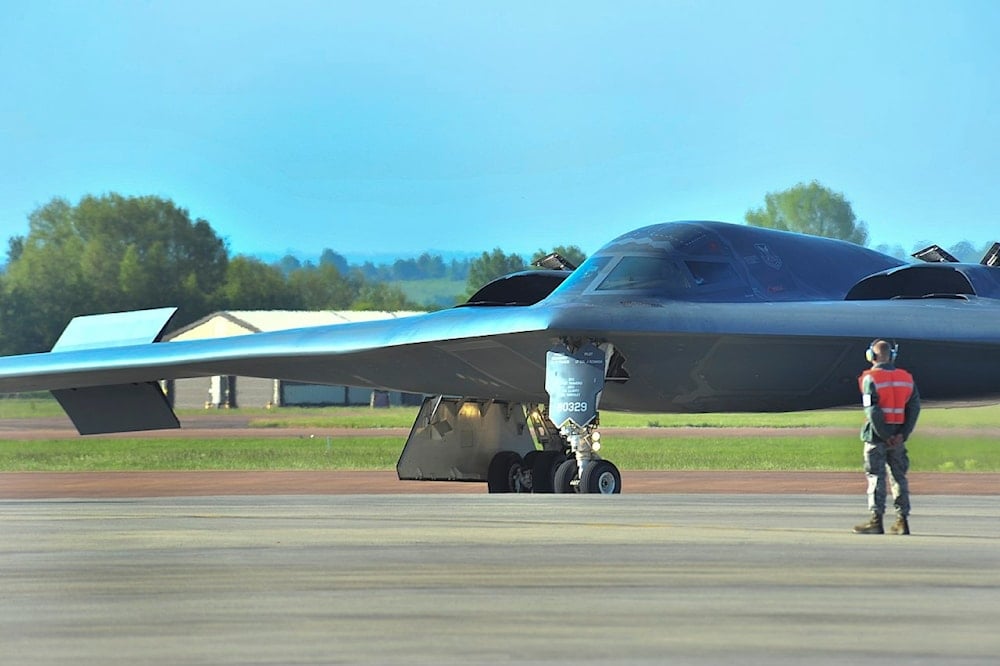
A US Air Force B-2A Spirit taxis after landing at RAF Fairford in June 2015. (Wikimedia Commons)
Tensions have surfaced between London and Washington after Prime Minister Keir Starmer reportedly refused a request by US President Donald Trump to allow American forces to use British-linked military bases for a potential strike on Iran.
According to officials familiar with the discussions, Starmer informed Trump that authorizing US aircraft to operate from Diego Garcia in the Indian Ocean and RAF Fairford in southwest England for offensive action against Iran would raise serious legal concerns. Under longstanding bilateral arrangements, such facilities may only be used for operations against third countries with the prior consent of the UK government and in accordance with British and international law.
The disagreement comes as Washington weighs military options if diplomatic efforts with Tehran collapse. Writing on Truth Social, Trump suggested that American access to the bases could become necessary should negotiations over Iran’s nuclear programme fail.
"Should Iran decide not to make a Deal [on its nuclear programme], it may be necessary for the United States to use Diego Garcia, and the Airfield located in Fairford, to eradicate a potential attack by a highly unstable and dangerous Regime," he wrote. "An attack that would potentially be made on the United Kingdom, as well as other friendly countries." He added, "We will always be ready, willing, and able to fight for the UK, but they have to remain strong in the face of Wokeism and other problems put before them."
Speaking later, Trump said the world would know "over the next, probably, ten days" whether diplomacy would prevail or force would be used. “Now we may have to take it a step further, or we may not,” he said. “They can’t have a nuclear weapon. Very simple. You can’t have peace in the Middle East if they have a nuclear weapon.”
London resists a preemptive strike
British government sources indicated that London is unlikely to endorse a pre-emptive military strike. The position follows a similar refusal to join US action targeting Iranian nuclear facilities last summer. At that time, ministers declined to clarify whether legal advisers considered the US strikes lawful.
Downing Street stated: "There is a political process ongoing between the US and Iran, which the UK supports. Iran must never be able to develop a nuclear weapon, and our priority is security in the region." Responding to questions about possible base access, a spokesperson added: “As a routine, we do not comment on operational matters.”
Legal concerns appear central to the British position. Officials are understood to fear that permitting US forces to operate from UK territory in support of a potentially unlawful attack could expose Britain to responsibility under international law, which does not distinguish between those carrying out an “internationally wrongful act” and those assisting it with knowledge of the circumstances.
The dispute has also spilled into broader strategic questions. Trump responded by withdrawing his backing for London’s proposed transfer of sovereignty over the Chagos Islands to Mauritius, an agreement the British government says is necessary to secure the long-term future of the joint UK–US base on Diego Garcia and avoid protracted legal challenges.
Tensions deepen over bases
Senior officials privately acknowledge that the arrangement cannot realistically proceed without Washington’s support. While the government maintains it will press ahead, the episode has added uncertainty to an already sensitive negotiation.
Opposition Conservatives have pressed Starmer to reverse his position, aligning themselves with Washington’s hardline approach toward Tehran. Shadow defence secretary James Cartlidge portrayed Iran’s nuclear programme as an imminent threat, arguing that Britain should open its bases to US forces if such action serves UK interests.
The White House is reportedly finalizing contingency plans involving Diego Garcia and RAF Fairford, amid what defense officials describe as the most significant American military build-up in the region since the 2003 Iraq war.
For now, London is signaling that diplomacy remains preferable. But with Trump warning that a decisive moment may arrive within days, the question of whether Britain will be drawn into another Middle East conflict, and on what legal basis, remains unresolved.
Read more: Iran: US aggression would have 'catastrophic' regional consequences


