
Ukraine reports progress in peace talks with US officials in Berlin
 5 Min Read
Ukraine’s top peace negotiator Rustem Umerov said “real progress” was made in the second round of peace talks with US officials in Berlin.
-
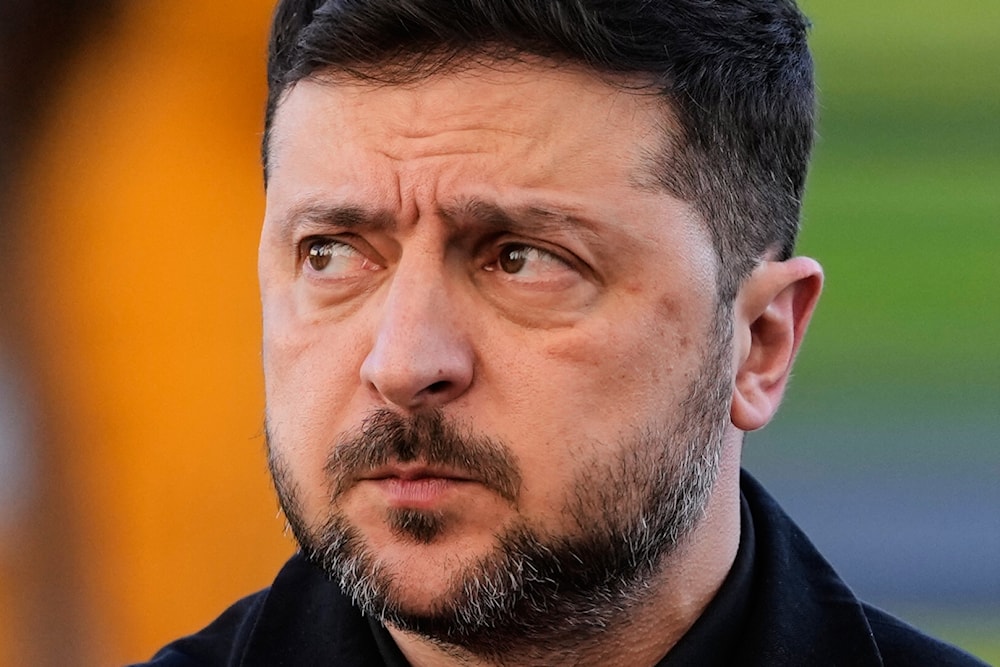
Ukraine's President Volodymyr Zelensky arrives at the Bellevue Palace for talks with German President Frank-Walter Steinmeier in Berlin, Germany, Monday, Dec. 15, 2025 (AP)
US and Ukrainian officials made “real progress” during the second round of peace talks in Berlin aimed at ending Russia’s war, Ukraine's top peace negotiator reported on Monday.
Ukrainian President Volodymyr Zelensky on Monday described two days of talks with US envoys in Berlin aimed at ending the war with Russia as “not easy” but “productive”. Speaking at a German-Ukrainian Business Forum, Zelensky said the discussions covered many details and allowed for an open exchange on difficult issues, including security guarantees and territorial questions.
Rustem Umerov, secretary of Ukraine’s National Security and Defense Council, described the negotiations as “constructive and productive” in a post on X.
He added that the American delegation, led by Steve Witkoff and Jared Kushner, is working “extremely constructively” to help Ukraine find a path toward a lasting peace agreement.
“The conversations are always not easy, but it was a productive conversation, with a lot of details, really a lot,” Zelensky said, acknowledging that Ukraine and the United States still hold differing positions on ceding territory, but emphasized that dialogue had been thorough.
Zelensky urges using frozen Russian assets to support Ukraine
Zelensky also called for the use of frozen Russian assets to support Ukraine’s defense, urging the European Union to ensure the funds are fully directed against Russia’s aggression. The EU is exploring a plan to mobilize 90 billion euros ($105 billion) from frozen Russian assets over the next two years, including funding loans to Kiev to be repaid from any future Russian reparations.
While many EU countries, including Germany, support the plan, Belgium has so far opposed it due to legal concerns surrounding Euroclear, the international deposit organization holding most of the assets.
EU foreign policy chief Kaja Kallas told journalists that the bloc still faced some "very important" decisions to make, adding, "We are not there yet, and it is increasingly difficult, but we're doing the work and we still have some days."
"We will not leave the meeting before we get a result."
US officials outline security guarantees for Ukraine
US officials also said the discussions were positive and outlined plans for “NATO-like” security guarantees for Ukraine, offering strong deterrence measures and pledging support in line with NATO’s Article Five. "The basis of that agreement is basically to have really, really strong guarantees, Article Five, also a very, very strong deterrence" in the size of Ukraine's military, a US official said on condition of anonymity.
The US officials noted that US President Donald Trump would later call Ukraine and European leaders to push forward the deal.
Notably, US negotiators have informed Ukraine that, as part of any agreement to end the nearly four-year-old war, it must agree to withdraw its forces from the eastern Donetsk region, according to an official familiar with the matter, as cited by Reuters.
The source, speaking on condition of anonymity, said that Kiev had requested additional discussions, while a second person familiar with the talks noted that significant obstacles still remain to be addressed in order to reach an agreement on the issue of territory.
Will Russia accept?
A US official expressed confidence that Russia would accept the deal, though no agreement has yet been reached on territorial issues, stating that "I think hopefully the Russians are going to look at it and say to themselves, 'That's OK because we have no intention, we're going to take them at their word, we have no intention of violating.'"
German Chancellor Friedrich Merz, speaking alongside Zelensky, said the talks presented “a chance for a real peace process” and described the proposed US security guarantees as an “important step forward.” Merz also stressed the urgency of finalizing an EU plan for frozen Russian assets, warning that failure to act would undermine the bloc’s credibility.
Zelensky, delegation arrive in Berlin
Ukrainian officials, including President Volodymyr Zelenskyy, traveled to Berlin on December 14 as part of a renewed diplomatic push to end the ongoing war with Russia. The visit followed months of international efforts to find a ceasefire and peace settlement involving Western partners.
Germany is hosting high‑level talks between Ukrainian and United States representatives to align positions on a comprehensive peace plan. Ukrainian and US envoys have already engaged in marathon discussions focused on a proposed 20‑point framework for peace.
The meetings began on December 14 and lasted over five hours, with officials agreeing to continue negotiations on subsequent days as part of broader consultations. These talks precede further meetings with European leaders and are meant to build momentum toward a diplomatic solution.
Berlin’s role underscores Germany’s position as a key diplomatic hub in European efforts to support Ukraine and coordinate with US and NATO allies. The German government has also deepened its defense cooperation with Ukraine alongside these talks.
Despite progress reported by Ukrainian negotiators, significant disagreements over security guarantees and territorial issues remain, reflecting intensified Western engagement as Kiev seeks lasting peace while navigating complex geopolitical demands.


