
Ukrainian drones strike Saint Petersburg as SPIEF opens
 4 Min Read
Ukrainian drones hit energy and military sites in Saint Petersburg as SPIEF opens, amid escalating cross-border strikes.
-
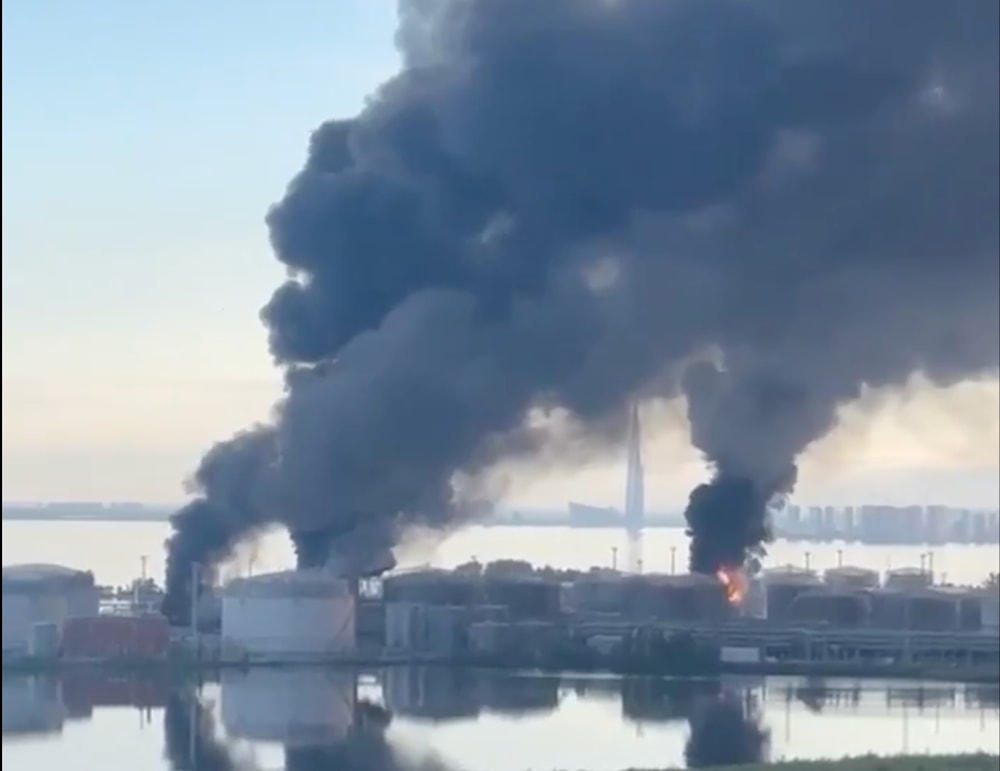
Screenshot of a video showing the Ukrainian attack on Saint Petersburg, Russia, ahead of the Saint Petersburg International Economic Forum on June 3, 2026 (X/@Osinttechnical)
Ukrainian drones struck energy and military-linked infrastructure in Saint Petersburg early Wednesday, coinciding with the opening of the Saint Petersburg International Economic Forum (SPIEF), Russian and Ukrainian authorities confirmed.
Targets reportedly included the Saint Petersburg Oil Terminal and the Kronstadt military base, with fires breaking out at key energy infrastructure facilities. Saint Petersburg Governor Alexander Beglov confirmed damage to “several” sites, while stating that no fatalities were recorded.
The timing of the strikes, as thousands of delegates gathered for Russia’s flagship economic forum, underscored the widening geographic scope of the war and its increasing penetration into strategic urban and industrial zones far from traditional frontline areas.
Ukrainian forces have launched a heavy attack on Saint Petersburg in Russia and hit multiple targets related to Russia‘s oil industry. pic.twitter.com/4UtpY9gKII
— (((Tendar))) (@Tendar) June 3, 2026
SPIEF opens amid sanctions fragmentation and shifting global alignments
SPIEF, once positioned as “Russia’s Davos,” opened with approximately 20,000 participants from 130 countries, reflecting Moscow’s continued attempt to sustain economic connectivity under sustained Western sanctions pressure.
Since 2022, SPIEF has undergone a structural transformation, shifting away from Western capital markets and toward non-Western partnerships, particularly across Asia, Africa, and West Asia. This shift reflects a broader fragmentation of the global economic order into competing blocs shaped by sanctions regimes and geopolitical confrontation.
The disruption caused by the drone strikes added a visible security dimension to the forum’s opening, reinforcing the extent to which economic diplomacy in Russia now operates under direct conditions of military escalation.
Read more: Ukraine receives another IRIS-T launcher from Germany: reports
Kiev frames strikes as part of 'long-range sanctions' strategy
Ukrainian President Volodymyr Zelensky confirmed responsibility for the strikes, stating that they form part of what Kiev describes as “long-range sanctions” targeting Russian energy and military infrastructure.
This framing reflects Ukraine’s integration of military operations into a broader sanctions-based strategy aimed at degrading Russia’s economic and logistical capacity beyond the battlefield. The approach positions deep-strike capabilities as an extension of Western-led economic pressure mechanisms.
Zelensky released footage showing a burning fuel installation, while Ukrainian officials indicated that the timing of the strikes was intended to disrupt SPIEF’s visibility and international messaging.
Escalation cycle intensifies as infrastructure becomes primary battlefield
The strikes on Saint Petersburg came one day after Russian missile and drone attacks killed 23 people across Ukraine, underscoring the entrenched cycle of escalation shaping the conflict.
Russian authorities stated that air defenses neutralized hundreds of Ukrainian drones overnight across multiple regions, including areas near Crimea and border zones. Ukrainian officials, meanwhile, reported casualties in southern frontline areas following Russian strikes.
The pattern reflects a structural shift in the war toward infrastructure-centered confrontation, where energy systems, logistics corridors, and urban industrial networks have become primary targets of military pressure.
Transport disruption and symbolic impact in Russia’s second city
The drone strikes temporarily shut down operations at Saint Petersburg’s main airport and caused delays on routes between Moscow and Saint Petersburg, according to transport reports.
Smoke from targeted energy infrastructure was visible across parts of the city during SPIEF’s opening hours, creating a stark contrast between Russia’s economic diplomacy efforts and the material realities of an ongoing war.
Ukrainian sources framed the visibility of the strikes as a deliberate signaling mechanism aimed at both Russian state infrastructure and international delegations attending the forum.
Read more: Zelensky urges Trump to approve major US-Ukraine drone deal


