
UNHCR warns funding cuts put refugee protection at risk
 6 Min Read
UNHCR says severe funding cuts are putting refugee protection services at risk, leaving millions of displaced and stateless people without vital support.
-
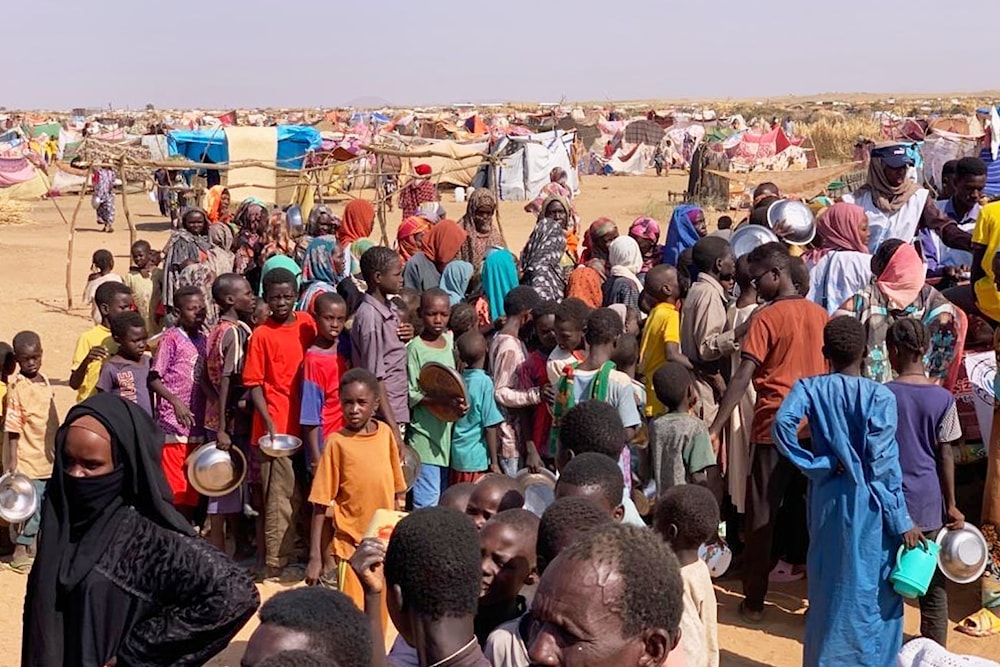
Displaced families from el-Fasher at a displacement camp where they sought refuge from fighting between government forces and the RSF, in Tawila, Darfur region, Sudan, Friday, Oct. 31, 2025. (AP)
Severe funding cuts are pushing refugee support and protection structures towards breaking point in the world’s main displacement situations, forcing UNHCR, the UN Refugee Agency, to scale back core programmes and leaving millions without the support they need to stay safe, the agency said.
Nearly 8.3 million refugees and other forcibly displaced and stateless people are on the brink of losing access to vital assistance, according to “Protection Eroded: The Human Cost of Underfunding,” a UNHCR report published today.
Available funding fell from $5.2 billion to $3.9 billion between 2024 and 2025, and by the end of July 2026, UNHCR had received only 32 per cent of the $8.5 billion funding needed this year, even as the number of people UNHCR is mandated to protect remained at historically high levels.
“When registration stops, safe houses close or child protection services disappear, the very risks that people fled – violence, exploitation and abuse, reappear in displacement, trapping families in a cycle of vulnerability and forcing some to move again in search of safety or fall prey to traffickers,” said Dominique Hyde, UNHCR’s Director of External Relations.
“Protection cannot be reduced indefinitely without systems collapsing. Below a certain threshold, services do not simply reach fewer people; they can stop functioning altogether, leaving those most at risk without the protection they need,” Hyde added.
Chad, Ethiopia and Sudan see services cut
In Chad, 319,000 refugees face registration delays, leaving them without documentation to access services and exposed to detention risks; up to 200,000 women and girls risk losing access to safe spaces and prevention programs; and around 233,000 children could lose child protection services.
In Ethiopia, capacity at safe houses for survivors of gender-based violence has more than halved in a year, while child protection coverage in some areas has fallen by as much as 85 per cent. In Sudan, tens of thousands of survivors of sexual violence and children at serious risk could lose access to critical protection services.
Faced with sharply declining resources, UNHCR has undertaken significant reforms and difficult prioritization measures to protect its most critical work. But the scale and persistence of the funding shortfall mean that even UNHCR’s highest-priority protection and solutions work is now being affected.
Livelihoods and returns also affected
Funding cuts are also undermining efforts to help displaced people move away from long-term reliance on humanitarian aid. In Chad, livelihoods, vocational training and business development opportunities are at risk for approximately 395,000 refugees and host-community members. In Iraq, up to 350,000 refugees and asylum-seekers risk losing access to economic inclusion opportunities.
The same pressures are affecting people at the critical point when they seek to rebuild their lives back home, whether returning voluntarily or under duress.
In Syria, 162,500 vulnerable internally displaced people and refugee returnees will not receive financial assistance during the initial stages of return unless additional funding is quickly received, reducing their ability to meet their basic needs and rebuild their lives at a pivotal moment in the country’s recovery. In Afghanistan, reintegration grants have reached just 175 households so far in 2026, compared with 5,300 in 2024.
At the same time, UNHCR has less flexibility to deploy increasingly scarce resources where they are needed most. The proportion of UNHCR funding tied to specific activities or projects has risen from 19 per cent in 2022 to 51 per cent in 2026.
“Flexible funding helps us move the right expertise and funds to where they are needed most,” Hyde said. “It lets our teams move quickly as needs change, protect essential services and stay on the ground when crises intensify. Importantly, it helps us respond to new emergencies without forgetting the crises that have fallen out of the headlines.”
UNHCR is urging donors and partners to provide urgent support now and expand flexible funding to protect progress already made, help people move beyond reliance on humanitarian aid, and rebuild their lives.
US aid cuts under Trump disrupt UN operations globally
The funding crisis at UNHCR stems directly from US aid cuts. In 2025, the Trump administration signed an executive order pausing most foreign assistance programs and moved to dismantle the US Agency for International Development (USAID), causing UNHCR’s funding from the United States to fall from about $2.1 billion in 2024 to roughly $800 million in 2025.
The United States had previously covered about 40 per cent of UNHCR’s budget, and other donors have not filled the gap.
The scale of the cuts is unprecedented. UNHCR’s approved budget for 2025 was $10.6 billion, but only $3.9 billion was received, a reduction of about $1.3 billion compared with 2024. UNHCR chief Filippo Grandi said the agency was forced to adjust or close offices in 185 countries, and that nearly 5,000 staff lost their jobs, more than a quarter of its total workforce.
Multiple refugee protection projects funded by USAID were terminated in Southeast Asia, Africa and the Middle East, including the closure of clinics in refugee camps on the Thailand border and the shutdown of community resource centres in Afghanistan.
Grandi characterised the crisis as the result of political choices. He told the Executive Committee that “I don’t see this as merely a financial crisis,” and condemned “political choices that are having devastating financial impacts.”
He further stated that the cuts “are dismantling the humanitarian sector, causing widespread and unnecessary suffering.” UNHCR has warned that without at least $300 million in emergency funding, the agency faces “a very difficult start to 2026.”


