
US calls on temp residents to leave and apply for green card from home
 3 Min Read
The Trump administration says temporary visa holders seeking Green Cards should return to their home countries, tightening immigration procedures and residency pathways.
-
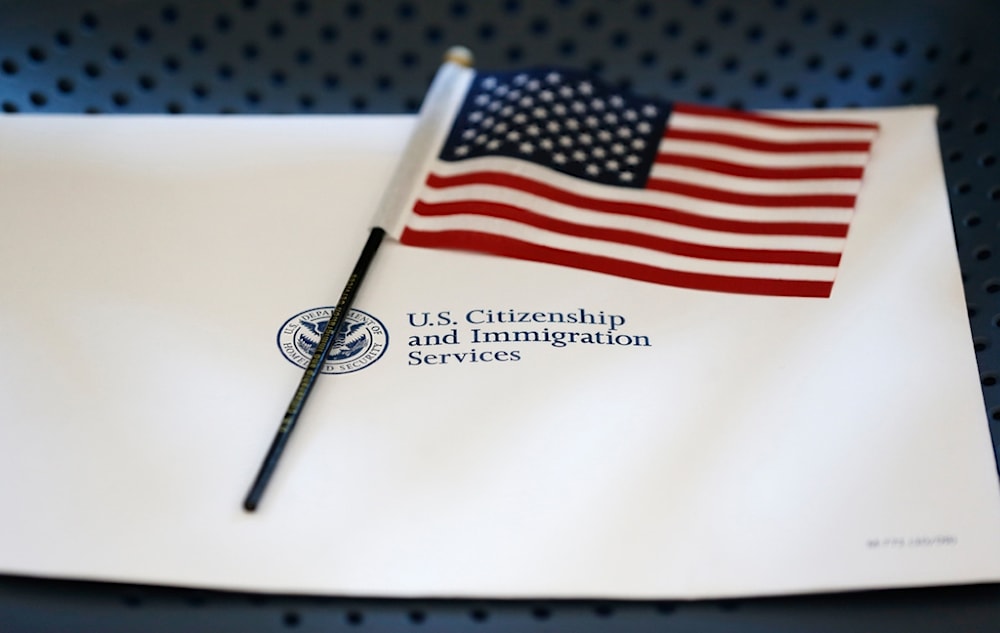
An information packet and an American flag are placed on a chair at the US Citizenship and Immigration Services Miami Field Office on Aug. 17, 2018, in Miami. (AP Photo/Wilfredo Lee)
The Trump administration has announced new immigration guidance stating that foreign nationals in the United States on temporary visas should generally return to their home countries if they wish to apply for permanent residency.
US officials said the measure is intended to reinforce what they describe as the “proper” legal immigration process and prevent temporary visa programs from becoming indirect pathways to long-term residency.
“An alien who is in the US temporarily and wants a Green Card must return to their home country to apply,” the Department of Homeland Security said in a statement posted on X.
The department added that the policy was designed to ensure immigration laws function “as intended instead of incentivising loopholes.”
USCIS is applying long-standing law and prior court decisions to require certain aliens with temporary visas who decide they want to permanently reside in the U.S. to return to their home countries to apply for permanent visas through the @StateDept.
— USCIS (@USCIS) May 22, 2026
We're returning to the… pic.twitter.com/E2AFZkds5m
USCIS says permanent residency is a discretionary benefit
In updated guidance released Friday, US Citizenship and Immigration Services said adjustment of status, the process of obtaining permanent residency from within the United States, is not an automatic entitlement.
The agency stated that temporary visa programs are generally based on the expectation that individuals will leave the country once the purpose of their stay concludes.
Immigration officers were instructed to assess applications individually, considering factors such as visa overstays, unauthorized employment, immigration fraud, and compliance with visa conditions.
The guidance also reaffirmed that immigration authorities retain broad discretion in deciding whether applicants qualify for permanent residency.
Read more: US citizenship applications to UK hit record high in 2025 under Trump
Limited exceptions remain under 'dual intent' visas
USCIS acknowledged that certain visa categories permit what is known as “dual intent,” allowing some foreign nationals to temporarily reside in the United States while also pursuing permanent residency.
However, the agency stressed that those exceptions do not guarantee Green Card approval or override congressional expectations that temporary visitors depart after their authorized stay expires.
Officials said the revised guidance would also help streamline immigration processing resources and reduce pressure on existing case backlogs.
Advocacy groups warn policy could affect vulnerable migrants
Immigrant rights organizations criticized the move, warning it could place vulnerable migrants at greater risk by forcing them to leave the United States while their applications remain pending.
HIAS said the policy may affect trafficking survivors, abused children, and other at-risk migrants who could face unsafe conditions if required to return abroad during immigration proceedings.
Rights groups also argued that the guidance may create additional uncertainty for families already navigating lengthy immigration processes.
Immigration restrictions continue under Trump administration
The guidance marks the latest step in the Trump administration’s broader effort to tighten immigration controls and limit pathways toward permanent residency.
Over the past year, the administration has introduced measures shortening visa durations for some students, exchange visitors, and foreign media workers.
In January, the US State Department announced that more than 100,000 visas had been revoked since Donald Trump returned to office, reflecting a wider crackdown on immigration and residency policies.


