
US destroyers fail to cross Hormuz after Iranian interception: Footage
 3 Min Read
A report reveals US destroyers were forced to retreat from the Strait of Hormuz after Iranian IRGC forces issued warnings, amid ongoing Iran-US talks in Islamabad.
-
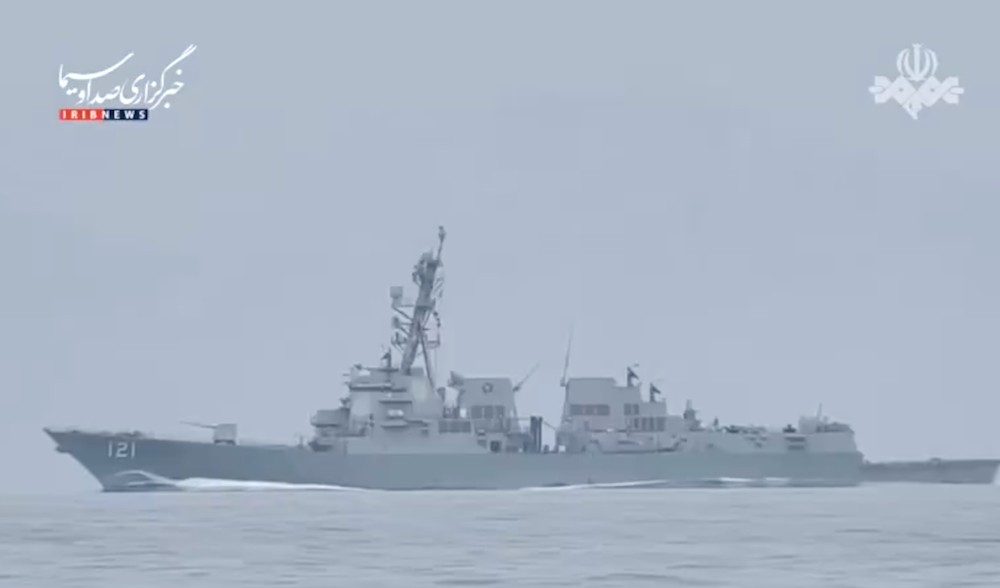
IRGC Navy published a radio communication they had with USS Frank E. Petersen Jr. (DDG-121) while attempting to pass the strait of Hormuz, April 11, 2026. (Screengrab)
A US naval attempt to transit the Strait of Hormuz ended in withdrawal after Iranian forces issued warnings, according to a report by Iranian State TV.
The report states that two US destroyers, the USS Michael Murphy (DDG 112) and USS Frank E. Peterson (DDG 121), both Arleigh Burke-class vessels, attempted to pass through the strategic waterway on Saturday. The move coincided with ongoing Iran-US talks in Islamabad.
According to the investigation, the vessels were forced to retreat after being intercepted by Iranian naval forces before completing their passage.
#WATCH | Iran's IRIB releases footage of the IRGC issuing a warning to a US warship that attempted to pass through the Strait of Hormuz yesterday. pic.twitter.com/2uoytLqHzg
— Al Mayadeen English (@MayadeenEnglish) April 12, 2026
IRGC locks in on US vessel
The investigation indicates that Iranian forces, including the Islamic Revolution Guards Corps (IRGC) Navy, responded swiftly to the presence of the US vessels.
Cruise missile systems reportedly locked onto the destroyers as they approached the entrance to the Persian Gulf, while drones were deployed overhead. The vessels were then issued a warning granting them 30 minutes to change course.
The report adds that communication was established via international maritime channels, instructing the US ships to leave the area or face potential targeting. Following the warning, the destroyers withdrew from the area.
According to the findings, the US vessels employed electronic warfare measures during the operation.
These reportedly included disabling position reporting systems and attempting to mask their identity by presenting themselves as commercial vessels. The ships were said to have simulated Omani registration while navigating through the southern Sea of Oman.
The report further notes that the vessels chose a route close to coastal and shallow waters, suggesting an attempt to minimize detection while entering the Strait of Hormuz.
However, Iranian forces monitoring the area near Fujairah detected the activity and responded.
Violation during Islamabad talks
The timing of the naval movement coincided with high-level Iran-US negotiations taking place in Islamabad under Pakistani mediation.
The talks lasted approximately 21 hours and concluded early Sunday without a breakthrough.
According to the investigation, the naval operation may have been intended to test Iran’s military readiness during a ceasefire period and potentially influence the course of the negotiations.
Investigation findings and strategic implications
The report concludes that the operation did not achieve its intended objectives. It describes the attempt as a high-risk maneuver that could have escalated into a broader confrontation. Support helicopters were also reported to be operating above the destroyers during the incident.
Additionally, nearby vessels were warned to maintain distance from the area as a precaution.
The investigation links the outcome of the operation to recent changes within the US military leadership, including the dismissal of senior officials under War Secretary Pete Hegseth.
Passage authorized by Iran only
Earlier on Sunday, a spokesperson for the Khatam al-Anbiya Central Headquarters rejected statements from US Central Command (CENTCOM) regarding the transit of American vessels through the Strait of Hormuz.
"The authorization for any vessel's transit through this strategic waterway rests solely with the Armed Forces of the Islamic Republic of Iran," Lieutenant Colonel Ebrahim Zolfaghari said.
In a separate statement, the IRGC Navy warned that any future attempt by US military vessels to pass through the Strait of Hormuz would face a strong response.
Read more: Exclusive: Iran denies US crossed Hormuz, calls claims fabricated


