
Islamabad talks are a 'round of demands,' not dialogue: Gharibabadi
 3 Min Read
Iran says US talks in Islamabad differ from past rounds, framing them as demands while stressing military readiness and refusal to compromise on rights.
-
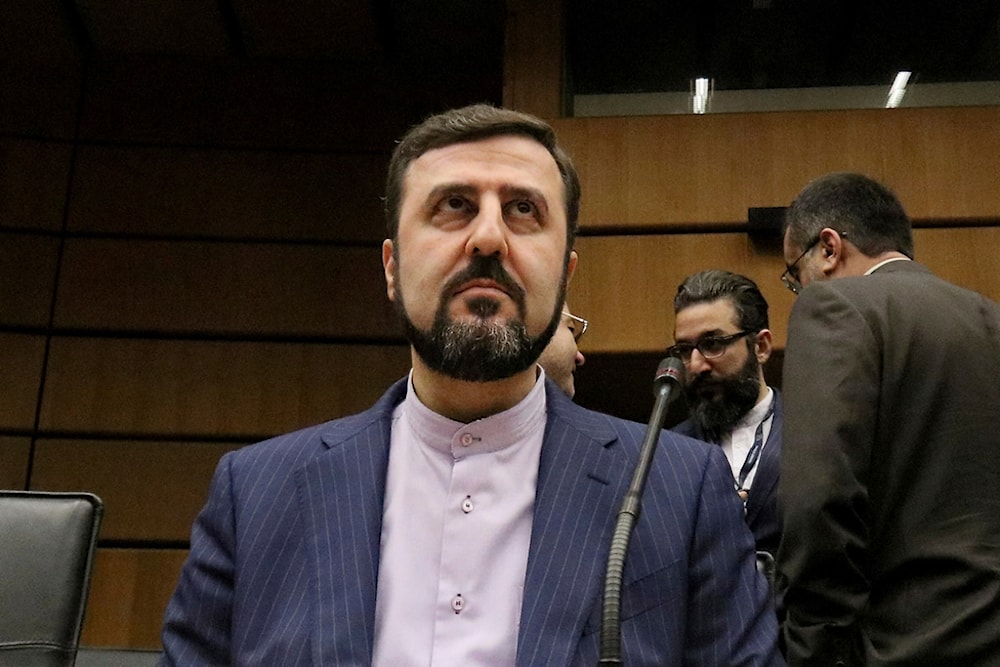
Deputy Foreign Minister for Legal and International Affairs of Iran, Kazem Gharibabadi, waits for the start of the IAEA board of governors meeting at the International Center in Vienna, Austria, November 21, 2019 (AP Photo/Ronald Zak)
Iran’s Deputy Foreign Minister for Legal and International Affairs, Kazem Gharibabadi, said that the current round of negotiations with the United States in Islamabad fundamentally differs from previous talks, describing it as a phase of demands rather than dialogue.
Speaking from Pakistan’s capital on Saturday, Gharibabadi said the shift reflects what he described as a lack of credibility and repeated breaches by Washington in earlier negotiations.
He stressed that “the difference in this round of negotiations is that it is not merely dialogue and negotiation, but a round of demands.”
Tehran outlines extensive demands and leverage
Gharibabadi noted that Iran has a “long list of demands” directed at the United States, ranging from issues related to the war to broader violations committed against the Iranian people.
He expressed hope that the talks would yield results, citing the Iranian delegation’s seriousness and the country’s strengthened position following recent developments.
According to Gharibabadi, Iran’s current standing, both militarily and domestically, has reinforced its negotiating position, pointing to national unity and battlefield outcomes as key factors.
He added that the United States has failed to achieve its objectives and has suffered significant setbacks, increasing Iran’s leverage.
Read more: Numbers reveal scale of US aircraft losses in Iran during OTP-4
Strait of Hormuz seen as key pressure tool
Gharibabadi highlighted Iran’s leverage and influence over the Strait of Hormuz as a critical strategic asset that has drawn the United States to engage in negotiations.
He described the Islamic Republic's advantage over the Strait as a central factor shaping the current talks, reinforcing Tehran’s position at the negotiating table.
Read more: Iran sets Lebanon ceasefire as key condition in US talks
Iran reiterates firm stance and readiness
In parallel, government spokesperson Fatemeh Mohajerani stated that sending a high-level delegation to Islamabad, headed by Parliament Speaker Mohammad Bagher Ghalibaf, reflects Iran’s commitment to dialogue.
Mohajerani reiterated the stance that Iran “will not compromise and will not retreat from its rights.”
She added that Iran’s armed forces remain “on full alert with fingers on the trigger,” underscoring Tehran’s readiness for all scenarios while expressing hope for a successful diplomatic outcome.
High-level delegation underscores seriousness
The senior Iranian delegation, which arrived in Islamabad on Friday, includes Foreign Minister Abbas Araghchi, Supreme National Security Council Secretary Ali Akbar Ahmadian, Central Bank Governor Abdolnaser Hemmati, and several members of the Shura Council.
Iranian officials have repeatedly indicated that the level and composition of the delegation reflect the seriousness of the Islamic Republic’s approach to the negotiations.
Despite Iran's good-faith strategy, US media outlets have called on Washington to play dirty by assassinating the Iranian delegation.
In an opinion piece penned by Marc A. Thiessen, he writes in the Washington Post that the US should "carry out a final barrage of leadership strikes, eliminating the Iranian officials who had been spared for the purpose of negotiations," he wrote.
Thiessen added, "Iran's leaders must be made to understand that their lives literally depend on reaching a negotiated settlement to Trump's liking. If they refuse to do so, they will be killed."


