
US-Iran talks end with 'significant progress', new round set: Omani FM
 4 Min Read
Indirect US-Iran nuclear talks in Geneva wrap up with "significant progress," according to Badr Albusaidi, who said technical talks are set for Vienna next week.
-
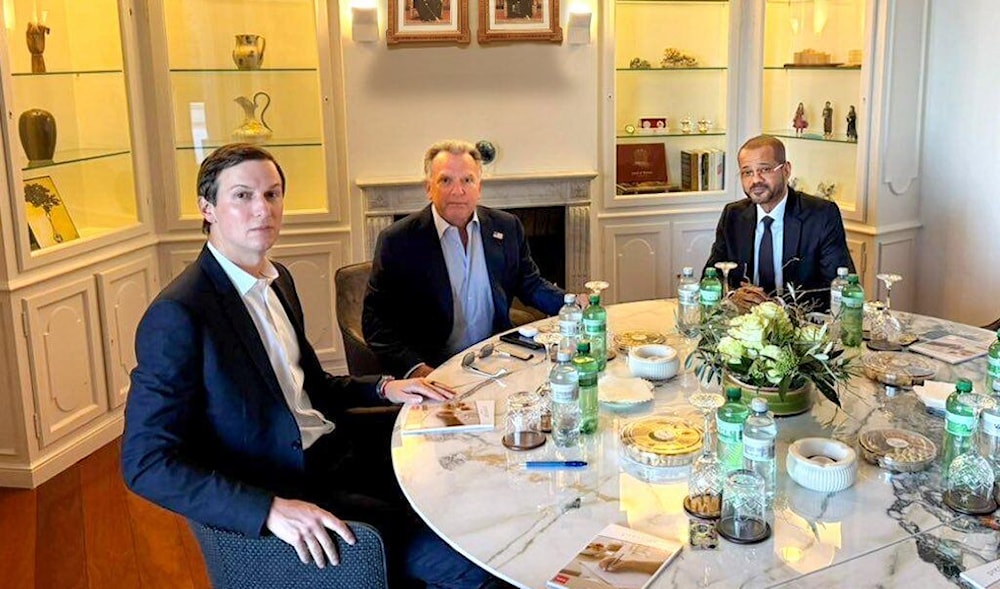
Oman's Minister of Foreign Affairs Sayyid Badr bin Hamad al-Busaidi, right, holds a meeting with Steve Witkoff, center, and Jared Kushner, as part of the ongoing Iranian-US talks, in Geneva, Switzerland, Thursday, Feb. 26, 2026 (Foreign Ministry of Oman via AP)
The third round of indirect talks between the United States and Iran concluded in Geneva on Thursday, achieving what Omani Foreign Minister Badr Albusaidi described as "significant progress", as both sides prepare to resume consultations after returning to their respective capitals for deliberations.
We have finished the day after significant progress in the negotiation between the United States and Iran. We will resume soon after consultation in the respective capitals. Discussions on a technical level will take place next week in Vienna. I am grateful to all concerned for…
— Badr Albusaidi - بدر البوسعيدي (@badralbusaidi) February 26, 2026
Albusaidi, who has played a central mediating role throughout the process, announced that technical-level discussions would continue next week in Vienna. He also expressed gratitude to the negotiating teams, the IAEA, and Switzerland for hosting the talks.
Iranian Foreign Ministry spokesperson Ismaeil Baghaei confirmed to IRNA that the second phase of the third round of nuclear negotiations had formally concluded, while Al Mayadeen's bureau director in Geneva reported that both the US and Iranian delegations had departed the negotiations venue.
Ibrahim Azizi, the chairman of the Iranian Parliament's National Security and Foreign Policy Committee, stated that all of Tehran's red lines were fully respected in the submitted Iranian proposal for talks and that the proposal addressed sanctions relief, foreign investment, and economic opportunities within Iran.
Azizi added that if Washington approaches the negotiations with rationality and seriousness, the Iranian proposal could lay the groundwork for a comprehensive agreement.
Sanctions relief in focus, but hurdles remain
Al Mayadeen's Geneva bureau director reported that the lifting of US sanctions on Iran was seriously discussed during the talks, contrary to US and Israeli media reports suggesting Washington was unwilling to engage on the matter before extracting concessions from Tehran.
On enrichment, the most sensitive technical issue, Azizi said Iran will not abandon its principle of uranium enrichment. Iranian state television similarly denied reports that Tehran plans to transfer enriched nuclear materials abroad, reaffirming the country's right to peaceful nuclear energy and domestic fuel production.
The talks have been described as constructive but difficult, with IAEA Director General Rafael Grossi's participation noted as significant for facilitating technical coordination between the two delegations. Western diplomatic sources told Al Mayadeen that a non-aggression pact is also under consideration.
Iran's red lines
Al Mayadeen's Geneva bureau director confirmed that the Iranian side categorically rejects any dismantling of its nuclear facilities. He clarified that Thursday's session did not reach the stage of discussing the number and type of centrifuges, indicating that the talks remain at an early substantive phase on the most technical dimensions of the nuclear file.
Our Geneva bureau director also pushed back against overblown media speculation around uranium enrichment, explaining that Iran has enriched at around 2% since 2015, sufficient for civilian use, and only raised that rate to 3.67% after the United States withdrew from the 2015 nuclear deal.
He highlighted that Iran is now showing flexibility on the issue, stressing that claims about Washington seeking to halt enrichment entirely or transfer it abroad do not reflect what is actually being discussed at the table.
Meanwhile, the head of Iranian government media relations, Elias Hazrati, stated that enrichment will continue and that no nuclear material will be transferred outside the country. He also pushed back directly against Western media coverage, saying that reporting by the Wall Street Journal and the New York Times "does not reflect the reality of the negotiations."
Al Mayadeen's Geneva bureau director further noted that US envoy Steve Witkoff and Jared Kushner have no established background in the technical details of the nuclear file, raising questions about the depth of engagement on the US side at this stage.


