
US Patriot stocks depleted by up to 67% during Iran war: CSIS
 6 Min Read
Heavy interceptor use during the war on Iran leaves US Patriot inventories below 1,000 and THAAD stocks at about 250, exposing pressure on missile defenses.
-
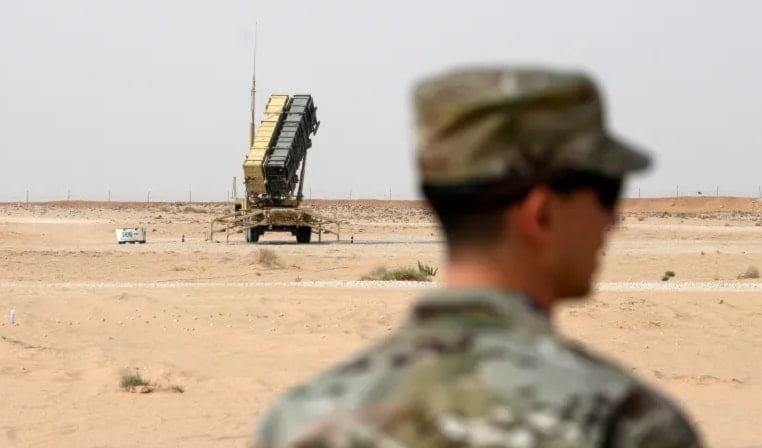
A member of the United States Air Force stands near a Patriot missile battery at the Prince Sultan Air Base in Saudi Arabia (AP)
US forces could face heightened risks if the war with Iran intensifies, as Washington has already depleted a substantial share of its Patriot and Terminal High Altitude Area Defense interceptor inventories, according to an analysis by the Center for Strategic and International Studies.
The assessment, published by Mark F. Cancian and Chris H. Park, said US forces fired large numbers of air-defense munitions during the first phase of “Operation Epic Fury,” significantly reducing the number of interceptors available as combat operations resumed.
Although Iranian missile launches have so far remained below the rate recorded before the April 8 ceasefire, the analysts warned that renewed or prolonged fighting would place additional pressure on inventories that are already severely diminished.
New satellite imagery proves the destruction of the US AN/FPS-117 early-warning radar at Ahmad Al-Jaber Air Base in #Kuwait, following Iran's retaliatory strike.
— Al Mayadeen English (@MayadeenEnglish) July 22, 2026
On July 21, the Islamic Revolution Guard Corps (IRGC) said Iranian forces targeted key US military infrastructure at… pic.twitter.com/RiyAwoTXl7
Patriot inventory falls below 1,000
CSIS estimated that the United States possessed approximately 2,330 Patriot interceptors before the war began on February 27.
By the April 8 ceasefire, the inventory had fallen to around 1,030 interceptors, representing a depletion of approximately 55.8%.
The analysis estimated that only 759 to 827 Patriot interceptors remained by July 27 after further wartime use and the addition of newly delivered missiles.
Compared with the prewar inventory, the July estimate represents a decline of between 1,503 and 1,571 interceptors, equivalent to a depletion of approximately 64.5% to 67.4%.
This means Washington had only around 32.6% to 35.5% of its estimated prewar Patriot inventory remaining by late July.
THAAD stocks fall by up to 48%
The THAAD inventory also declined sharply, although not to the same extent as the Patriot stockpile.
CSIS estimated that the United States had approximately 452 THAAD interceptors before the war.
At the April 8 ceasefire, the remaining inventory was estimated at between 232 and 262 interceptors.
-

Patriot and THAAD interceptors remaining in US inventory (CSIS)
By July 27, the estimated stockpile stood at between 234 and 278. The slight increase from the ceasefire estimate reflected the arrival of additional interceptors, with deliveries reportedly exceeding the number used during that period.
Nevertheless, compared with the prewar level of 452, the July estimate indicates that between 174 and 218 THAAD interceptors had been depleted.
This amounts to a reduction of approximately 38.5% to 48.2%, leaving Washington with between 51.8% and 61.5% of its prewar THAAD inventory.
Diminished stocks could force greater risks
The analysis said the extensive use of both systems had left Patriot inventories below 1,000 and THAAD stocks at approximately 250.
“Diminished stockpiles may force the United States and its coalition partners to take more risks with interceptions,” the authors wrote, adding that “there are no good alternatives to Patriot and THAAD for ballistic missile defense.”
According to the analysts, US Navy vessels equipped with Standard Missiles capable of intercepting ballistic threats are generally positioned too far away to provide a dependable substitute for land-based Patriot and THAAD systems.
The depletion could therefore force US forces to become more selective about which incoming missiles they attempt to intercept, particularly during a prolonged confrontation involving repeated Iranian strikes.
Depletion raises concerns over China readiness
Cancian and Park also warned that the reduced inventories could create near- and medium-term challenges for Washington’s preparations for a potential confrontation with China in the western Pacific.
Patriot and THAAD systems would likely be required to protect US bases and forces from ballistic missile attacks during such a conflict.
“The Trump administration’s munitions request of $95 billion in the FY 2027 defense budget and $21 billion in the war supplemental reflects this urgency,” the analysis stressed.
The figures underline the growing strain placed on US military resources by Washington’s operations across several regions, as it continues its war on Iran while supplying weapons to Ukraine and preparing for a possible confrontation in the Asia-Pacific.
Pentagon pursues $59bln Patriot deal
The depletion has prompted the Pentagon to pursue major long-term agreements intended to replenish missile stocks and expand weapons production.
The Pentagon has moved to secure approximately $136 billion in contracts for air-defense missiles and nuclear-powered submarines, The Wall Street Journal reported.
The proposed agreements include an expanded Patriot missile package valued at nearly $59 billion and a $76.6 billion submarine deal covering 14 vessels scheduled for delivery through 2038.
The spending reflects the Trump administration’s push to expand the US military-industrial base amid the continuing war on Iran, ongoing weapons transfers to Ukraine, and persistent delays affecting naval shipbuilding.
However, the agreements have not yet been fully financed, and Congress would still need to approve the necessary funding through annual defense appropriations.
Patriot production expands amid war on Iran
Lockheed Martin’s agreement with the US Army would significantly expand a Patriot missile contract first announced in April.
Demand for the system has increased as Patriot interceptors are used against cruise and ballistic missiles during the war on Iran and in Ukraine.
The latest Patriot interceptors cost approximately $4 million each and can take years to manufacture, placing additional pressure on the Pentagon to establish longer and more predictable production schedules.
Lockheed Martin is also negotiating a preliminary seven-year agreement worth approximately $35 billion to supply THAAD interceptors designed to counter ballistic missiles.
Departure from annual purchasing
The proposed Patriot and THAAD agreements mark a departure from the Pentagon’s traditional practice of ordering missiles one year at a time.
Under the new approach, the military would provide weapons manufacturers with multiyear purchasing commitments intended to encourage greater investment in factories, workers, and supply chains.
The strategy was introduced last year under Deputy Secretary of War Steve Feinberg as the Pentagon sought to provide arms manufacturers with greater certainty regarding future orders.
Both missile agreements remain undefinitized contracts, meaning their final terms have not been settled and Congress has not yet provided all the funding required to support them.
Read next: US to buy Patriot PAC-2 interceptors for first time in 30 years


