
War on Iran drains up to half of key US munitions: CNN
 6 Min Read
The depleted inventories have exposed production bottlenecks that could take years to overcome and complicate Washington’s global military commitments.
-
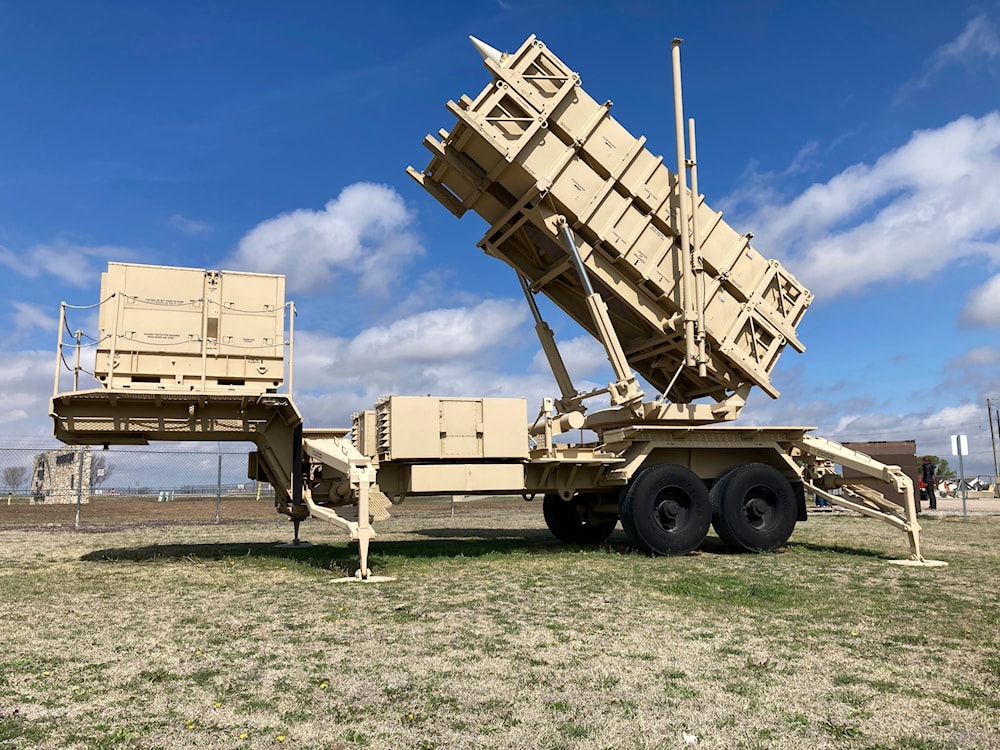
FILE - A Patriot missile mobile launcher is displayed outside the Fort Sill Army Post near Lawton, Okla., on March 21, 2023 (AP)
The United States may face mounting shortages of essential weapons after consuming a significant share of its missile reserves during the war on Iran.
Mark Cancian, a retired US Marine Corps colonel and defense analyst at the Center for Strategic and International Studies, told CNN that Washington had expended between one-third and one-half of several critical types of ammunition during the war.
“The US has used between a third and a half of its key munitions,” Cancian said.
The assessment highlights growing concerns over the ability of the US arms industry to replenish weapons at the same pace at which they were used during the fighting.
Exact US stockpile figures remain classified, meaning assessments of the remaining inventory are based largely on Pentagon procurement records, reported launch figures, and analysts’ estimates.
Thousands of missiles deployed
During the opening phase of the war, the US military fired thousands of missiles in long-range attacks and security operations against incoming Iranian strikes, according to analysts and earlier CNN reporting.
A particularly heavy burden fell on Patriot missile defenses, which were deployed to intercept missiles targeting US forces and allied states across the Gulf.
“We have used over a thousand (Patriot missiles) in this current war. Our allies in the Gulf have also used a lot. Ukraine wants more so there is a tremendous demand for production,” Cancian told Lynda Kinkade on CNN’s Newsroom.
The scale of the expenditure has intensified competition for limited supplies, as the United States seeks to rebuild its own inventories while Gulf allies and Ukraine continue requesting additional interceptors.
Patriot missiles were already in high demand before the war. Ukraine relies on the system to defend cities and critical infrastructure from Russian missile attacks, while several Gulf and European countries have also placed orders to expand or restore their air-defense inventories.
The pressure was not limited to Patriot missiles. US forces also consumed large numbers of THAAD and ship-launched SM-3 interceptors, as well as long-range offensive weapons such as Tomahawk cruise missiles and Joint Air-to-Surface Standoff Missiles.
CSIS estimated that Washington may have used more than half of its prewar inventory in several critical missile categories. The think tank also assessed that more than 1,000 Tomahawks were fired during the war, representing several years of output at recent production rates.
Production unable to match demand
The Patriot is one of the US Army’s principal air and missile defense platforms. It consists of radar systems, launchers, command equipment, and interceptor missiles designed to confront aircraft, drones, and ballistic and cruise missiles.
A complete Patriot battery can cost more than $1 billion, while annual production of the advanced PAC-3 Missile Segment Enhancement interceptor has stood at around 600 missiles.
That production rate remains far below the level of demand generated by the war on Iran and Washington’s other military commitments.
The Pentagon announced plans in January to establish a new acquisition framework intended to raise annual PAC-3 MSE production to as many as 2,000 missiles. However, reaching that target will require expanded factories, supply chains, trained workers, and long-term government contracts, meaning the additional capacity will not become available immediately.
Cancian warned that countries seeking to place new orders would likely face delays lasting several years because manufacturers are already working through a substantial backlog.
“If you went and ordered another Patriot today, you probably wouldn’t get it for four or five years because of the backlog.”
Missile production cannot be increased as quickly as the output of less sophisticated ammunition. Interceptors require specialized rocket motors, guidance systems, seekers, electronics, explosives, and extensive testing before they can be delivered to military units.
The problem extends to Tomahawk missiles. Although manufacturer Raytheon aims to establish the capacity to produce more than 1,000 annually, recent output has remained below 200 a year because of relatively small orders placed before the war. Existing contracts are not expected to restore the inventory rapidly to its prewar level.
Years needed to restore inventories
The shortages could leave Washington with difficult choices over how to distribute available weapons between its own forces, allies in West Asia, Ukraine, and other foreign customers.
Newly manufactured interceptors may be required simultaneously to replenish US military stocks, replace missiles used by Gulf states, and respond to demands from Kiev and European governments.
CSIS has warned that rebuilding some missile inventories will be a multiyear process. Advanced weapons can take several years to move from an order to delivery, particularly when their production lines are already operating at capacity.
The consequences could extend beyond the war on Iran. US military planning for a possible aggression on China would depend heavily on many of the same weapons, including long-range Tomahawk and JASSM missiles, as well as Patriot, THAAD, and SM-3 interceptors needed to protect US bases, warships, and allied territory.
Analysts have warned that American stocks of long-range offensive weapons and missile-defense interceptors were already inadequate for a prolonged conflict in the Western Pacific before the war on Iran. The additional expenditure has therefore raised questions over Washington’s ability to sustain simultaneous military commitments in several regions.
The depletion does not necessarily mean the US military is on the verge of becoming unable to continue operations. Washington retains other types of weapons and could adjust its tactics by relying more heavily on aircraft-delivered bombs and less scarce ammunition.
However, the figures demonstrate the pressure that sustained Iranian missile operations placed on US and allied security systems, forcing Washington to consume advanced and expensive interceptors far faster than its existing industrial base can replace them.
Read more: US war on Iran depletes missile arsenal, exposes strategic weaknesses


