
US voices concern over Sudanese military's push for military solution
 3 Min Read
The US warns Sudan's military against pursuing a military solution, urging a ceasefire and peace talks.
-
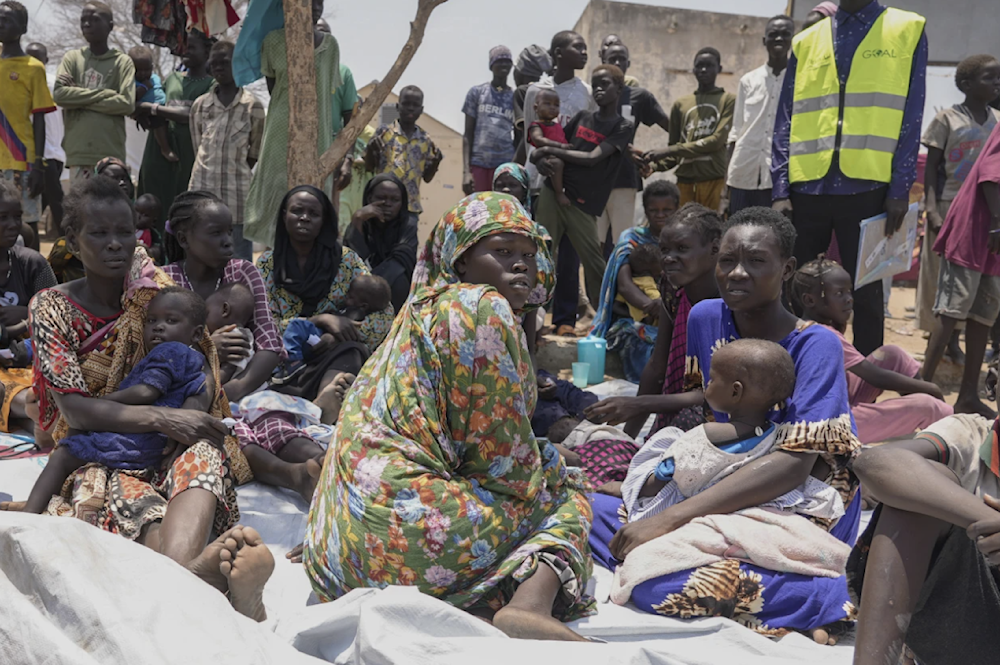
South Sudanese who fled from Sudan sit outside a nutrition clinic at a transit center in Renk, South Sudan, on May 16, 2023. (AP)
The US State Department has expressed deep concern over recent statements by Sudan’s military leadership advocating military solutions to the ongoing conflict, warning that such rhetoric undermines efforts to end the crisis and ease the suffering of millions.
The department stressed that tens of thousands of Sudanese are suffering, emphasizing that Sudan's military leaders must follow a path toward peace, not further violence. It criticized the imposition of preconditions for any ceasefire, saying such demands only prolong the conflict.
The statement emphasized that lasting peace in Sudan can only be achieved through negotiated arrangements that halt violence, facilitate humanitarian aid access, and lay the groundwork for a permanent ceasefire and inclusive civil dialogue.
Over 200 civilians killed in ethnic attacks in Darfur
The Sudan Doctors Network has confirmed that more than 200 civilians, comprising women, men, and children, have been deliberately killed in western Darfur in a wave of "ethnically motivated attacks" by the Rapid Support Forces (RSF). The report is based on survivor testimonies gathered from displaced individuals who fled to refugee camps in Tine, eastern Chad.
The killings occurred in the towns of Ambro, Serba, and Abu Qumra. Victims were targeted explicitly for their ethnic background, in what the Sudan Doctors Network labeled a flagrant violation of international humanitarian law.
This latest report aligns with mounting evidence of systematic ethnic cleansing campaigns by the RSF across Darfur. International investigations have previously revealed that the RSF, originally formed from the Janjaweed militias, has carried out mass atrocities against non-Arab ethnic communities, especially the Masalit, Zaghawa, and Fur groups, since the outbreak of conflict in April 2023.
Humanitarian crisis deepens as civilians flee
The network further noted that the attacks have triggered mass displacement toward neighboring Chad. Civilians fleeing the violence have reported "extremely dire" conditions in camps, including shortages of food and drinking water, the collapse of health services, and a lack of adequate shelter.
The Sudan Doctors Network warned that these conditions pose a grave threat to thousands of lives, emphasizing that the most at-risk groups include children, women, and the elderly. The organization called attention to the continued absence of humanitarian access and protection for displaced populations.
Additionally, the network has called for an immediate cessation of hostilities and demanded unhindered humanitarian access to affected populations. It also urged international organizations to scale up assistance for displaced people and to hold perpetrators accountable for what it described as "mass killings on an ethnic basis."
This mirrors earlier findings by UN agencies and humanitarian organizations, which documented that RSF attacks have forcibly displaced over 14 million people since April 2023, making Sudan the site of the world's largest displacement crisis.
The RSF emerged from the Janjaweed militias that carried out atrocities during the early 2000s war in Darfur, which saw the death of approximately 200,000 Darfuris. Since the start of the renewed conflict in 2023, the group has led ethnic-based campaigns, especially in areas like El Geneina and El Fasher. The attacks in Ambro, Serba, and Abu Qumra echo these past patterns, indicating a deliberate and ongoing strategy to depopulate ethnic communities in Darfur.


