
'No chance' US strikes on Iran lead to protracted war, Vance claims
 4 Min Read
US Vice President JD Vance says there is “no chance” US strikes on Iran would trigger a prolonged regional war, while urging diplomacy.
-
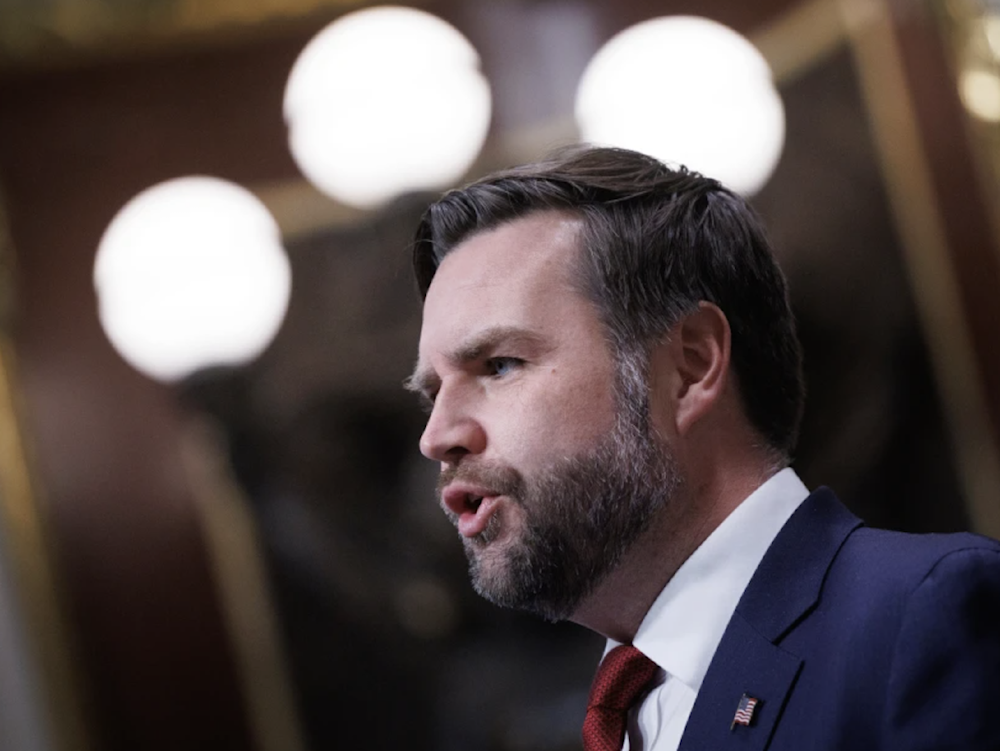
US Vice President JD Vance speaks during a news conference in the Old Eisenhower Executive Office Building on the White House campus on February 25, 2026 in Washington. (AP)
US Vice President JD Vance claimed there is “no chance” that US strikes on Iran, an option being mulled by President Donald Trump, would lead to a prolonged war in the region, according to an interview with The Washington Post.
“The idea that we’re going to be in a Middle Eastern war for years with no end in sight — there is no chance that will happen,” Vance said, dismissing warnings that Washington could be drawn into an open-ended military quagmire.
Vance alleged that he preferred a diplomatic route, but added that outcomes would depend on “what the Iranians do and what they say.”
His remarks come after Iranian Foreign Minister Abbas Araghchi announced that “greater progress” was achieved during the third round of indirect negotiations between Tehran and Washington.wing criticism over the risks of escalation across the region.
In remarks published on the social media platform X, Araghchi described the latest round as “the most intense so far,” confirming that the diplomatic track is advancing despite remaining differences on key issues.
Araghchi said the talks concluded with an understanding to continue consultations in a more detailed and precise manner on core issues.
Any miscalculation could ignite wide-scale conflict in region: Iran
Brigadier General Abolfazl Shekarchi, spokesperson for the Iranian Armed Forces, warned Thursday that any miscalculated move could trigger wider conflict in the region, emphasizing that US interests in the region would be in the armed forces' crosshairs.
"We do not seek to ignite wars, but we do not fear them," he asserted, vowing to "strongly defend our homeland and the interests of our people."
The warning comes amid continued US military buildup in the region, with Washington threatening potential action against Iran despite ongoing rounds of talks over Tehran’s nuclear program.
US build-up escalates significantly
Amid these developments, US military buildup in the Middle East has expanded significantly, with Washington assembling 16 warships, about 40,000 troops, and at least seven air wings in the region, the Financial Times reported, citing rising US-Iran tensions.
US President Donald Trump said on February 19 that he will decide within 10 to 15 days whether to pursue diplomacy with Iran or take military action, Axios reported. Speaking in Washington, he said the coming days would be decisive for US policy. “Now we may have to take it a step further, or we may not,” Trump said, adding, “Maybe we are going to make a deal [with Iran].”
The United States had already maintained five air wings, command units of roughly 70 aircraft each, at bases in Jordan, Kuwait, Qatar, Saudi Arabia, and the United Arab Emirates. It has since added two more aboard the aircraft carriers USS Abraham Lincoln and USS Gerald R. Ford, reinforcing what Trump described as a “massive armada” of 16 vessels and expanding Washington’s operational reach.
The overall US troop presence in the region now stands at around 40,000 personnel. Citing data from Tel Aviv University, the Financial Times reported that Jordan’s Muwaffaq Salti military base hosts at least 66 fighter jets, including 18 F-35s, 17 F-15s, and eight A-10s, along with EA-18 electronic warfare aircraft and transport planes. Satellite data also shows an increase in fighter jets at a Saudi air base, reflecting the broader expansion of the US air footprint across Jordan and the Gulf.


