
Vance doubts Pentagon Iran war claims amid missile stock depletion
 4 Min Read
Vice President JD Vance questions the Pentagon’s portrayal of the war on Iran, raising concerns in closed-door meetings about the severe depletion of US missile stockpiles.
-
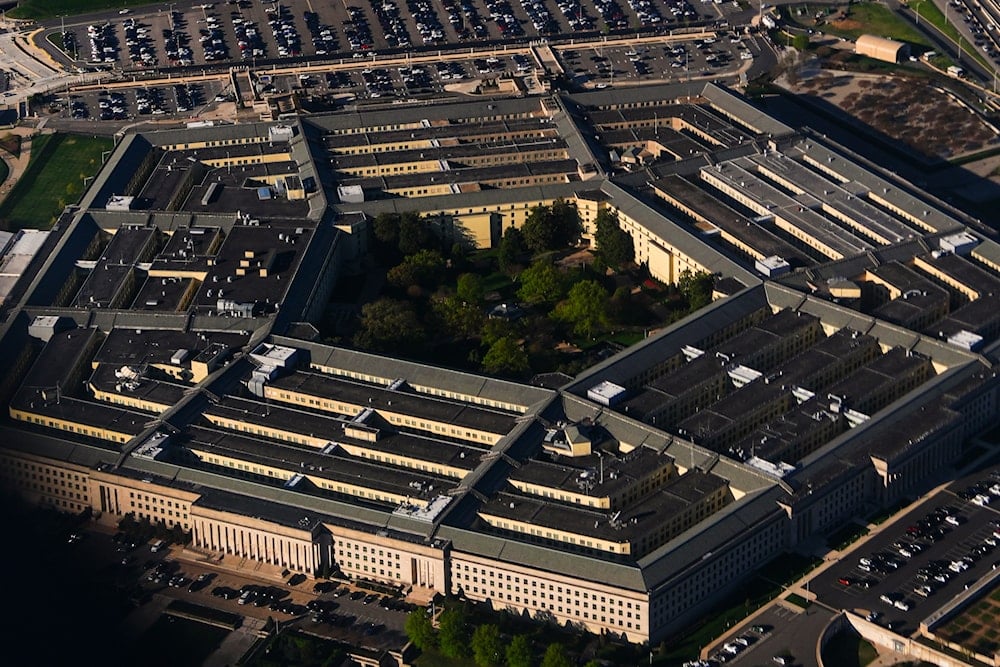
The Pentagon is seen from an airplane, on April 7, 2026, in Washington. (AP Photo/Julia Demaree Nikhinson)
US Vice President JD Vance has repeatedly questioned the Department of War’s account of the war on Iran, including whether it has understated the apparent depletion of US missile stockpiles, two senior administration officials told The Atlantic.
Vance has also raised concerns about the accuracy of information provided on the war and about the availability of certain missile systems in discussions with President Donald Trump.
The consequences of a sharp depletion in munitions reserves could be severe. US forces would rely on the same stockpiles to defend Taiwan against China, South Korea against the Democratic People's Republic of Korea (DPRK), and Europe against Russia.
Both War Secretary Pete Hegseth and General Dan Caine, who chairs the Joint Chiefs of Staff, have publicly stated that US weapons stockpiles remain robust and portrayed the damage to Iranian forces after eight weeks of fighting as drastic.
Vance advisers believe Hegseth's portrayal is misleading
Some of Vance's confidantes believe that Hegseth's portrayal has been so positive as to be misleading.
In a statement, Vance said that the War secretary "is doing a great job" and cited Hegseth's work with Trump to ensure a "warrior ethos" in the military's top ranks.
A White House official told The Atlantic that Vance "asks a lot of probing questions about our strategic planning, as do all of the members of the president's national-security team."
Trump has echoed many of Hegseth and Caine's positive statements about the war, declaring weeks ago that the damage wrought by US forces already constituted victory and that US stockpiles of key weapons are "virtually unlimited."
Some advisers suggested that Hegseth's sanguine portrayals and at times combative approach with the press appear designed to give the president what he wants to hear. "Pete's TV experience has made him really skilled at knowing how to talk to Trump, how Trump thinks," one former Trump official told The Atlantic.
Internal assessments show Iran retains significant capabilities
Department of War leaders' positive portrayals present an incomplete picture at best, people familiar with intelligence assessments told The Atlantic. According to those internal estimates, Iran retains two-thirds of its air force, the bulk of its missile-launching capability, and most of its small, fast boats, which can lay mines and suspend traffic in the Strait of Hormuz.
In March, Hegseth boasted about the military's "complete control" of Iranian skies. But in April, Iranian forces downed a US fighter jet, setting off an intensive rescue operation. Tehran brings more missile launchers back online every day, with roughly half accessible again after the initial ceasefire was extended indefinitely.
US may have used more than half of prewar munitions
Officials and outside advisers told The Atlantic that the use of key weapons, including interceptors and weapons such as Tomahawk and Joint Air-to-Surface Standoff missiles, has produced a serious shortage that erodes America's ability to fight future wars. The Center for Strategic and International Studies, a Washington think tank, stated this week that the United States may have already gone through more than half of its prewar supply of four key munitions.
Even before the war on Iran, stockpiles had been drained by lethargic manufacturing and munitions donations to Ukraine and "Israel." Department of War officials have warned that the deficits jeopardize the military's ability to prevail in a hypothetical war against Russia or China.
Far from Hegseth's predictions of a quick, decisive win, the war on Iran has now drifted into a costly, indeterminate stalemate, The Atlantic reports.
Read More: War on Iran cost US billions and its top weapon stockpiles


