
Venezuela approves oil law reform, opens sector to foreign investors
 4 Min Read
Venezuela has approved a major hydrocarbon law reform, reducing PDVSA’s monopoly and opening the oil sector to foreign investors.
-
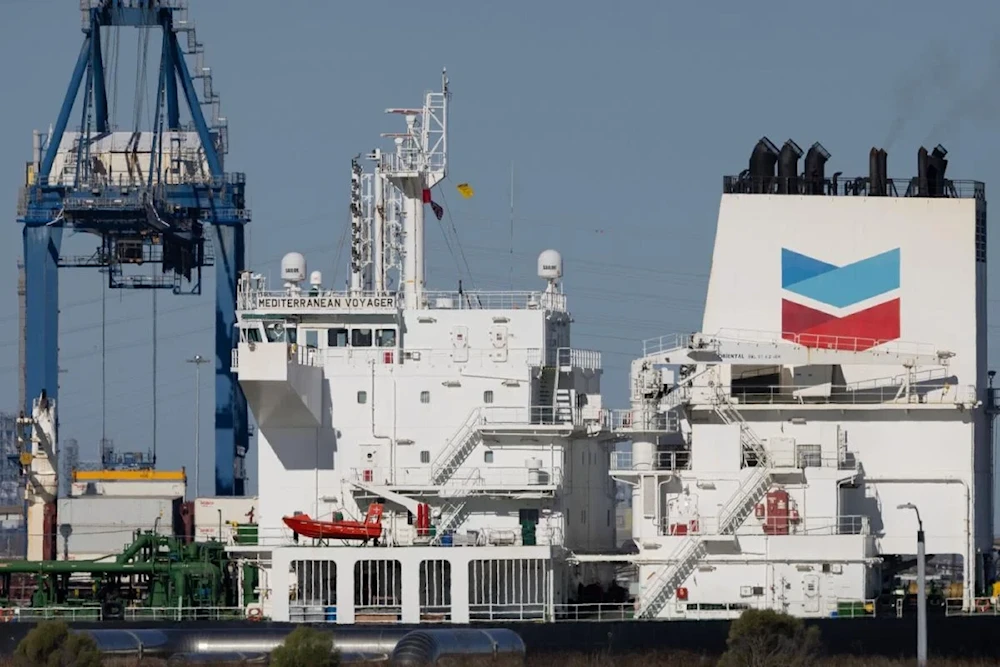
The Mediterranean Voyager is seen docked at Port Freeport, Monday, January 19, 2026, in Freeport, Texas (AP)
Venezuelan lawmakers on Thursday approved a sweeping reform of the country’s hydrocarbon laws, significantly reducing state control over oil and opening the sector to foreign interference and investments.
State control over the oil sector was greatly curbed and made far too difficult due to sweeping US sanctions that forced Caracas to sell oil at lower than market prices, significantly cutting its profits and slowing down the country's battered economy.
The legislation was enacted by the National Assembly and signed into law by acting President Delcy Rodriguez, taking away control over the oil industry from state-owned producer Petróleos de Venezuela.
Under the new framework, private producers will be granted greater operational autonomy, including the ability to manage oilfields, transfer assets, and outsource services without being subject to mandatory majority control by PDVSA. The reform also lowers taxes and royalties in an effort to make oil projects more competitive and attract international investment after the entire sector was greatly impacted by sanctions.
In a significant concession to foreign investors, the law stipulates that legal disputes arising from oil contracts will be resolved in international or US courts rather than within Venezuela’s judicial system, taking away further control from Caracas over its own resources following US intervention.
US eases sanctions amid interventionism
The changes come amid a broader political and economic realignment following the January 3 kidnapping of President Nicolas Maduro by the US military. The reform is closely tied to a proposed $100 billion reconstruction plan for Venezuela’s oil industry promoted by the administration of US President Donald Trump.
On the same day the legislation was signed, the US Treasury Department issued a general license easing several sanctions on Venezuelan crude. The authorization allows US companies to lift, transport, and refine Venezuelan-origin oil, effectively reopening commercial air and maritime routes between the two countries.
Speaking at a signing ceremony with oil workers in Caracas, Rodriguez described the reform as a “historic qualitative leap” and said the new law aims to restore Venezuela as a leading global oil producer. She added that the objective was to turn the country’s vast proven oil reserves into “the greatest happiness” for the Venezuelan people.
Venezuela holds the world’s largest proven oil reserves, but years of underinvestment and mismanagement driven by sanctions have sharply reduced production and exports.
At what cost?
The United States Treasury Department has issued a new authorization allowing US‑registered companies to drill, purchase, sell, and export Venezuelan oil, according to a federal document published Friday. The move significantly alters US policy toward Venezuela’s energy sector after years of sanctions.
Under the updated regulations, transactions that were previously prohibited under the Venezuela Sanctions Regulations, including activities involving Petróleos de Venezuela, S.A., and companies majority‑owned by it, are now permitted for established US entities.
These activities include lifting, exportation, re‑exportation, sale, resale, supply, storage, marketing, purchase, delivery, transportation, and refining of Venezuelan‑origin oil.
Exclusions for foreign adversaries
However, the Treasury made clear that the new general license does not authorize transactions involving companies from Russia, China, Iran, DPRK, or Cuba, a selective carve‑out that reinforces Washington’s geopolitical priorities in the region. Any Venezuelan oil deal involving entities based in or controlled by those countries remains barred.
The Treasury also requires that any entity involved in the sale or supply of Venezuelan oil to countries other than the United States submit reports within 10 days of the first transaction and every 90 days thereafter. Additionally, the general license prohibits the use of sanctioned tankers, vessels previously blacklisted under US sanctions, for transporting Venezuelan oil.
Shift in US policy amid broader intervention
This policy shift comes as part of a broader US strategy in Venezuela following its military aggression earlier this month, which resulted in the kidnapping of President Nicolás Maduro.
The Trump administration has since pursued new oil supply deals intended to resume Venezuelan exports and integrate them into the global market under US oversight, tying them to reconstruction plans and political leverage.


