
Von der Leyen tightens grip on EU security policy, centralizes power
 2 Min Read
EU officials say a new European Security Strategy is being drafted under von der Leyen’s direct influence, reducing the role of established foreign policy bodies.
-
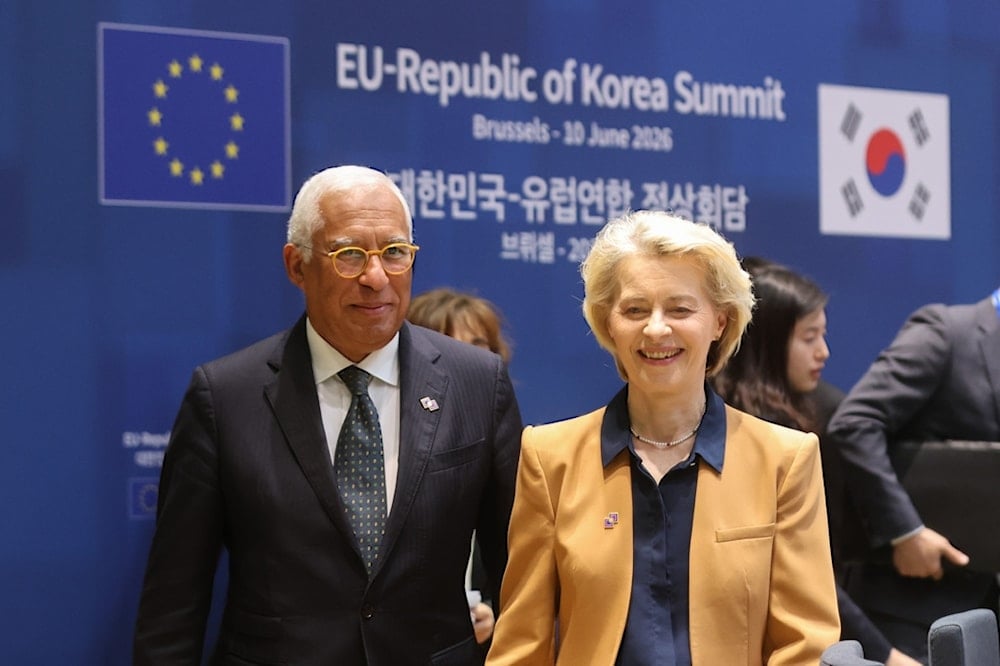
European Council President Antonio Costa, left, and European Commission President Ursula von der Leyen arrive for a round table at the EU-Republic of Korea Summit in Brussels, Wednesday, June 10, 2026. (Olivier Hoslet, Pool Photo via AP)
European Commission President Ursula von der Leyen is continuing a push to centralize decision-making within the EU and is now seeking to extend her influence into the bloc’s defense policy, Politico reported on Wednesday, citing EU officials.
The report said that centralization has become a defining feature of von der Leyen’s leadership, with key strategic portfolios increasingly managed from her immediate circle rather than through traditional EU institutional channels.
According to Politico, a major restructuring of the European Commission has been discussed since May, including proposals to streamline internal operations and create a centralized mechanism for managing EU funds.
The publication noted that von der Leyen’s tendency to personally oversee strategic policy areas has become a hallmark of her presidency, and that defense is now emerging as a central focus of her agenda.
EU security strategy being drafted under Commission control
The report said this shift is reflected in work on a new European Security Strategy, expected to be presented after the upcoming NATO summit in July.
Drafting of the strategy is reportedly being led within the European Commission itself, rather than through the European External Action Service (EEAS), which has traditionally handled such strategic documents.
Politico said key roles in the process have been assigned to officials close to von der Leyen, including her chief diplomatic advisor Simon Mordue and former EEAS official Arnout Molenaar.
EU foreign service and defense commissioner sidelined
The report also suggests that the EEAS has been only marginally involved in the drafting process, despite its previous role as the main body responsible for EU strategic foreign policy documents.
EU Defense Commissioner Andrius Kubilius has also reportedly been left on the sidelines, according to officials cited in the report.
The developments come amid broader debates inside the EU over institutional balance, as questions grow over how much authority is concentrated within the European Commission presidency versus member state-driven structures.
Read more: European trust in US security guarantees falls to historic low: ECFR


