
EU leaders push new energy plan as current measures fall short
 2 Min Read
EU leaders have called for stronger, more targeted energy measures after concluding current proposals are insufficient to address rising costs driven by the war on Iran.
-
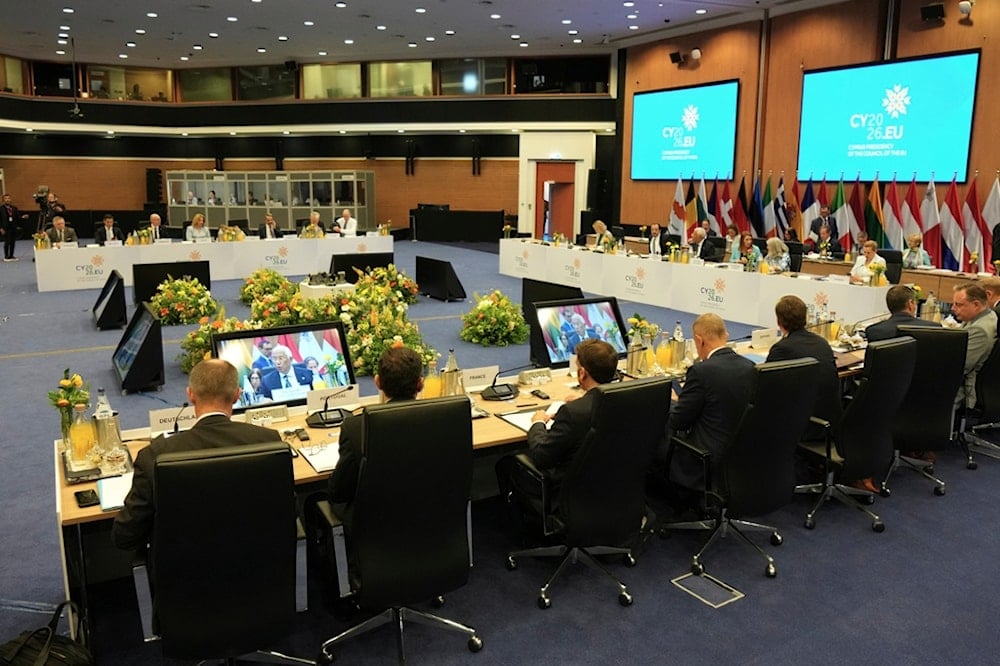
EU leaders attend a roundtable of the EU Summit in Nicosia, Cyprus, Friday, April 24, 2026. (AP Photo/Petros Karadjias)
European Union leaders are pushing for a revised approach to the bloc’s energy crisis after concluding that current measures fall short, according to information reported by Bloomberg.
During a meeting in Cyprus on Thursday, EU leaders agreed to task finance ministers with drafting new proposals aimed at addressing the worsening situation, particularly in light of rising costs linked to the war on Iran. A source familiar with the discussions, speaking on condition of anonymity, said there was a clear sense among leaders that the plan introduced earlier this week by the European Commission does not go far enough.
The Commission’s proposal included measures such as reducing energy-related taxes and improving the distribution of aviation fuel, in an effort to cushion the impact of supply disruptions. Since the outbreak of the war, gas prices have climbed by 34%, while Brent crude has surged by 37%.
Energy urgency
Ahead of the discussions, Italian Prime Minister Giorgia Meloni told reporters: "Europe must show more courage," adding that while the Commission’s plan is a step forward, it "are still not enough to move forward."
Cypriot President Nikos Christodoulides confirmed that leaders would instruct finance ministers to return with "very specific proposals on short-term measures regarding the energy crisis."
At the same time, the Commission unveiled its "AccelerateEU" initiative, designed to give member states more flexibility to manage energy prices and prepare for potential shortages, without undermining climate targets or distorting competition within the bloc.
Energy transition
Looking further ahead, EU officials are aiming to scale up electricity infrastructure and reduce reliance on fossil fuels as part of a broader strategy aligned with the bloc’s goal of cutting emissions by 90% by 2040 compared to 1990 levels.
Spanish Prime Minister Pedro Sánchez said the Commission must adopt a more ambitious stance on energy policy, while Czech Prime Minister Andrej Babiš criticized the pace of action, saying: "It is taking far too long."
Read more: Araghchi says Iran acted lawfully, European silence unacceptable


