
War on Iran deepens US Patriot shortages after Ukraine transfers: RIA
 3 Min Read
Delayed US production of PAC-3 MSE interceptors has hindered efforts to replenish missiles transferred to Ukraine.
-
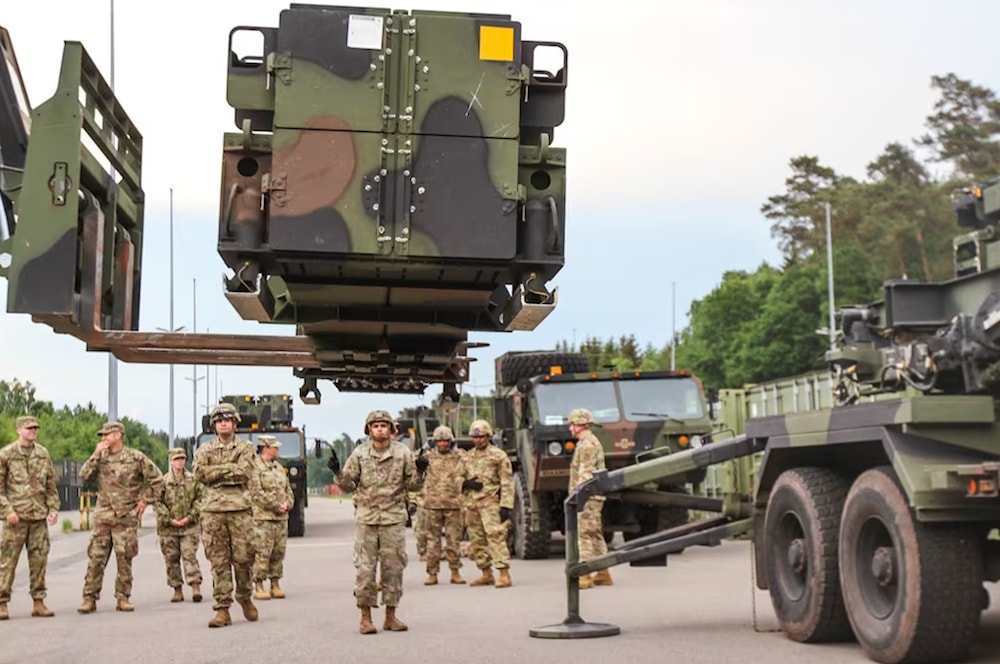
Sgt. Joel Lopez guides a Patriot PAC-3 interceptor for load-out at Miesau Army Depot, Germany (US Army)
The US Army is continuing to receive Patriot interceptors ordered years ago to replace missiles transferred to Ukraine, revealing the lengthy production delays facing Washington as its air defense inventories come under mounting pressure.
An analysis of US Army budget documents by a RIA Novosti correspondent found that deliveries of Patriot Advanced Capability-3 Missile Segment Enhancement, or PAC-3 MSE, interceptors financed in fiscal years 2022 and 2023 remain incomplete.
Although Congress approved funding to restore the missiles sent to Ukraine several years ago, manufacturing constraints have stretched delivery schedules to as long as three years.
Missiles funded in 2022 only recently delivered
Congress financed 148 additional PAC-3 MSE interceptors toward the end of fiscal year 2022, on top of the Army’s original procurement order.
However, most of those missiles were not delivered until the period between October 2025 and June 2026, according to the budget documents.
A further $1.44 billion was allocated in fiscal year 2023 to replace depleted stocks. Some interceptors covered by that funding are not expected to reach the Army until the final months of 2026 or sometime in 2027.
The delayed schedule reflects limitations in US missile-manufacturing capacity, which has struggled to expand quickly enough to meet domestic military requirements, transfers to allies, and foreign export orders.
Export contracts contribute to delivery gap
Under its baseline procurement program, the US Army is expected to receive 166 PAC-3 MSE interceptors throughout 2026.
Budget documents nevertheless indicate that no deliveries were scheduled between May and August. The Pentagon attributed the interruption partly to manufacturers completing export contracts for foreign customers.
The pause comes as Washington faces growing concerns over its ability to replenish advanced interceptors at the same pace that they are being expended or transferred abroad.
PAC-3 MSE missiles are among the most advanced interceptors used by the Patriot air defense system and are designed to target ballistic missiles, cruise missiles and aircraft.
War on Iran deepens stockpile pressure
The delayed replacement of missiles transferred to Ukraine has coincided with the extensive use of Patriot systems during the US war on Iran.
"Operation Epic Fury," launched in late February, placed severe pressure on American air defense inventories as US forces attempted to intercept Iranian missiles targeting military installations and allied positions across the region.
Estimates by the Center for Strategic and International Studies suggested that the campaign depleted the US Patriot inventory by approximately 65%.
The research center estimated that Washington could have been left with as few as 759 PAC-3 MSE interceptors following months of operations.
The figures indicate that the United States launched the war on Iran before fully replacing weapons previously supplied to Ukraine, while its industrial base remained unable to rapidly compensate for wartime consumption.
Read more: US Patriot stocks depleted by up to 67% during Iran war: CSIS


