
Yemen warns against aggression, holds KSA responsible for blockade
 3 Min Read
Acting Head of the Sana’a Government Mohammed Miftah holds Saudi regime responsible for the consequences of its aggression against Yemen and reaffirms solidarity with Palestine.
-
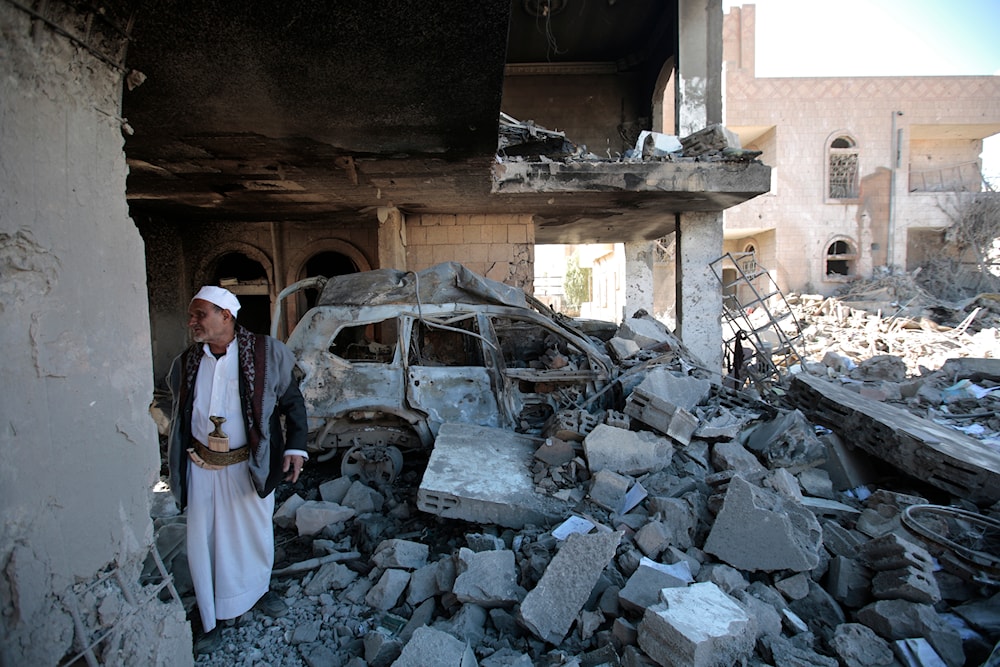
A man inspects the wreckage of a building after it was damaged in Saudi-led coalition airstrikes, in Sanaa, Yemen, Tuesday, Jan. 18, 2022 (AP)
Saudi regime fully responsible for the consequences and atrocities resulting from its aggression and blockade of Yemen over more than a decade, Acting Head of the Sana’a Government, Mohammed Miftah, stated on Tuesday.
Miftah warned any domestic or foreign parties against engaging in adventures or attacks on Yemen, stating that “we are fully prepared and ready for confrontation.”
He also cautioned against accepting a framework that normalizes violations and the normalization of crimes and suffering.
Highlighting the ongoing violence in Palestine, Miftah described the continued killing and desecration of holy sites without accountability as a “major catastrophe threatening the future of all of us,” noting that what is happening in Palestine today could affect other regions tomorrow.
Miftah reaffirmed full solidarity with the Palestinian people and the peoples of the Arab and Islamic world in confronting the US-backed Israeli aggression.
Saudi blockade: 12 million at risk of famine in the name of 'security'
The Saudi‑led coalition began enforcing a sea, land, and air blockade on Yemen in March 2015, shortly after intervening in Yemen’s civil war to support the exiled government against the Ansar Allah movement. The coalition repeatedly justified restrictions on ports and borders as necessary to stop arms smuggling to the Houthis and uphold United Nations Security Council Resolution 2216.
On November 6 2017, the coalition announced a full blockade of all airports, seaports, and land borders, claiming it would prevent the entry of foreign‑made weapons. Independent UN inspections later showed that around 90% of inspected ships destined for Yemeni ports carried no weapons, undermining the stated rationale.
While the coalition cited security concerns, 90% of Yemen’s food, fuel, and medical supplies are imported, meaning tight restrictions instantly choked essential goods into the country. Fuel imports into Houthi‑controlled ports dropped sharply, crippling hospitals, water systems, and transport infrastructure.
By late 2018, 12 million Yemenis were at imminent risk of famine, with more than 16 million lacking safe water and sanitation, and over one million suspected cholera cases recorded due to worsening public health conditions tied to shortages.
The United Nations has estimated that by March 2022, more than 17 million people were experiencing acute food insecurity, with 16 million lacking adequate medical care and millions dependent on humanitarian assistance that was often delayed or blocked.
Human rights groups and analysts say the blockade contributed to widespread famine, disease outbreaks, and the collapse of the health system, turning Yemen into one of the world’s most severe humanitarian crises since 2015, far beyond its stated military goals.


