
Musk and OpenAI clash in explosive closing arguments at trial
 4 Min Read
Lawyers for Elon Musk and OpenAI exchanged sharp accusations in court as the trial over the company’s restructuring and artificial intelligence ambitions approached its final stage.
-
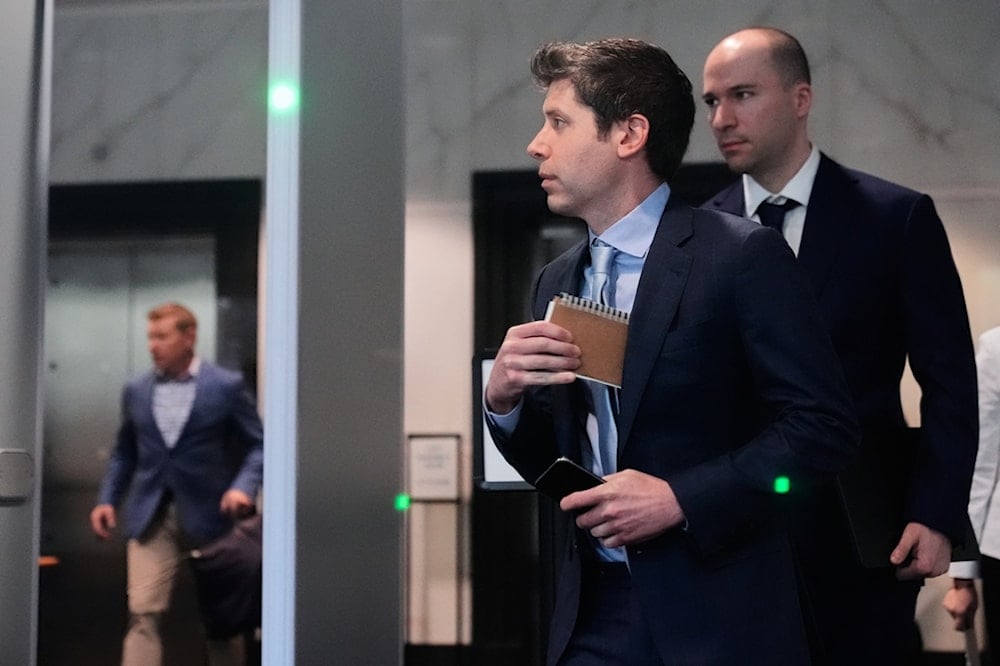
Sam Altman, center, and OpenAI president Greg Brockman, right, arrive at the U.S. District Court in Oakland, Calif., Thursday, April 30, 2026. (AP Photo/Godofredo A. Vásquez)
Lawyers representing Elon Musk intensified accusations against Sam Altman and OpenAI leadership during closing arguments in a closely watched California trial examining whether the company abandoned its founding nonprofit mission.
The lawsuit centers on claims that OpenAI transformed itself into a profit-driven enterprise benefiting executives and investors rather than pursuing artificial intelligence research for the broader public good.
Musk accuses OpenAI and its leadership of breaching charitable obligations after allegedly persuading him to contribute $38 million before restructuring the organization and securing massive outside investment, including funding from Microsoft.
During proceedings in federal court in Oakland, Musk’s attorney Steven Molo argued that testimony from several witnesses raised serious questions about Altman’s credibility.
“Sam Altman's credibility is directly at issue in this case,” Molo told jurors. “If you don't believe him, they cannot win."
Molo said multiple witnesses, including Musk, former OpenAI board members, and former chief scientist Ilya Sutskever, testified that Altman had been dishonest.
The lawsuit seeks roughly $150 billion in damages from OpenAI and Microsoft, with the money potentially directed to OpenAI’s nonprofit structure. Musk also seeks the removal of Altman and OpenAI President Greg Brockman from leadership positions.
OpenAI says Musk sought control over artificial intelligence
Lawyers representing OpenAI rejected Musk’s allegations and argued that the billionaire entrepreneur himself pushed to turn OpenAI into a for-profit entity under his control.
Attorney Sarah Eddy told jurors that by 2017, OpenAI leadership, including Musk while he remained on the board, understood the organization required substantially more funding than a nonprofit model could provide.
“Mr. Musk wanted to turn OpenAI into a for-profit company that he could control,” Eddy said.
“But the other founders refused to turn the keys of AGI over to one person, let alone Elon Musk,” she added, referring to artificial general intelligence.
OpenAI’s legal team also argued that Musk waited too long to file his lawsuit, claiming he had known for years about the company’s plans to attract outside investment.
The company’s lawyers accused Musk of ignoring documents discussing OpenAI’s financial restructuring while later claiming ignorance about the process.
Attorney William Savitt accused Musk of suffering from “selective amnesia,” while also dismissing claims that Musk had been essential to OpenAI’s technological development.
“Mr. Musk may have the Midas touch in some areas, but not in AI,” Savitt said. “To succeed in AI, as it turns out, all Mr. Musk can do is come to court.”
Read more: Pentagon partners with Big Tech for AI-driven military shift
Microsoft drawn into escalating courtroom battle
Microsoft also became a major focus during the proceedings because of its extensive financial partnership with OpenAI.
Musk’s legal team accused Microsoft of knowingly participating in what they described as OpenAI’s improper transformation into a profit-driven business.
“Microsoft was aware of what OpenAI was doing every step of the way,” Molo argued.
Microsoft attorney Russell Cohen rejected those accusations, insisting the company had acted responsibly throughout its relationship with OpenAI.
He said Microsoft was not directly involved in the central events underlying the dispute.
The trial also highlighted the enormous financial stakes surrounding artificial intelligence development.
OpenAI is reportedly preparing for a possible initial public offering that could value the company at nearly $1 trillion, while testimony indicated Microsoft has invested more than $100 billion into the partnership.
Meanwhile, Musk’s AI company xAI has been integrated into SpaceX, which is itself reportedly preparing for a major public offering.
The courtroom battle unfolds amid growing public concern regarding the rapid expansion of artificial intelligence technologies across society.
AI systems are increasingly being used in finance, journalism, healthcare, surveillance, and military applications, while critics warn about risks tied to disinformation, labor displacement, data concentration, and corporate monopolization of emerging technologies.


