
Pentagon partners with Big Tech for AI-driven military shift
 3 Min Read
The Pentagon signs agreements with major AI companies to advance an AI-first military strategy, amid disputes with Anthropic over surveillance concerns.
-
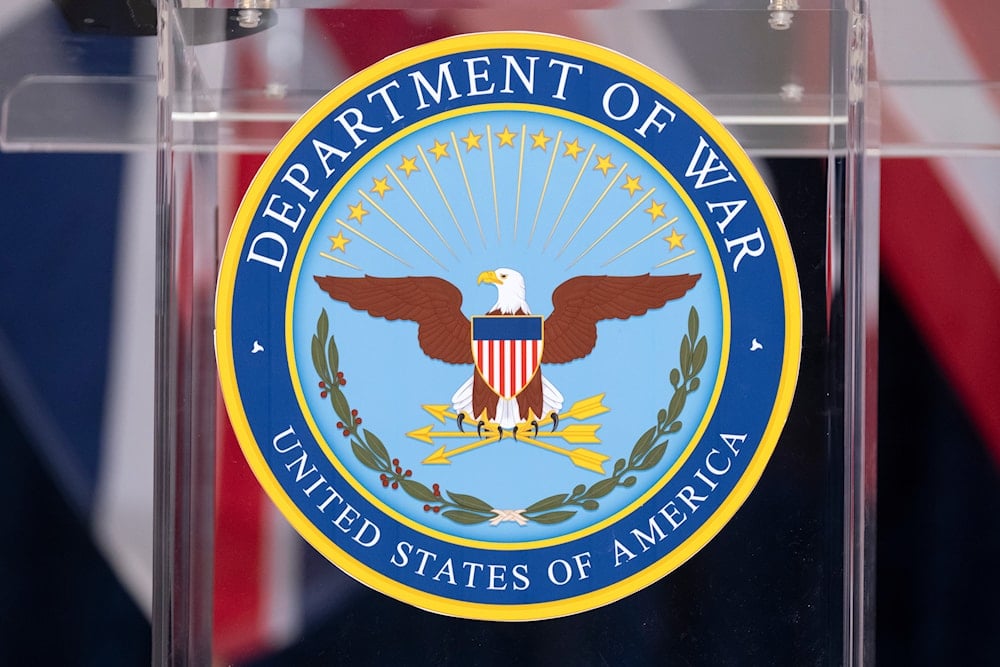
The seal is seen on a podium at the Pentagon, Wednesday, Dec. 10, 2025, in Washington, before War Secretary Pete Hegseth speaks (AP)
The Pentagon announced on Friday that it has finalized agreements with seven leading artificial intelligence companies, including SpaceX, OpenAI, Google, Nvidia, Microsoft, and Amazon Web Services, as part of a sweeping initiative to transform the US military into an “AI-first fighting force.”
In a federal statement, the Department of Defense said the companies would be integrated into its “Impact Levels 6 and 7” network environments. The move is designed to “streamline data synthesis, elevate situational understanding, and augment warfighter decision-making in complex operational environments.”
“These agreements accelerate the transformation toward establishing the United States military as an AI-first fighting force and will strengthen our warfighters’ ability to maintain decision superiority across all domains of warfare,” the Pentagon said.
According to the department, the seven companies have agreed to allow the US military to deploy their technology for “any lawful use.” However, the startup Anthropic, maker of the popular Claude chatbot, notably rejected that standard in its own contract with the War Department last month, sparking a high-profile dispute.
Pentagon vs. Anthropic: A $54 billion standoff
The Pentagon’s push has already ignited disputes with some AI firms, as well as broader concerns over public spending, global cybersecurity, and the potential for such technology to be used in domestic surveillance.
The US Department of War is budgeting tens of billions of dollars for cutting-edge programs related to intelligence, drone warfare, and classified and unclassified information networks. It has requested $54 billion for the development of autonomous weapons alone. The Pentagon did not specify how each company’s technology would be deployed.
Among the firms listed is Reflection AI, a two-year-old startup that has yet to release a publicly available model. The company aims to build open-source models as a counter to Chinese AI firms such as DeepSeek. According to The Wall Street Journal, Reflection is seeking a $25 billion valuation and has received backing from Nvidia and 1789 Capital, the venture fund where Donald Trump Jr. is a partner.
Lawful-use clause under question
Meanwhile, the standoff with Anthropic continues to escalate. The AI firm objected to the lawful-use clause over fears its technology could be used for domestic mass surveillance or fully autonomous lethal weapons. In response, the Pentagon last month designated Anthropic a supply-chain risk, the first time an American company has received such a label.
As a result, the Pentagon and its contractors are barred from using Anthropic’s products, though officials acknowledge the tools remain difficult to fully extricate from classified networks. Anthropic has filed a lawsuit in response.
According to The New York Times, War Department officials believe that signing agreements with Anthropic’s rivals could pressure the holdout startup back to the negotiating table. Complicating matters further, Anthropic’s latest AI model, the cybersecurity-focused Mythos, has rattled government officials and bankers alike due to its ability to find vulnerabilities in well-tested software. The release of Mythos has also complicated efforts by the Trump administration and Defense Secretary Hegseth to blacklist the company.


