
US troops in war zones exposed via commercial location data: Reuters
 4 Min Read
US forces deployed in war zones may have been tracked using commercially available location data, prompting warnings from lawmakers over risks posed by the global adtech and data broker industry.
-
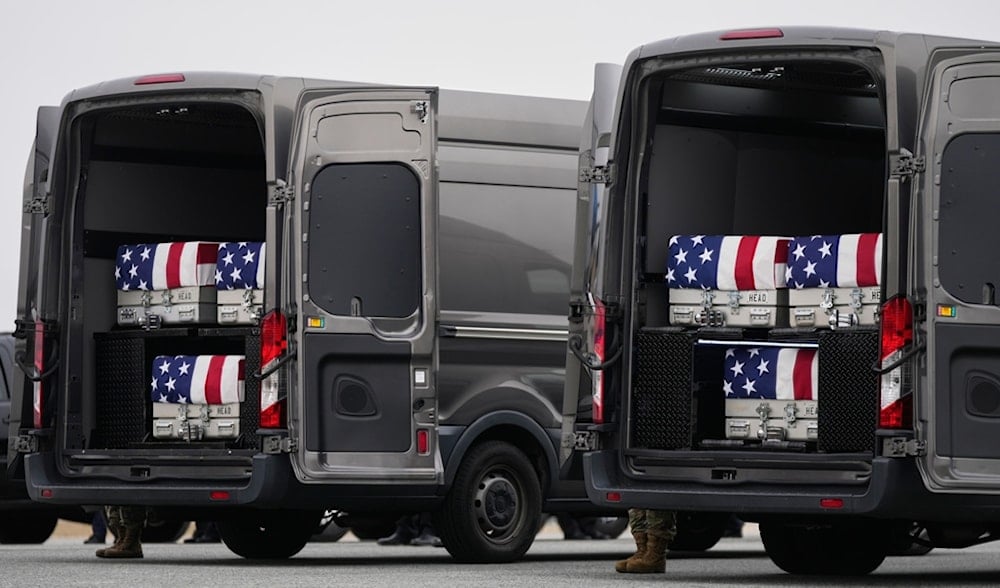
Transfer vans containing the remains of US Army soldiers who were killed in a drone strike at a command center in Kuwait during a casualty return, Saturday, March 7, 2025, at Dover Air Force Base, Delaware. (AP)
US forces deployed in active war zones have reportedly been targeted or surveilled using commercially available location data, highlighting growing concerns over how the global surveillance and advertising ecosystem is reshaping modern battlefields.
In a letter shared with Reuters by US Senator Ron Wyden, US Central Command said it had “received multiple threat reports concerning adversary exploitation of commercial location data to target or surveil U.S. personnel in theater.”
The message, dated April 14, did not provide further operational details, but CENTCOM's area of responsibility includes the Gulf region, where US forces operate in the aggression against Iran.
US lawmakers said the disclosure marks the first official acknowledgment that US troops may have been targeted in an active war zone through commercial data sources. A bipartisan group of legislators raised the issue in a separate letter sent to the Pentagon, saying efforts to obtain further information had so far been unsuccessful.
The Pentagon said it would respond directly to lawmakers but did not provide additional comment.
'Pattern of life' tracking seen as security risk
Lawmakers warned that commercially traded location data can reveal where troops gather and establish “pattern of life” profiles that may be exploited by adversaries.
According to the letter, such data could be used to facilitate attacks, including missile strikes, drone operations, roadside bombs, and counterintelligence activities. Wyden said it was time to “start treating the adtech industry as a national security threat.”
Location data is widely collected through smartphones, apps, and digital services, then sold through data brokers and intermediaries as part of the global digital advertising ecosystem.
While privacy concerns over such practices have long been debated, lawmakers and security officials increasingly warn that the same data streams may pose direct risks to military personnel operating overseas.
Previous cases highlight surveillance vulnerabilities
As early as 2016, commercially available location data was reportedly used to track US special operations forces from domestic bases to a staging area in Syria, according to previously disclosed accounts.
More recently, investigative reporting by outlets including Wired and German media organizations used large-scale datasets from a broker to map movements around US military and intelligence installations in Germany, raising further concerns about operational security.
The letter urged military officials to take stronger preventive steps, including disabling advertising identifiers on government devices, restricting location sharing, and limiting the use of mainstream browsers such as Google Chrome in favor of more privacy-focused alternatives.
US Representative Pat Harrigan, a former Army Special Forces officer and one of the signatories, argued that widely used browsers are “built from the ground up to collect and share user data,” warning that continued use on government systems could expose troops to adversaries.
Alphabet, Google’s parent company, said Chrome offers “industry-leading security” and stated it has long supported stronger rules and safeguards around data brokers and digital privacy practices.
US death toll in Iran rises to 14: Pentagon
The US Department of War recently announced that the number of American troops killed during the war on Iran has risen to 14, according to Pentagon data.
Early in April, The Intercept reported that nearly 750 US troops fell casualty in West Asia since October 2023. At the time, CENTCOM had released figures on casualties but had not provided a comprehensive updated total in response to recent requests.
It is worth noting that throughout the war on Iran, the Islamic Revolution Guard Corps announced dozens of operations targeting US troop assemblies and positions across the Gulf, confirming even higher casualties.


