Fractured minds of a nation: Mental health and schooling in Lebanon - when learning becomes a battle for survival
-
 Dana Kahil
- 1 Feb 2026 23:57
- 8 Shares
 22 Min Read
Childhood in Lebanon became increasingly defined by cumulative stress rather than developmental progression, with each new crisis layering itself onto the previous one,
-
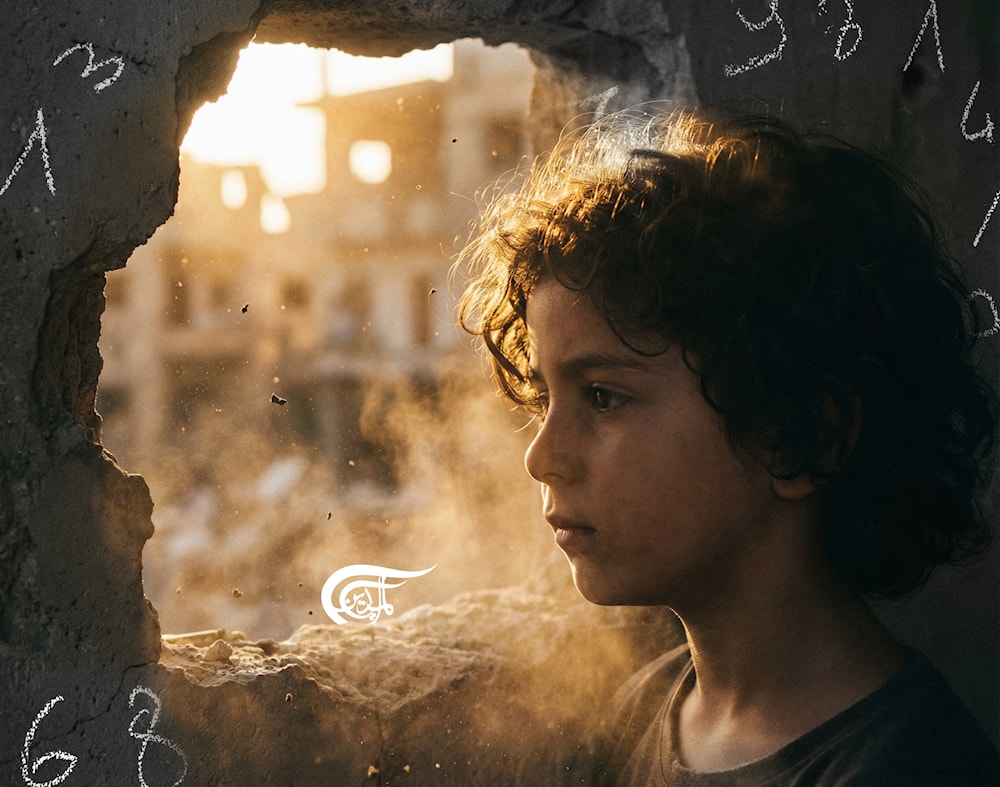
Trauma in Lebanon is not an abstract concept but a daily condition shaping attention, memory, and behaviour (Illustrated by Ali al-Hadi Shmeiss; Al Mayadeen English)
Mental health in Lebanon today cannot be treated as a marginal concern or a specialised medical subfield. It has become the central axis around which childhood and schooling revolve. Children and adolescents are growing up in a country where economic collapse, political paralysis, infrastructural decay, and recurrent conflict form the background of everyday life rather than its exception. In such a context, to speak of education without speaking of mental health is to misrepresent the reality. The Lebanese classroom is no longer simply a place of instruction; it has become an arena in which the psychic consequences of national crisis are enacted hour by hour, lesson by lesson. This transformation signals a deeper structural shift in the conditions under which learning is expected to occur. Educational and developmental psychology consistently demonstrate that learning depends on a baseline of emotional safety, predictability, and cognitive availability. In Lebanon, these conditions are systematically undermined as children enter classrooms carrying uncertainty about food, electricity, transport, and family income, while teachers attempt to sustain pedagogical routines amid chronic disruption. Rather than buffering children from crisis, schools increasingly mirror the instability of the broader social environment, reproducing its anxieties and constraints within the space ostensibly designed for growth and stability.
Years before the current phase of collapse, research already showed that Lebanese children carried a heavy psychological burden with limited access to care. A landmark epidemiological study found that 26.1 per cent of adolescents in Beirut met criteria for a psychiatric disorder in the previous month, yet only about six per cent of those meeting criteria had received any form of professional support (Maalouf et al. 1108). A later national survey, the Psychopathology in Children and Adolescents in Lebanon Study, screened children and adolescents aged five to seventeen across the country, finding that about one third screened positive for at least one psychiatric condition, most commonly anxiety and trauma-related symptoms, while only five per cent had accessed mental health services (Maalouf et al. 761–74). These figures reveal not only high prevalence but also a longstanding structural treatment gap shaped by cost, stigma, and the concentration of services within urban private sectors. Mental health care for children was already fragmented, underfunded, and unevenly distributed, leaving families to rely on informal coping strategies and schools to manage psychological distress without institutional support. The education system thus inherited responsibilities it was never designed or resourced to fulfil.
These findings predate the 2019 financial collapse, the 2020 port explosion, and the escalations of conflict in 2023 and 2024, crises that amplified an already existing emergency. What had once been described as vulnerability hardened into permanence, and what had once been framed as individual pathology became a collective condition. The collapse of the banking system erased savings and salaries, stripping families of economic buffers; the port explosion transformed private grief into public trauma; and repeated episodes of violence normalised fear as a persistent feature of everyday life. Childhood in Lebanon became increasingly defined by cumulative stress rather than developmental progression, with each new crisis layering itself onto the previous one, compressing recovery time and exhausting the adaptive capacities of families, schools, and social institutions simultaneously.
UNICEF’s assessments describe a relentless erosion of family resilience under these conditions. In Future on Hold, the organisation warned that the socio-economic collapse was “breaking [children’s] spirits, damaging their mental health, and threatening to wipe out their hope for a better future” (UNICEF, Future on Hold 5). In Trapped in a Downward Spiral, UNICEF documented rising child labour, reduced food consumption, and increasing anxiety among children as families struggled to provide electricity, heating, healthcare, and school materials (UNICEF, Trapped in a Downward Spiral 3). These reports rely on systematic field data and caregiver testimonies rather than anecdote, depicting households trapped in cycles of deprivation where parental distress becomes unavoidable and children absorb anxiety long before it reaches diagnostic thresholds. Extensive research confirms that prolonged caregiver stress is strongly correlated with anxiety, depression, and behavioural difficulties among children, suggesting that the home itself becomes a primary site of psychological transmission under sustained economic collapse.
The most recent war added acute trauma to chronic insecurity. UNICEF reported in October 2024 that children had been killed, injured, and displaced, describing the psychological consequences of bombardment and sudden flight as likely to be severe (“War in Lebanon Inflicting Devastating Physical and Emotional Impacts”). A UNICEF Lebanon situation update found that more than four hundred thousand children were displaced in a matter of weeks as schools and homes were damaged or evacuated (Chaiban). In Shattered Childhoods, UNICEF documented the mental health consequences of displacement, disrupted education, and prolonged fear, noting that many children displayed anxiety, withdrawal, and sleep disturbances (UNICEF, Shattered Childhoods 6–10). Displacement fractures routines, social bonds, and spatial familiarity, dismantling the emotional scaffolding children rely upon for regulation and learning, while schooling, when it resumes at all, often does so in overcrowded, temporary, or unfamiliar environments that further strain psychological resilience.
A national caregiver survey published on February 28, 2025, found that 72 per cent of caregivers said their children felt anxious during the conflict, 62 per cent reported sadness or depressive symptoms, and nearly half of households had reduced spending on healthcare, while 30 per cent had reduced spending on education (“Decline in Children’s Mental Health”). These figures reflect the lived reality of families forced to ration care across competing survival needs, where decisions about schooling are no longer guided by aspiration or long-term planning but by immediate affordability. When education becomes economically conditional, its protective and stabilising function weakens, and children internalise the precarity of learning itself.
Lebanon’s education system mirrors the instability shaping children’s daily lives. The European Training Foundation’s 2024 country fiche notes that years of overlapping disruptions, including economic instability, pandemic closures, teacher strikes, and security concerns, have placed learning outcomes at serious risk (Country Fiche 4). A 2024 report by the Centre for Lebanese Studies documented that many public schools recorded reduced instructional time, and, in some cases, severe reductions, due to structural and economic obstacles, with substantial variation across regions (Chahine et al. 5–7). These disruptions are not merely administrative interruptions but measurable losses with long-term economic consequences. The World Bank estimates that public school children received approximately 190 days of in-person teaching across the three academic years from 2019–20 to 2021–22, compared with the 450 days they would have received in typical years. It further models learning loss as a decline in learning-adjusted years of schooling and projects that if disruptions are not remediated, they could translate into roughly a 10 per cent loss in future earnings over affected students’ working lives (World Bank). The point is not simply that learning has been interrupted but that the interruption has acquired structural durability, turning education into a site where national collapse becomes legible in the diminished time, diminished continuity, and diminished promise of schooling itself.
These disruptions have made consistency in schooling difficult to sustain. For many children, education has become intermittent rather than dependable, not because families have ceased to value learning, but because the system itself cannot reliably provide it. School calendars shift unpredictably, closures recur, and partial openings replace the full academic rhythm. Evidence of this instability is visible in repeated emergency updates documenting schools used as shelters and the staggered, uneven resumption of schooling across regions and shifts. UNESCO’s education emergency response fact sheets repeatedly note disruptions tied to insecurity and displacement, including schools still serving as shelters during the conflict period, which directly reduces the availability of learning space (UNESCO). The erosion of predictability matters because routine is not a cosmetic feature of schooling but a psychological precondition for it. Where schooling functions as an anchor, children can externalise stability even when home life is volatile; where schooling itself is volatile, children lose one of the few institutional structures capable of buffering anxiety. Intermittency thus becomes not only an academic problem but a mental health condition, as children learn to expect interruption and to hold their aspirations in suspension.
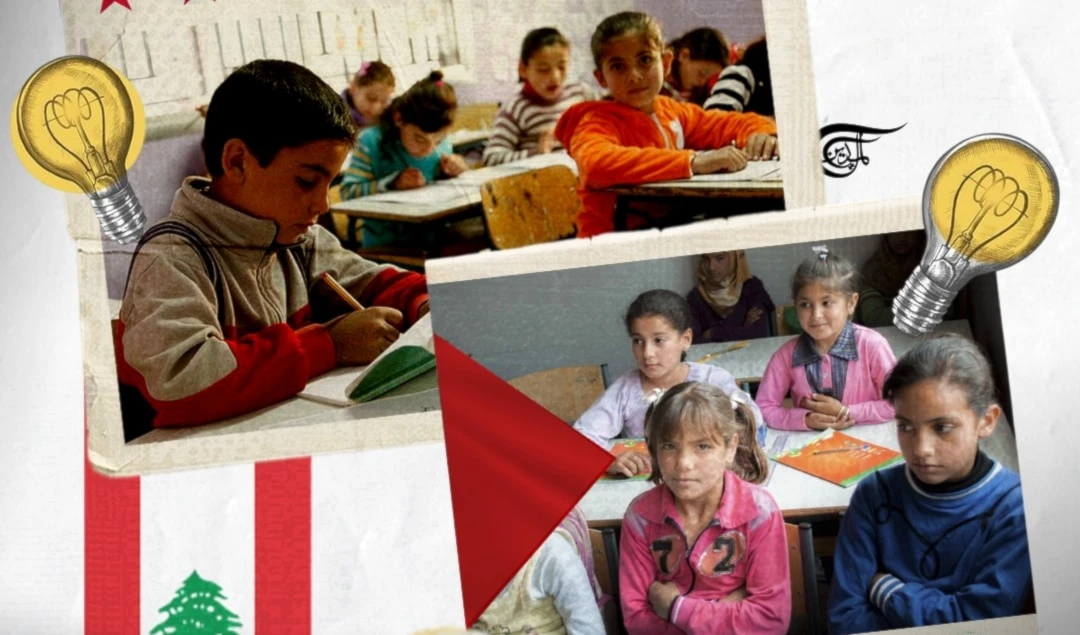
Inside schools, overcrowding and resource shortages intensify stress. Public schools host large numbers of Lebanese and Syrian children, often without proportional increases in staffing or infrastructure. UNICEF reports that many schools experience frequent electricity cuts, insufficient heating, and inadequate sanitation facilities, conditions that interfere with both learning and wellbeing (“Children Hit Ever Harder”). The strain becomes sharper during conflict and displacement, when the educational environment is materially transformed. A Centre for Lebanese Studies report on schooling during the 2024 conflict found that large shares of public schools were repurposed as shelters, while others were located in war zone areas, compressing already limited space for learning and altering the meaning of school buildings themselves (Chahine et al.). Under such conditions, classrooms become sites of sensory and emotional overload: overcrowding amplifies noise, reduces individual attention, and increases the likelihood that distress spreads through the collective atmosphere. Physical discomfort, whether cold, poor lighting, or inadequate sanitation, does not merely inconvenience students; it interacts with chronic stress to heighten irritability, fatigue, and withdrawal, undermining both regulation and concentration. The learning environment thus reflects the broader infrastructural decay of the nation, turning schooling into another space where deprivation becomes normalised.
Teachers themselves are under immense pressure. UNICEF notes that many teachers cannot afford transport, food, or essential household expenses, and that strikes reflect these survival conditions rather than a lack of commitment (“Lebanon’s Crisis Stretches Families”). The impact of devaluation on educators is documented across multiple sources, including teacher organisations and policy analyses describing salaries that have collapsed in real value. Education International reports that public education teachers’ wages have plummeted with the devaluation of the local currency, producing conditions in which work no longer sustains basic living needs (Education International). This economic erosion is not peripheral to education quality; it directly shapes attendance, retention, and the stability of classroom relationships. A World Bank note on Lebanon’s learning losses explicitly links teacher strikes to severely devalued salaries, noting prolonged closures and reduced weekly instruction even when schools were formally open (World Bank). When educators are forced to choose between commuting to school and feeding their families, the moral burden placed upon teachers becomes structurally cruel. Burnout in this context is not simply occupational fatigue but an institutional symptom, one that erodes the emotional scaffolding of classrooms and makes consistency in instruction and care increasingly difficult to sustain.
The consequences of this pressure are visible in system-level disruption and in the language of emergency. In January 2023, reporting on closures and strikes described the scale of school disruption as affecting vast numbers of children, not in the language of ordinary labour disputes but as an educational emergency (ReliefWeb). World Bank analysis similarly frames the repeated interruptions as producing cumulative losses, not single-year setbacks, with learning deficits compounding across consecutive disrupted school years (World Bank). Beyond student learning, instability in the teacher workforce also creates inequality between sectors. When private schools resume more consistently while public schools remain disrupted, the education gap deepens, making schooling an accelerant of stratification rather than a mechanism of mobility (Asfari Institute). Teachers thus stand at the intersection of economic collapse and educational survival, expected to provide emotional and pedagogical stability in a context that denies them the material conditions required for stability themselves.
Behaviour in the classroom often reflects this distress. Research on children in crisis-affected contexts shows that anxiety, trauma, and chronic stress rarely present as clearly labelled disorders but instead appear as restlessness, withdrawal, irritability, somatic complaints, or sudden fatigue. In Lebanon, the conditions producing such behaviours are not episodic but sustained, meaning that behavioural manifestations of stress may become chronic classroom patterns. Without adequate mental health training, these behaviours may be misinterpreted as defiance, disinterest, or passivity. A noisy child is punished rather than supported, a silent child is praised rather than noticed, and a tired child is reprimanded rather than assisted. This misrecognition matters because it turns the classroom into a site where trauma is disciplined rather than understood, reinforcing children’s sense that their distress is moral failure rather than injury. The educational cost is measurable as well as emotional. World Bank evidence of early grade reading deterioration, for example, indicates severe declines in foundational learning outcomes during years of disruption, with only 2.8 per cent of Grade 2 students reaching intermediate reading comprehension levels in a 2022 assessment compared to 11 per cent in 2018 (World Bank). The classroom, therefore, becomes both a psychological theatre and an academic indicator, revealing how distress and deprivation materialise as weakened attention, diminished engagement, and slowed skill acquisition.
For Syrian refugee children, the pressures are even greater. UNHCR reports that about 44 per cent of school-aged Syrian refugees in Lebanon are not enrolled in school, with even lower enrolment among adolescents (“Education”). The barriers cited are consistently economic: transport costs, lack of resources, and the compulsion to work. Recent reporting by the International Labour Organization underscores that child labour remains a serious challenge across Lebanon for both Lebanese and refugee children, referencing the 2023 Lebanon Multiple Indicator Cluster Survey as evidence of continued and widespread child labour (International Labour Organization). The deeper issue is that labour and schooling become mutually exclusive under conditions of deprivation, and adolescents are pushed toward work as households prioritise immediate survival. This pressure is intensified by the instability of the school system itself: where education is intermittent, the opportunity cost of attending school rises, making labour seem not only necessary but rational. A child who arrives in class exhausted from work is not merely tired; he embodies an economic structure that extracts childhood into labour, and an education system that lacks the resources to respond with accommodation rather than exclusion.
The exclusion of refugee children from schooling also has administrative and policy dimensions that amplify vulnerability. The European Training Foundation’s country fiche notes tens of thousands of children out of school due to documentation or registration constraints, underscoring how legal and bureaucratic barriers converge with poverty to limit access (Country Fiche). These constraints are not neutral; they shape which children remain visible to schooling and which are pushed beyond its boundaries. Where children are excluded, the protective role of education collapses, and risk exposure increases. The outcome is not simply loss of learning but heightened vulnerability to exploitation, early entry into labour, and deterioration of mental well-being. In such conditions, school becomes not a universal public institution but a selectively accessible resource, and that selectivity reproduces both social inequality and psychological harm.
Lebanon’s National Mental Health Strategy for 2024–2030 acknowledges these realities. The strategy emphasises integrating mental health promotion into schools, strengthening psychosocial support, improving referral pathways, and building teacher capacity (Lebanon, Ministry of Public Health 25–28). Its significance lies in treating mental health not as an isolated clinical issue but as a cross-sectoral condition requiring implementation in education settings. Yet the strategy’s ambitions confront structural constraints, including fragmented governance, limited funding, and the difficulty of maintaining consistent implementation during overlapping emergencies. The gap between policy recognition and institutional capability remains wide, and schools often lack the specialised staff or referral networks required to translate strategy into daily practice. This is precisely why integration is not merely an administrative concept but a material one. For schools to act as sites of early identification and support, teachers require training, mental health professionals must be accessible through referral pathways, and children must experience schooling as stable enough to sustain intervention rather than interrupt it.
Some emerging programmes nonetheless demonstrate how education and mental health can be integrated even under constraint. A multisite trial led by the American University of Beirut and War Child Holland developed a Family Focused Psychosocial Support programme for adolescents at risk, aiming to strengthen communication, emotional regulation, and problem-solving within families. Early findings indicate that the programme is feasible and acceptable in humanitarian contexts and that strengthening family functioning can mitigate adolescent distress (Bosqui et al.). The value of such interventions lies in recognising that adolescent distress is often relational, shaped by family stress, and disrupted social environments. In parallel, quantitative evidence of learning recovery suggests that academic remediation is most effective when combined with emotional safety. A study on remedial reading interventions enriched with social and emotional learning components found improved literacy outcomes among Syrian refugee children, underscoring how academic engagement and psychological support are mutually reinforcing rather than separate domains (World Bank).
Taken together, these data and narratives demonstrate that the mental health crisis affecting children and the crisis in education are not separate phenomena. They are interlocking expressions of the same structural collapse. Children are expected to learn in conditions that undermine emotional regulation and cognitive stability, while the system delivers diminished instructional time, fragmented continuity, and disrupted space. Teachers are expected to sustain learning while struggling to survive, and their economic precarity becomes a direct determinant of classroom stability. School buildings are asked to operate simultaneously as classrooms, shelters, and emotional anchors, a dual function that reveals both the collapse of infrastructure and the moral overburdening of public institutions (Chahine et al.). Under such conditions, the promise of education becomes fragile not because children lack ability or motivation but because the environment systematically erodes their capacity to engage. What is being tested is not the resilience of children but the endurance of a system that has been forced into permanent improvisation.
To centre mental health within education is not to displace curricula, instruction, or assessment. It is to recognise that none of these can function without emotional stability, safety, and support. Trauma in Lebanon is not an abstract concept but a daily condition shaping attention, memory, and behaviour, and learning loss becomes both the symptom and the measurement of that condition. The World Bank’s modelling of learning losses and future earning losses renders visible what families and teachers experience daily: the costs of disruption accumulate across years and do not disappear when schools reopen (World Bank). The implication is that any educational recovery plan that treats mental health as secondary will reproduce the very failures it seeks to correct. Emotional regulation is not an accessory to cognition; it is one of its conditions. Therefore, schools require not only better materials and more instructional time but also the psychosocial infrastructure that enables children to be present, safe, and reachable in the first place.
Lebanon cannot afford to defer child mental health until economic recovery or political reform is achieved. Recovery cannot occur without a generation capable of thinking, trusting, and imagining a future. Schools must be rebuilt as spaces of emotional recovery, as well as intellectual formation, supported by trained educators and accessible care systems. This demands sustained public investment, donor coordination beyond emergency cycles, and political recognition that mental health is foundational to national survival. It also requires confronting the reality that learning losses are not merely private tragedies but national liabilities, projected to shape future earnings and economic capacity if not remediated (World Bank). The question is no longer whether Lebanon’s children are resilient enough to endure further crisis but whether the country is willing to uphold their right to learn in safety, dignity, and hope, and to treat that right as the foundation of any credible reconstruction rather than as a postponed aspiration.
References:
Asfari Institute for Civil Society and Citizenship. “The Educational System in Lebanon: A Red Alert After the War.” Asfari Institute, 5 May 2025, https://asfariinstitute.org/2025/05/05/ggco-op-ed-10/. Accessed 30 Dec. 2025.
Bosqui, Tania, and Felicity Brown, et al. “Family Focused Psychosocial Support for At-Risk Adolescents in Lebanon.” American University of Beirut – Faculty of Arts and Sciences, Department of Psychology, American University of Beirut, https://www.aub.edu.lb/fas/psychology/Pages/FFPSS.aspx. Accessed 30 Dec. 2025.
Centre for Lebanese Studies. A Generation at Risk: Urgent Steps Needed to Address Learning Loss in Lebanon’s Public Schools. Centre for Lebanese Studies, 2024, https://lebanesestudies.com/publications/a-generation-at-risk-urgent-steps-needed-to-address-learning-loss-in-lebanons-public-schools/. Accessed 30 Dec. 2025.
Education International. “Just Wages for Public School Teachers in Lebanon.” Education International, 12 May 2025, https://www.ei-ie.org/en/item/29865:just-wages-for-public-school-teachers-in-lebanon. Accessed 30 Dec. 2025.
European Training Foundation. Key Policy Developments in Education, Training and Employment: Lebanon 2024 (Country Fiche). European Training Foundation, 11 Dec. 2024, https://www.etf.europa.eu/sites/default/files/2025-04/Country%20Fiche_Lebanon_2024_EN_web%20%281%29.pdf. Accessed 30 Dec. 2025.
International Labour Organization. Action against Child Labour in Lebanon: Mapping Policy Initiatives and Interventions. ILO, May 2025, https://www.ilo.org/sites/default/files/2025-05/Report_mapping_policy_initiatives_Lebanon.pdf. Accessed 30 Dec. 2025.
Lebanon. Ministry of Public Health. National Mental Health Strategy for Lebanon (2024–2030). Ministry of Public Health, 2024, https://www.moph.gov.lb/userfiles/files/National%20Mental%20Health%20Strategy%20For%20Lebanon%20%282024%20-%202030%29.pdf. Accessed 30 Dec. 2025.
Maalouf, Fadi T et al. “Psychiatric disorders among adolescents from Lebanon: prevalence, correlates, and treatment gap.” Social psychiatry and psychiatric epidemiology vol. 51,8 (2016): 1105-16. https://doi.org/10.1007/s00127-016-1241-4. Accessed 30 Dec. 2025.
Maalouf, Fadi T et al. “Psychopathology in Children and Adolescents in Lebanon Study (PALS): a national household survey.” Social psychiatry and psychiatric epidemiology vol. 57,4 (2022): 761-774. https://doi.org/10.1007/s00127-021-02208-4. Accessed 30 Dec. 2025.
UNESCO. “Fact Sheet on Education Emergency Response in Lebanon.” UNESCO, 26 Feb. 2025, https://www.unesco.org/en/articles/fact-sheet-education-emergency-response-lebanon. Accessed 30 Dec. 2025.
UNHCR. “Education.” UNHCR Lebanon, https://www.unhcr.org/lb/what-we-do/education. Accessed 30 Dec. 2025.
UNICEF. “Children Hit Ever Harder by Lebanon’s Unrelenting Crises—UNICEF Report.” UNICEF, 13 Dec. 2023, https://www.unicef.org/lebanon/press-releases/children-hit-ever-harder-lebanons-unrelenting-crises-unicef-report. Accessed 30 Dec. 2025.
---. “Decline in Children’s Mental Health, Nutrition and Education after the War in Lebanon: UNICEF.” UNICEF, 28 Feb. 2025, https://www.unicef.org/press-releases/decline-childrens-mental-health-nutrition-and-education-after-war-lebanon-unicef. Accessed 30 Dec. 2025.
---. Future On Hold: Lebanon’s Worsening Crisis Is Breaking Children’s Spirits. UNICEF, 2023. UNICEF Lebanon, https://www.unicef.org/lebanon/reports/future-hold-report. Accessed 30 Dec. 2025. PDF: https://www.unicef.org/lebanon/media/10336/file/Future%20On%20Hold%20Report%20EN.pdf. Accessed 30 Dec. 2025.
---. “Lebanon’s Crisis Stretches Families’ Coping Ability to Breaking Point.” UNICEF, 20 June 2023, https://www.unicef.org/press-releases/lebanons-crisis-stretches-families-coping-ability-breaking-point. Accessed 30 Dec. 2025.
---. Shattered Childhoods: The Catastrophic Toll of War on Children in Lebanon. UNICEF, Feb. 2025. UNICEF Lebanon, https://www.unicef.org/lebanon/reports/shattered-childhoods. Accessed 30 Dec. 2025. PDF: https://www.unicef.org/lebanon/media/12731/file/CFRA-UNICEF-Lebanon-2025-Report-EN.pdf.pdf. Accessed 30 Dec. 2025.
---. Trapped in a Downward Spiral: The Unrelenting Toll of Lebanon’s Crisis on Children. UNICEF, Dec. 2023. UNICEF Lebanon, https://www.unicef.org/lebanon/reports/trapped-downward-spiral. Accessed 30 Dec. 2025.
---. “War in Lebanon Inflicting Devastating Physical and Emotional Impacts on Children.” UNICEF, 31 Oct. 2024, https://www.unicef.org/press-releases/war-lebanon-inflicting-devastating-physical-and-emotional-impacts-children. Accessed 30 Dec. 2025.
World Bank. Another Lost Year: Estimating the Educational and Economic Costs of Lebanon’s Public School Closures. World Bank, 27 Sept. 2023, https://documents.worldbank.org/en/publication/documents-reports/documentdetail/099092623073542135. Accessed 30 Dec. 2025.
---. “Learning and Earning Losses: The Educational and Economic Costs of Lebanon’s Public School Closures.” World Bank Blogs, 25 Oct. 2023, https://blogs.worldbank.org/en/arabvoices/learning-and-earning-losses-educational-and-economic-costs-lebanons-public-school. Accessed 30 Dec. 2025.